
Self-Closing Gate Requirements for Florida Pool Fences

Self-closing gates for Florida pool fences must swing outward and include self-latching devices. They should open away from the pool and have a self-closing mechanism. The latch release must be at least 54 inches high, with no gaps near the mechanism exceeding ½ inch. The fence must be at least 48 inches tall. Always check local codes for compliance. For safety, ensure your pool area meets these standards.
Gate Orientation and Operation Standards
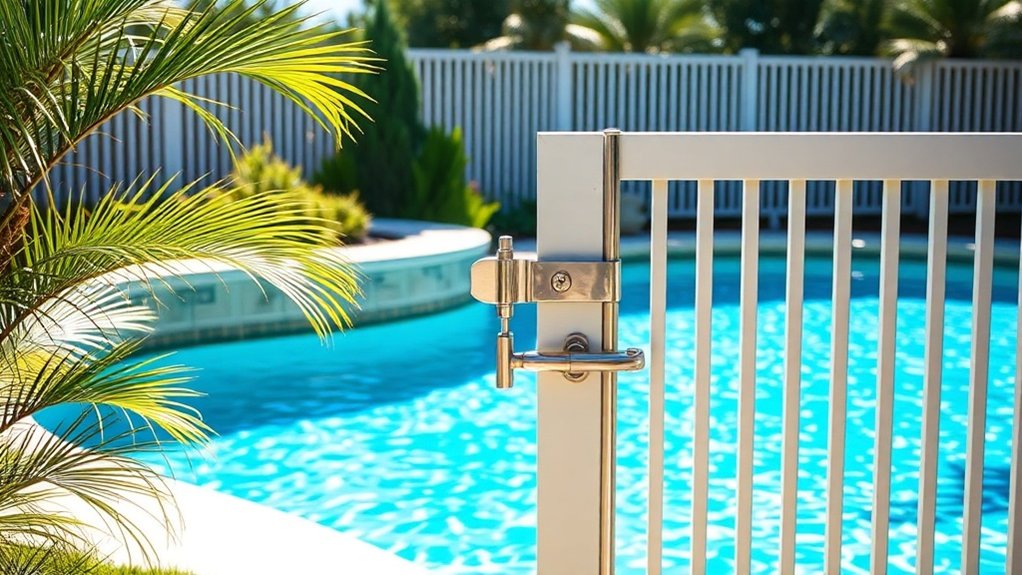
When installing a self-closing gate for a pool fence, it’s crucial that the gate swings outward, away from the pool. This design ensures the gate closes automatically if pushed by a child, enhancing safety. Florida Statutes require that pedestrian access gates open outward for this reason.
All gates must also have a self-closing mechanism, ensuring they return to a closed position after use. Additionally, the 360-degree fence barrier is essential to prevent unauthorized access and protect children, highlighting the importance of proper gate orientation and operation in pool fencing. To further enhance safety, gates should also be fitted with self-latching devices that engage when the gate closes. These measures help prevent unauthorized access and protect children, highlighting the importance of proper gate orientation and operation in pool fencing.
Release Mechanism Placement and Child Access
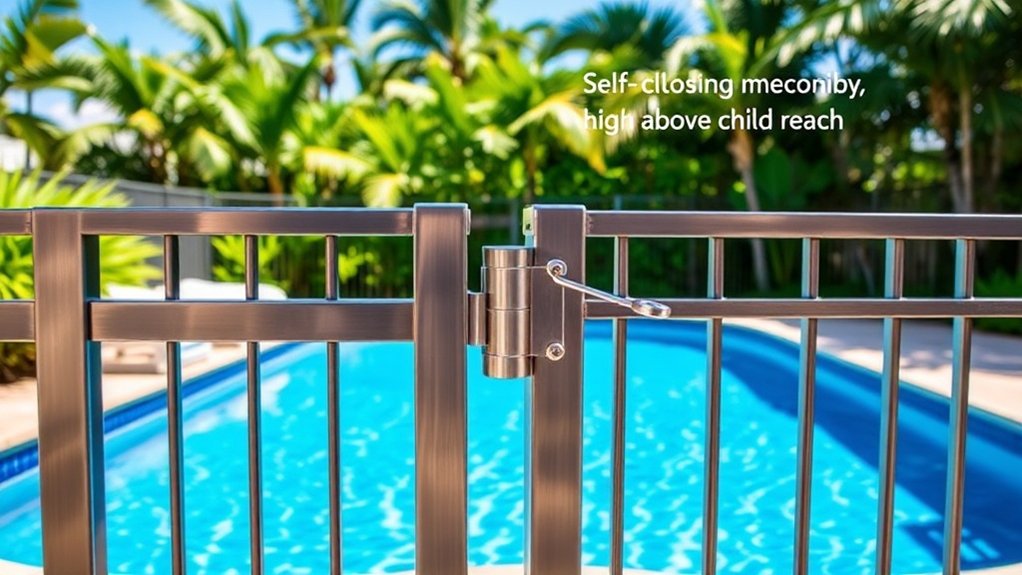
Proper placement of the release mechanism is crucial for keeping pool areas safe for children. Here are the key points to follow:
- Install the release mechanism at least 3 inches below the top of the gate on the inside if the gate is under 54 inches tall.
- Ensure there are no gaps larger than ½ inch within 18 inches of the mechanism to prevent kids from reaching through.
- Position the mechanism on the pool side of the gate for self-latching devices, making it harder for children to reach over or through. Additionally, utilizing online services for residents can provide valuable information about local safety regulations and compliance.
Height, Spacing, and Opening-Size Requirements
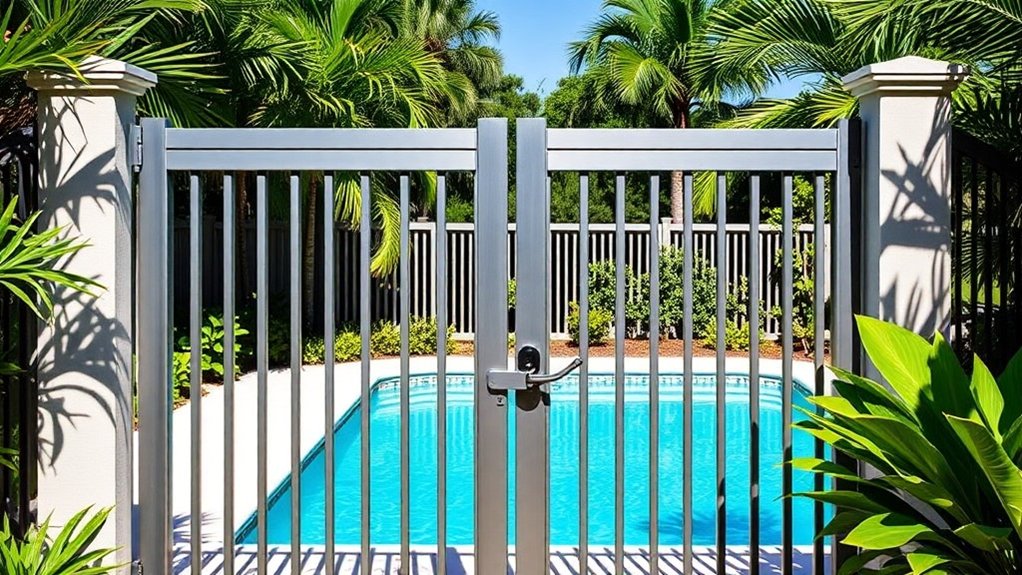
To ensure safety around pools, follow these height, spacing, and opening-size rules for barriers. Barriers must be at least 48 inches tall, measured from the outside. If part of the barrier is a home wall, it must also meet this height. Openings shouldn’t compromise the barrier’s height. Make sure all gates swing outward, close automatically, and have secure latches that are hard for young children to reach. Always check local codes for any stricter requirements. Additionally, it is important to note that drowning is a leading cause of death for young children in Florida, emphasizing the need for effective safety measures. Understanding local building codes is crucial to ensure compliance with safety regulations.
Regulatory References and Compliance Paths
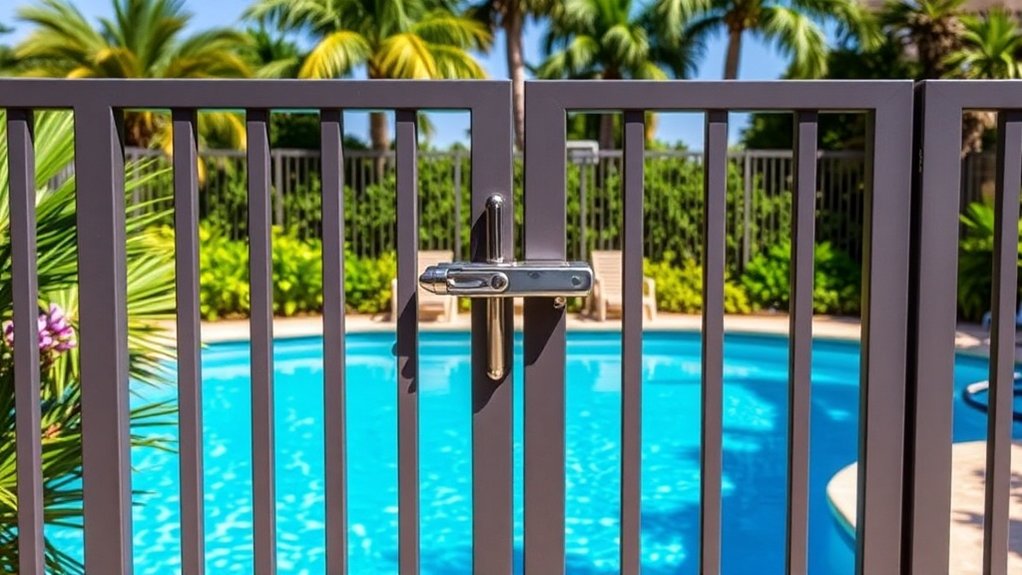
Ensuring pool safety starts with more than just following height, spacing, and opening-size guidelines.
Here are essential steps for regulatory compliance:
- Install self-closing and self-latching gates that swing outward from the pool.
- Ensure the latch release is at least 54 inches high or adjusted properly if lower.
- Explore alternatives like exit alarms on doors leading to the pool.
Compliance options include a secure barrier with a self-closing gate, safety pool covers, or exit alarms that meet required sound levels.
Always align your choices with Chapter 515 and check local regulations for necessary documentation.
Staying informed will help guarantee safety around your pool.
Installation, Materials, and Durability Considerations
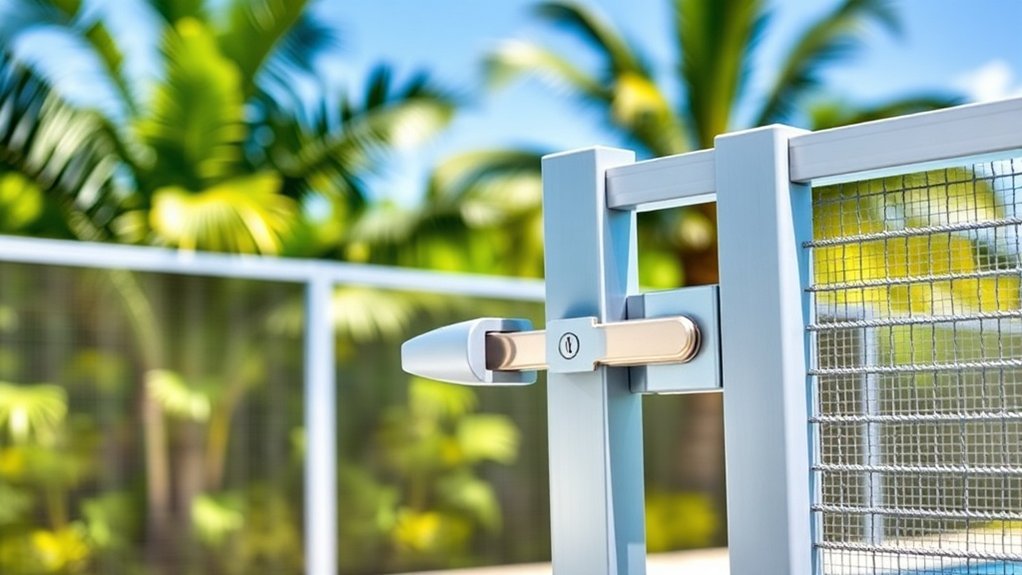
When installing a self-closing gate for pool safety in Florida’s humid climate, it’s crucial to address installation challenges to enhance the lifespan of materials. Use corrosion-resistant materials to withstand the environment.
| Material Type | Recommended Use |
|---|---|
| Stainless Steel | Hinges, springs, latches |
| PVC | Gate panels |
| Powder-Coated Aluminum | Gate panels and hardware |
| Pressure-Treated Wood | Structural framing |
| UV-Stable Plastics | Latch housings and bumpers |
Regular maintenance is key—inspect the gate annually for hinge tension and alignment. Replace worn components promptly to ensure safety and meet Florida regulations. Additionally, choosing durable materials for your gate components can significantly improve longevity and performance in challenging weather conditions.
Frequently Asked Questions
What Materials Are Best for Pool Gate Construction in Florida?
For pool gate construction in Florida, aluminum and vinyl gates are top choices. Aluminum is lightweight and resists corrosion, making it ideal for humid climates. Vinyl requires minimal maintenance, which is a plus for busy homeowners. Both options comply with safety standards, ensuring your pool area remains secure and durable.
How Often Should I Inspect My Pool Gate?
Is your pool gate doing its job? Check it daily to ensure it opens and closes properly. Do a monthly maintenance check to keep it in good shape, and perform a thorough inspection once a year to ensure it meets safety regulations.
Can I Install a Gate Myself, or Hire a Professional?
You can choose to install a gate yourself, but hiring a professional can help ensure compliance with local regulations. For example, if you’re unsure about property lines or safety features, a pro can guide you. Consulting with experts can save you time and avoid costly mistakes.
What Are the Consequences of Non-Compliance With Gate Regulations?
Non-compliance with gate regulations can lead to legal penalties and serious safety risks. This includes fines and increased liability, as well as a greater chance of accidents or injuries. For example, ignoring safety protocols at a construction site can result in costly accidents and lawsuits. It’s crucial to follow these regulations to protect yourself and others.
Are There Any Exemptions to the Gate Requirements?
Yes, there are exemptions to gate requirements. For instance, indoor pools with alarms, tall above-ground pools, and kiddie pools may not need standard gates. These exceptions help maintain safety while offering flexibility in certain cases.
Conclusion
In summary, making sure your self-closing gate meets Florida’s pool fence requirements is essential for safety. Think of it as a protective barrier for your family. By following the guidelines for how the gate opens, the type of latch used, and the materials, you ensure compliance and create a secure environment. Focus on these key aspects to effectively protect against potential dangers.
More guides from the yard
Need the materials for this job?
Chain link, vinyl, aluminum and gates, with contractor pricing for everyone and no minimum order.
Ask us about your project
Send the details and we’ll come back with a materials list and a price.