
Pool Fence Inspection Checklist for Florida Homeowners
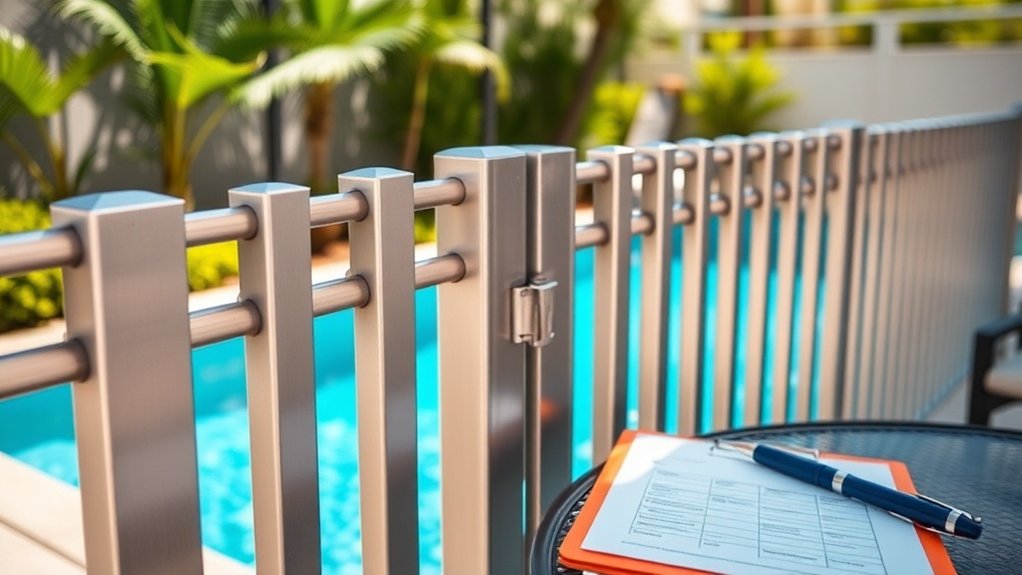
To ensure your pool fence meets Florida safety standards, check that it’s at least 4 feet tall and has no gaps larger than 4 inches. Make sure openings between vertical bars are no more than 1 3/4 inches wide. Your gate should swing outward, have self-closing hinges, and a latch positioned at least 54 inches high. Regularly inspect the materials for wear and ensure the fence placement keeps children and pets safe. Stay compliant and prioritize safety!
Understanding Fence Height Requirements
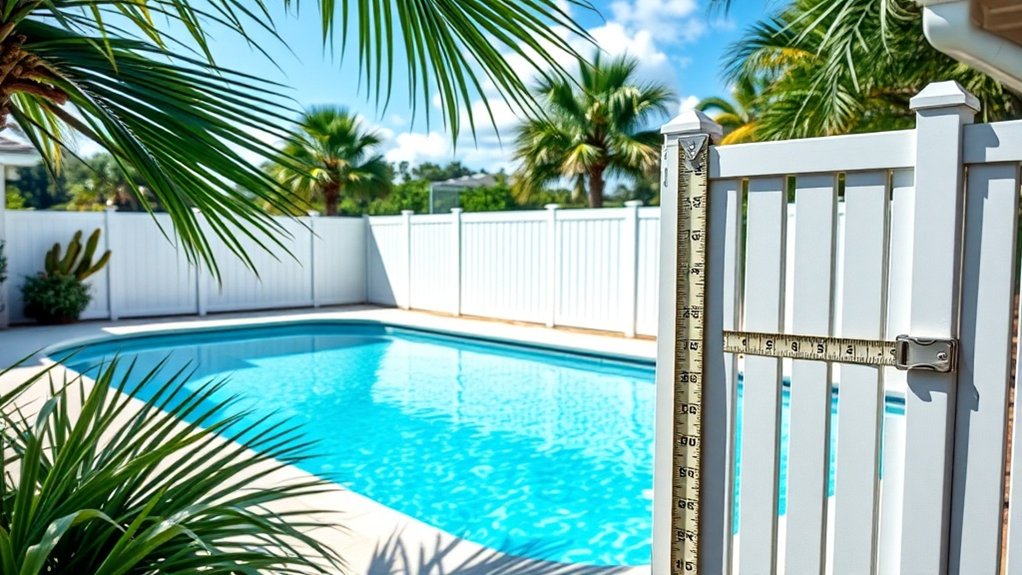
Understanding fence height requirements is crucial for pool safety, especially to protect young children from drownings.
In Florida, the law states that pool barriers must be at least 4 feet (48 inches) high, measured from the outside. However, a height of 5 feet is recommended for better security. It’s important to note that various types of barriers—like chain link, mesh safety fences, or those attached to pool structures—must meet these height standards and also have features to prevent kids from climbing over. Additionally, all outdoor pools must have a 4-foot barrier with no gaps to ensure maximum safety. Always check local regulations, as some areas may require even taller fences. Additionally, gates must comply with the same height rules and should have self-closing and self-latching mechanisms for safety. Ensuring that the fence maintains a clear zone around it can further enhance safety by preventing climbing access to the barrier.
Evaluating Gap and Opening Specifications
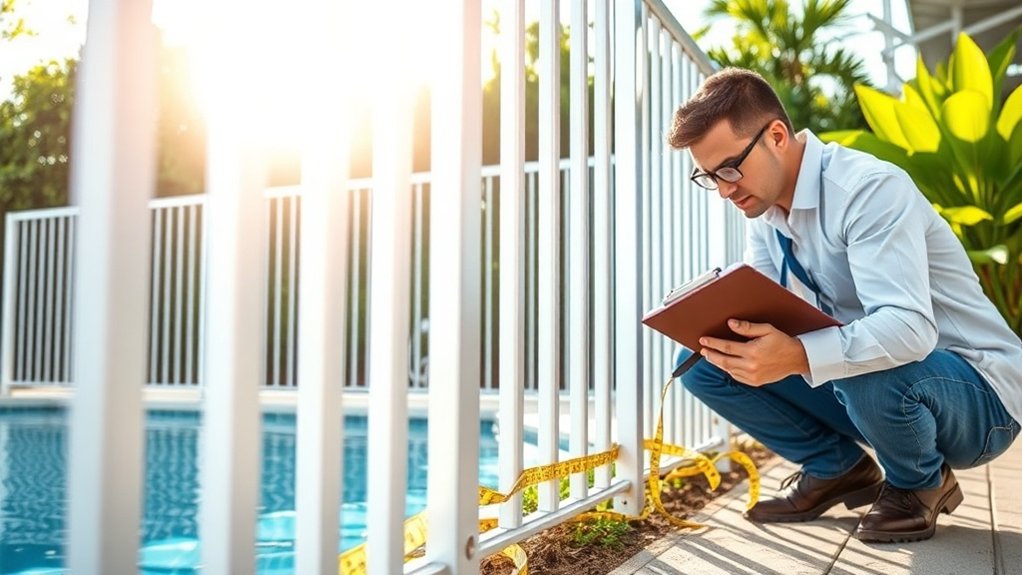
After confirming your pool fence meets the height requirements, the next step is to check the gap and opening specifications to keep young children safe.
Here are the key points:
- Vertical Gap Measurement: Ensure no vertical gaps exceed 2–4 inches, as required by local regulations.
- Opening Restrictions: Make sure a 4-inch diameter ball can’t fit through any openings.
- Vertical Member Spacing: If horizontal bars are under 45 inches apart, vertical members should be spaced no more than 1 3/4 inches apart.
- Decorative Cutouts: Any cutouts in vertical members shouldn’t exceed 1 3/4 inches to avoid creating footholds.
Regularly review these specifications to ensure compliance and keep children safe around the pool.
Ensuring Gate Functionality Standards
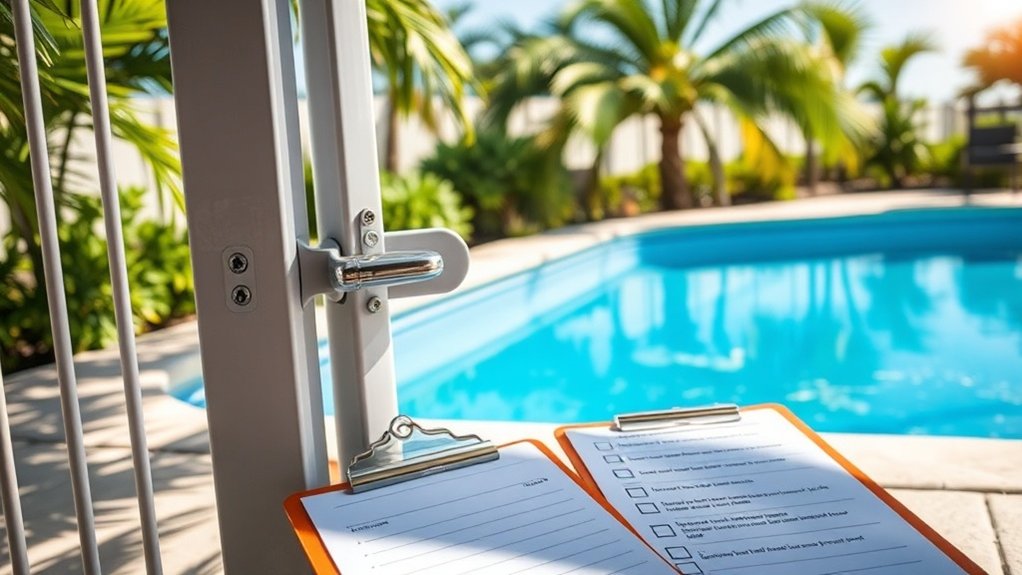
A well-functioning gate is essential for pool safety, especially for protecting young children. Ensure your gate opens outward to prevent direct pool access. Regular maintenance is key: install self-closing hinges so it shuts automatically after use. Use self-latching devices that engage on their own and are at least 54 inches high to keep kids out of reach. Check for gaps larger than 1/2 inch near the latch to ensure it closes and latches properly. If your gate is near pool equipment, use lockable latches and consider adding exit alarms for extra security. Remember, drowning is a leading cause of death for young children in Florida, making these precautions crucial.
Complying With Material and Climbability Rules

To keep your pool area safe, make sure your gate works properly and that your pool fence meets material and climbability standards. Here are some key points to consider:
- Material Selection: Choose strong materials that can handle Florida’s weather and meet wind-load standards.
- Gap Restrictions: Ensure that gaps in the fence are small enough to prevent a 4-inch sphere from passing through, with vertical spaces no more than 1¾ inches apart.
- Climbability Measures: Install horizontal rails on the pool side and avoid any ledges that could be used for climbing.
- Height Requirements: The fence should be at least 48 inches tall, and if you use mesh, make sure it doesn’t sag enough to let small items through.
Assessing Barrier Placement and Isolation
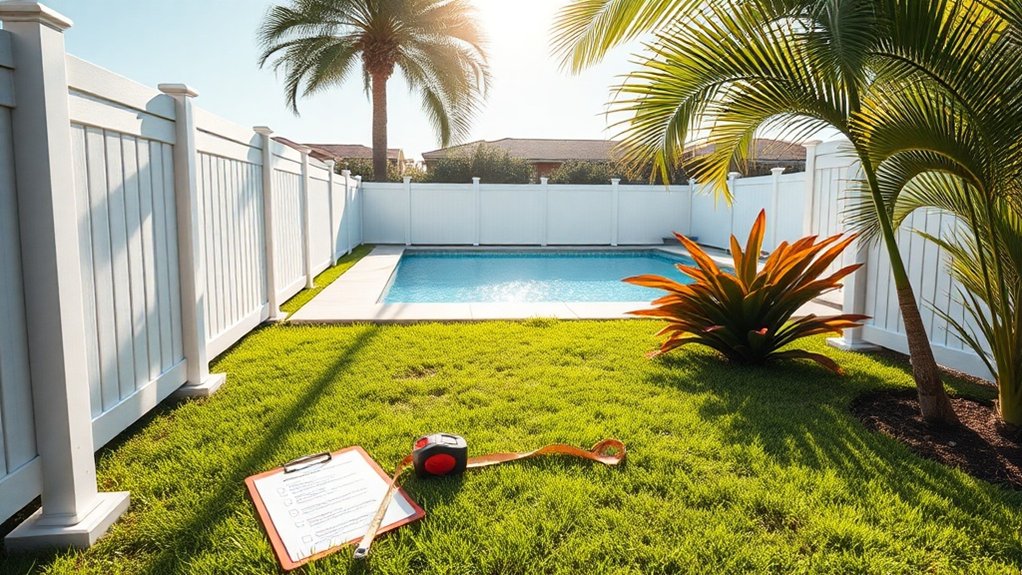
When assessing barrier placement and isolation, ensure the fence is a safe distance from the pool edge to prevent falls.
Block any entry points to keep children and pets out of the pool area, and make sure all installations meet local safety codes.
Regular inspections will help maintain the barrier’s effectiveness and safety.
Proper Distance From Pool
Evaluating the distance from the pool to the barrier is crucial for safety. Here are key points to ensure proper barrier placement:
- Height: The barrier should be at least 48 inches tall on the side away from the pool.
- Clearance: Keep a maximum vertical clearance of 4 inches from solid surfaces. Stricter limits apply to non-solid surfaces.
- No Gaps: There should be no openings that a child can crawl through or climb over.
- Horizontal Members: If there are horizontal members, they should be at least 45 inches apart, ideally on the pool side, to reduce the risk of climbing.
Regularly check these factors to keep your pool area safe.
Access Point Blockage
Check the access points around your pool to ensure safety.
Make sure gates swing outward to keep kids from entering if they’re left open. Install self-closing and self-latching mechanisms, with latches at least 54 inches off the ground.
Look for gaps bigger than 4 inches and limit decorative cutouts to 1 3/4 inches. Remove any climbable surfaces, and keep barriers clear for easy visibility and monitoring.
Regularly inspect these features to ensure your pool area complies with safety regulations in Florida, as well as local zoning laws and height requirements that may apply to pool fences.
Compliance With Local Codes
Ensuring your pool meets local safety codes is crucial. Here are key points to consider for compliance:
- Barrier Placement: Your pool should be completely surrounded by a barrier, separate from any yard fences.
- Isolation from Structures: Keep all permanent structures, like sheds or decks, outside the barrier for better safety.
- Separation from Yard Fences: Don’t mix your pool barrier with yard fences unless they meet all safety requirements to prevent child access.
- Know Local Codes: Check your local regulations for specifics like barrier height and gap limits to make sure you’re in compliance.
Preparing for the Inspection Process
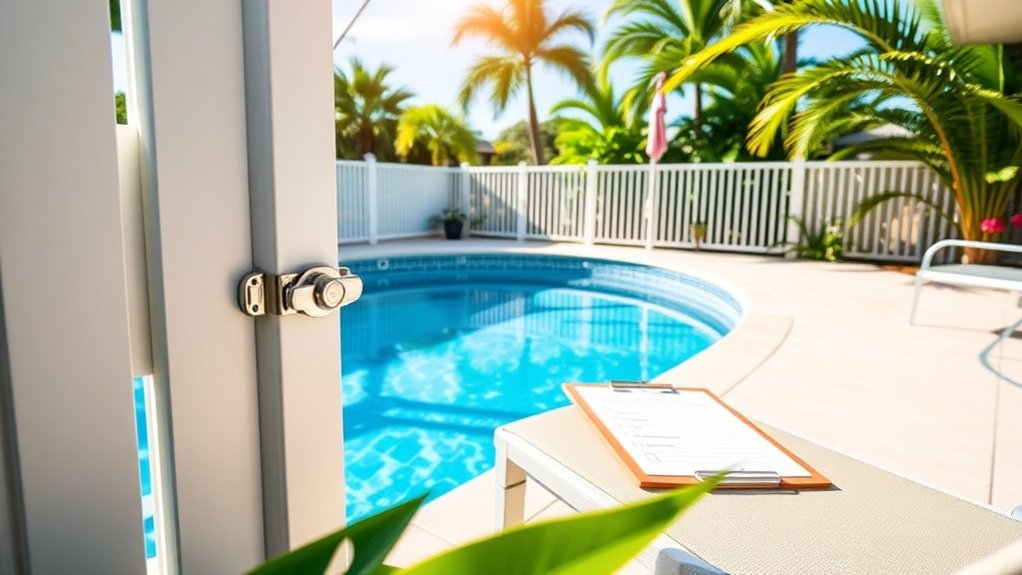
Before starting the inspection of your pool fence, gather all necessary documents and perform some basic checks for safety compliance. First, collect your pool permit, site plan, manufacturer compliance statements, and warranty records for safety equipment like gates and latches.
Next, do some physical checks: measure the height of the barrier, look for gaps, and test the gate to ensure it opens and closes properly.
Make sure safety equipment such as alarms and covers meets standards and has recent maintenance records. Check that barriers are continuous and free of any climbable features.
Don’t forget to confirm local code requirements and that all inspections are scheduled. Following these steps will help your inspection go smoothly and improve pool safety.
Common Compliance Issues to Watch For
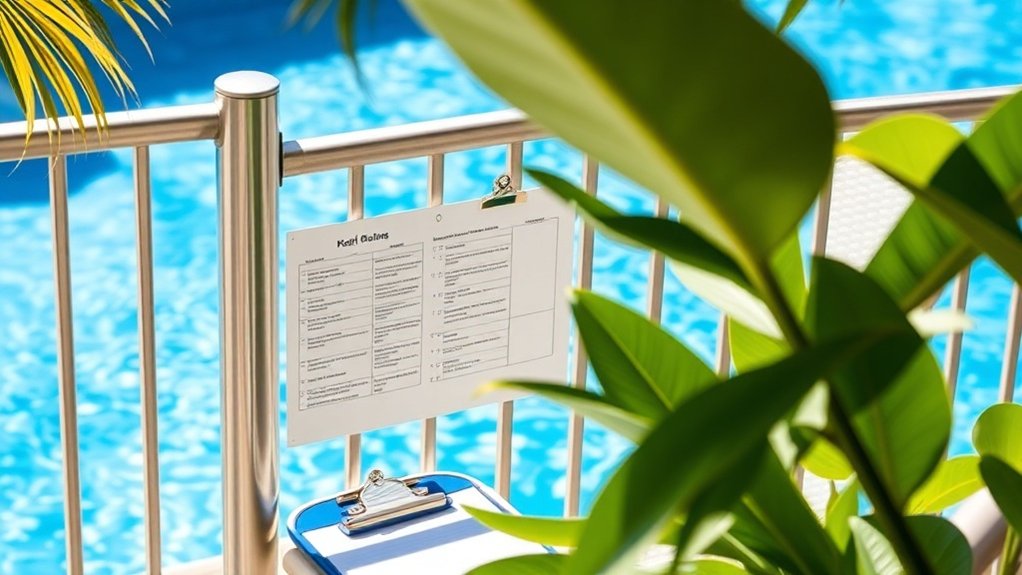
When inspecting your pool fence, pay attention to these common compliance issues that can affect safety:
- Barrier Durability: Ensure the fence is at least 48 inches tall and has openings small enough to prevent a 4-inch sphere from passing through.
- Gate and Latch Requirements: Check that gates close and latch automatically and swing outward. Latches should be at least 54–60 inches high to keep children safe.
- Setback Compliance: Know the required distance from the water’s edge; some areas mandate a 5-foot setback.
- Ground Clearance: Look for gaps under the barrier—there should be no spaces that a child could crawl under.
Regular inspections are crucial to ensure ongoing compliance and safety.
Importance of Professional Help for Repairs
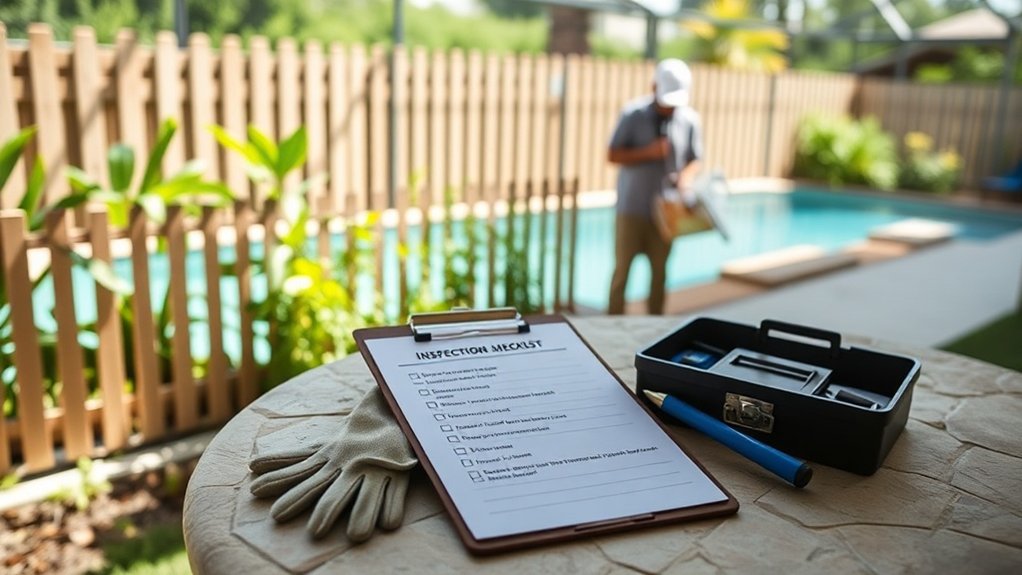
When it comes to pool fence repairs, getting professional help is crucial for safety and compliance. Experts ensure your fence meets Florida’s pool safety codes, helping you avoid fines. They guarantee proper alignment and secure anchoring, and install important features like self-closing, self-latching gates.
Using high-quality, weather-resistant materials, professionals enhance durability and reduce accident risks. By leaving repairs to the experts, you minimize the chances of costly DIY mistakes that could lead to liability issues or trespassers. Additionally, a well-constructed fence provides enhanced security for your pool area, keeping children and pets safe from potential hazards.
In the long run, professional repairs save you time and money, often come with warranties, and can even lower your insurance premiums.
Navigating Local Variations in Regulations
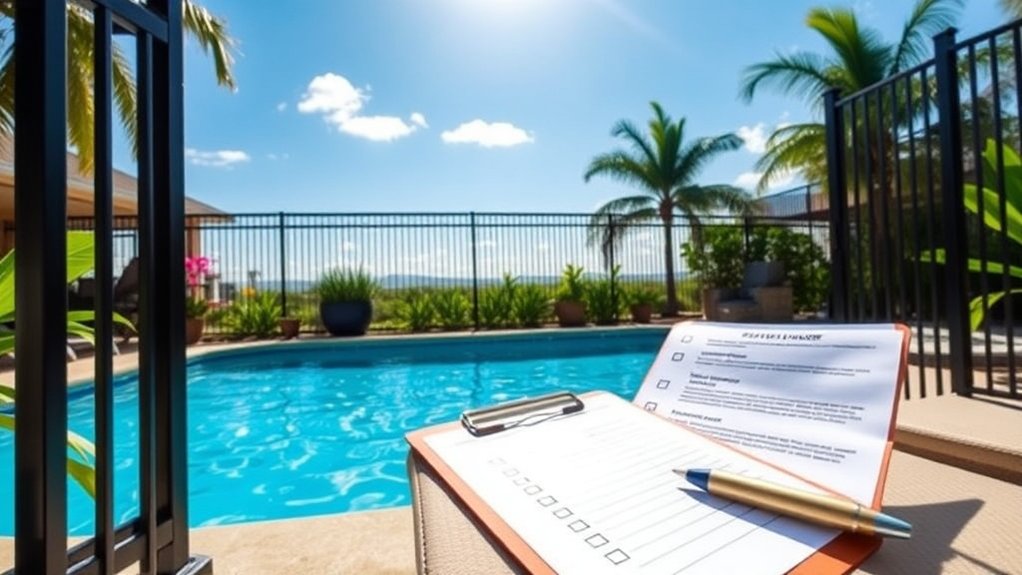
Navigating pool fence regulations can be tricky due to local variations.
Here are some important areas to check for compliance and safety:
- Setbacks: Some areas require more distance between the fence and the pool than others.
- Barrier Specifications: Local codes might’ve stricter requirements for features that prevent climbing compared to state laws.
- Inspection Procedures: Different localities have varying rules for permit applications and inspections.
- Access Mechanisms: Requirements for latch heights and self-closing gates can differ, affecting your safety setup.
Understanding these local differences is crucial for ensuring your pool area is safe and compliant.
Frequently Asked Questions
How Often Should Pool Fences Be Inspected for Compliance?
Inspect pool fences every two years to ensure compliance with safety standards. Additionally, perform self-inspections twice a year—in spring and fall—to check for any issues and maintain proper function. This proactive approach helps keep your pool area safe.
Can I Install a Pool Fence Myself?
Yes, you can install a pool fence yourself, but be sure to check local codes first. Follow DIY guidelines and installation tips closely to ensure safety and compliance, which protects both your family and any visitors. For example, ensure the fence is at least four feet high and has a self-closing gate. This will help keep children safe around the pool.
What Are the Penalties for Non-Compliance?
Failing to follow safety regulations can lead to fines starting at $500, potential jail time, and greater civil liability for any accidents. It’s crucial to comply to steer clear of these serious penalties.
Are Temporary Pool Fences Allowed During Inspections?
Temporary pool fences are not permitted during inspections. You must follow strict regulations and ensure compliance, as only permanent barriers can effectively secure your pool area for safety. For instance, think of a permanent fence as a sturdy safety net that keeps everyone safe, while a temporary fence is like a flimsy curtain that offers no real protection.
How Can I Report a Non-Compliant Pool Fence?
To report a non-compliant pool fence, reach out to your local building department. Follow their specific reporting steps and provide necessary details, such as the location and description of the fence. This ensures they can investigate and address the issue effectively.
Conclusion
In Florida, your pool fence is crucial for safety. Use this checklist to ensure it meets regulations and protects your family. Neglecting these requirements can lead to costly repairs or accidents. Whether you’re a seasoned homeowner or new to pool ownership, understanding these rules is vital. Stay compliant to create a safe space for everyone.
More guides from the yard
Need the materials for this job?
Chain link, vinyl, aluminum and gates, with contractor pricing for everyone and no minimum order.
Ask us about your project
Send the details and we’ll come back with a materials list and a price.