
The 4-Inch Sphere Rule: Understanding Pool Fence Spacing Requirements

The 4-inch sphere rule is crucial for pool fencing, as it prevents toddlers from slipping through or getting stuck. This rule is based on the size of a child’s head and chest, which helps lower the risk of drownings. In California, pool fences must be at least 60 inches tall with a maximum 2-inch gap at the bottom. Following these guidelines is vital for safety. For more information on regulations and safety features, keep your pool secure.
Origin of the 4-Inch Sphere Rule
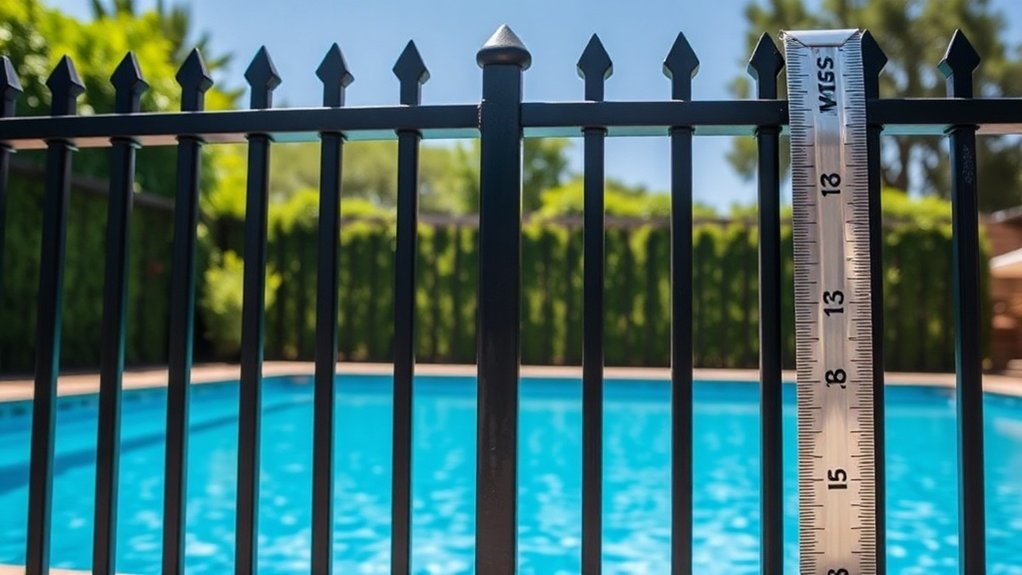
The 4-inch sphere rule is a crucial safety guideline for pool fencing, aimed at preventing young children from drowning. This rule stems from research showing that many drownings occur when toddlers can access pools unsupervised. Studies found that a 4-inch diameter roughly matches the size of a toddler’s head and chest, which means it reduces the risk of a child slipping through or getting stuck. Safety organizations, including the U.S. Consumer Product Safety Commission, adopted this standard, leading to its inclusion in regulations for both residential and public pools. Additionally, compliance with safety standards ensures that pool fencing effectively protects children from potential hazards.
California State Requirements for Pool Fencing
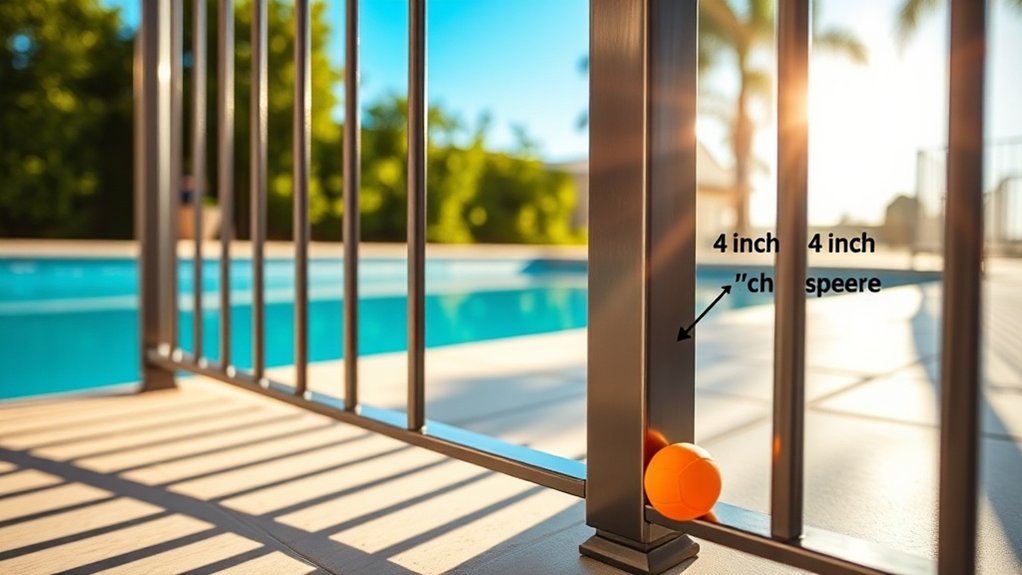
In California, your pool fence must be at least 60 inches tall, measured from the outside, to prevent easy access. Additionally, there’s a 4-inch sphere rule, meaning no openings should be large enough for a small child to slip through. Following these regulations is crucial for safety and to avoid fines. Compliance with the California Pool Safety Act not only protects children but also helps homeowners avoid legal penalties.
Fence Height Regulations
When it comes to pool safety in California, knowing the fence height regulations is crucial. Your fence must be at least 60 inches tall, measured from the outside, to protect children from accessing the pool. This rule applies to both in-ground and above-ground pools. Additionally, there should be no more than a 2-inch gap beneath the fence to keep small children safe. It is also essential to ensure that your fence and its features comply with California Pool Fence Regulations. Additionally, these regulations are designed to ensure child safety in residential areas where pools are present.
Here’s a quick overview of the requirements:
| Requirement | Description |
|---|---|
| Minimum Height | 60 inches from outside the fence |
| Vertical Clearance | Maximum 2 inches below the fence |
| Material Options | Must not provide footholds |
| Compliance Checks | Local inspections ensure adherence |
| Child Safety Focus | Essential for protecting young kids |
Choosing the right materials for your fence is important to meet these standards and enhance child safety.
Opening Size Restrictions
California has strict rules for pool fencing to keep kids safe.
Openings in the fence can’t be large enough for a 4-inch ball to fit through. This applies to both vertical and horizontal gaps.
The bottom of the fence must also be no more than 2 inches off the ground. For chain link fences, the gap size is even smaller, limited to 1-3/4 inches.
These restrictions are crucial for preventing accidents around pools.
Gate Specifications for Pool Safety
For pool safety, it’s crucial to have a self-closing gate. This feature ensures the gate closes automatically, preventing unauthorized access.
Latch height is also important; it should be at least 54 inches off the ground to keep it out of reach of young children.
Following these guidelines significantly improves the security of your pool area.
Self-Closing Mechanism Requirements
Self-closing mechanisms for gates are essential for pool safety. They automatically close the gate after it’s opened, preventing young children from accessing the pool area and ensuring the gate shuts when users are retrieving items.
Options like adjustable hinges or closers provide smooth operation and consistent closing speed. The main benefits include reducing accidents and improving security. Additionally, ensuring that the mechanism complies with local pool fencing regulations will enhance overall safety and prevent potential legal issues.
Regularly test and maintain the mechanism to ensure it operates smoothly and is free of debris that could block the latch. Choosing a reliable self-closing mechanism is a crucial step in keeping your pool area safe and compliant with safety regulations.
Latch Height Regulations
Latch height regulations are essential for pool safety, helping to prevent young children from accessing the pool area unsupervised. For 48-inch fences, latches should be at least 54 inches above the ground, while California requires a height of 5 feet for self-latching gates. This height makes it difficult for small children to reach the latch.
Additionally, the latch shouldn’t have openings larger than 1/2 inch within 18 inches of the release to enhance safety. Gates should always open outward to further secure the area and reduce accidental access.
Always check your local codes, as some areas may have stricter requirements to ensure your pool remains safe.
Local Variations in Fence Regulations
Local pool fence regulations can vary significantly, affecting your compliance responsibilities.
Many municipalities set stricter rules than state minimums, such as taller fences or smaller gaps between pickets. For example, while a state might permit a 4-inch gap, some counties limit it to 1.75 inches.
Local codes may also require larger distances from the pool edge or specific gate hardware.
Always check your local municipal codes, as you might need inspections or permits that go beyond state requirements to keep your pool area safe for children.
Additional Features for Pool Barriers
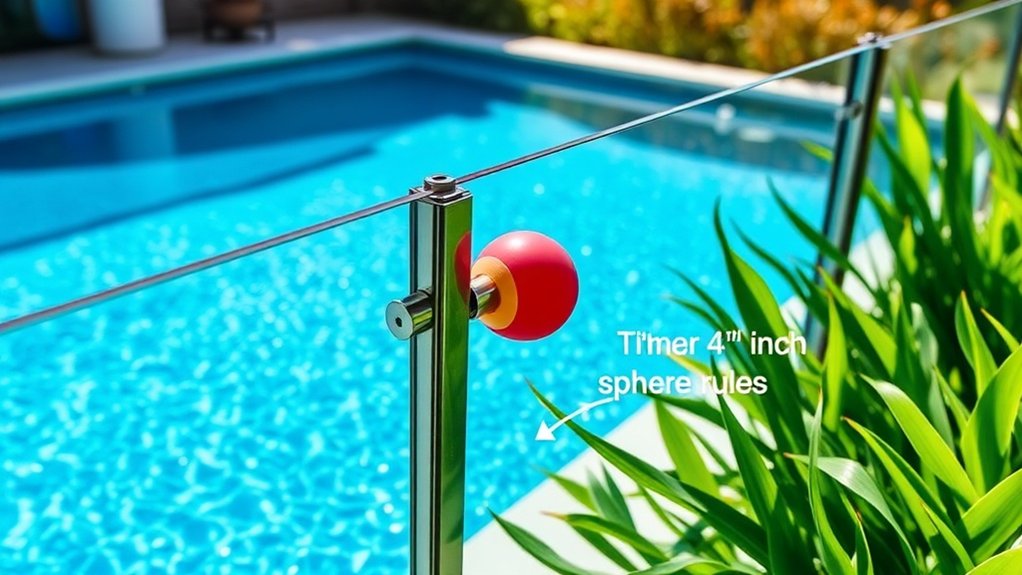
Enhancing pool safety goes beyond just following local fence regulations. Here are some practical features to consider for your pool barriers:
- Self-Closing Gates: Install hinges that automatically close the gate after use, and ensure latches are out of reach of small children.
- Strong Barrier Materials: Use fencing that prevents anything larger than a 4-inch sphere from getting through, and choose vertical bars that don’t allow kids to climb.
- Power Safety Covers: Invest in safety covers that provide an extra layer of protection when the pool isn’t in use.
- Door Alarms: Install alarms on doors leading to the pool area to alert you if someone opens them.
- Clear Sightlines: Make sure the pool area is visible from your home for easy supervision.
- Warning Signage: Use clear signs to remind everyone about pool safety.
Regularly check the functionality of your gate hardware and latches to ensure they work properly.
Implementing these features can significantly reduce the risk of accidental pool access.
Compliance Standards and Inspections
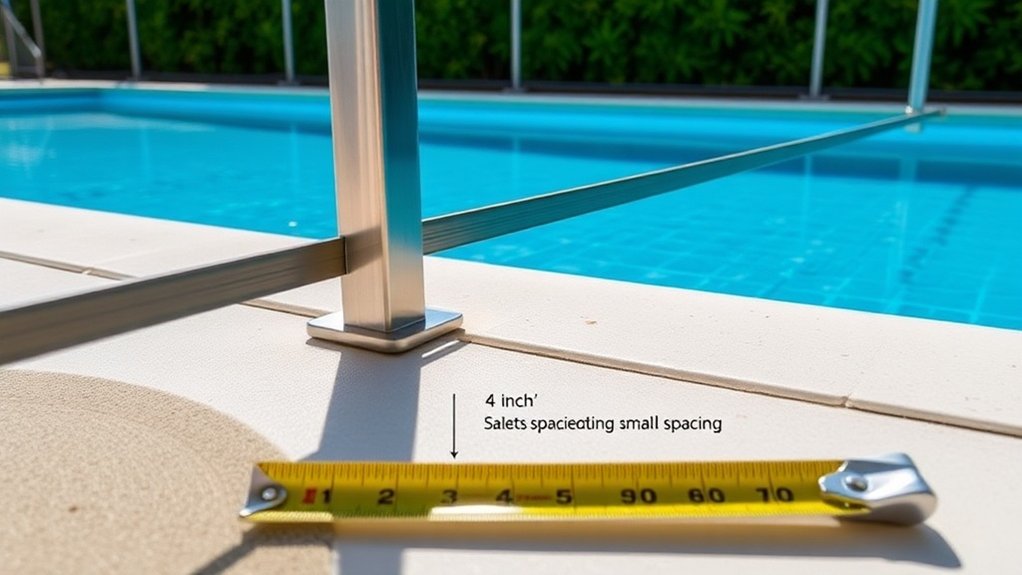
Ensuring your pool fence meets compliance standards is crucial for safety and legal requirements. Start by understanding federal CPSC standards, which specify a maximum gap of 4 inches under fences on solid surfaces and 2 inches on non-solid ones.
Regularly check that vertical panels are spaced no more than 4 inches apart and that horizontal elements are correctly placed.
Remember, compliance rules differ by state. For instance, Arizona requires fences to be at least 5 feet tall, while California allows a maximum ground clearance of 2 inches.
Additionally, gates must have self-closing and self-latching devices to boost security. Regular maintenance is key to preventing unauthorized access and avoiding fines.
Stay vigilant to keep your pool area safe and compliant.
Frequently Asked Questions
What Materials Are Best for Pool Fences to Meet Safety Requirements?
For pool safety, aluminum fences and mesh barriers are top choices. Aluminum is strong and requires little upkeep, while mesh barriers are flexible and allow for visibility. Both options effectively keep children safe around pools.
How Often Should Pool Fence Inspections Be Conducted?
Conduct pool fence inspections once a year, and more often if needed. Use a checklist to ensure everything is up to standard and fix any issues quickly, especially during busy swimming seasons for added safety and reassurance.
Can I Install a Pool Fence Myself, or Should I Hire a Professional?
Installing a pool fence can be like putting together a complicated puzzle. Doing it yourself can save you money, but hiring a professional ensures safety and adherence to local regulations. Consider your skills and the risks involved before making a choice.
What Are the Penalties for Non-Compliance With Pool Fencing Regulations?
Failing to comply with pool fencing regulations can result in significant penalties, such as large fines and legal liability. You may incur costs to bring your property up to code, face lawsuits, and experience delays in obtaining necessary permits. These issues can negatively affect your property’s value and safety. For example, if someone gets injured due to improper fencing, you could be held responsible.
Are There Exceptions to the 4-Inch Sphere Rule for Certain Pool Designs?
Yes, some unique pool designs can have exceptions to the 4-inch sphere rule. For example, if a pool has specific horizontal elements, it may allow for adjustments in vertical spacing as long as it meets safety standards. This flexibility helps incorporate unique design features while still ensuring safety.
Conclusion
In summary, the 4-inch sphere rule is crucial for pool safety and compliance with local laws. For example, a child could easily slip through a gap in a poorly constructed fence, resulting in a serious accident. By following spacing guidelines and ensuring proper gate design, you can avoid such tragedies. Prioritizing safety protects your family and meets legal requirements, providing you with peace of mind.
More guides from the yard
Need the materials for this job?
Chain link, vinyl, aluminum and gates, with contractor pricing for everyone and no minimum order.
Ask us about your project
Send the details and we’ll come back with a materials list and a price.