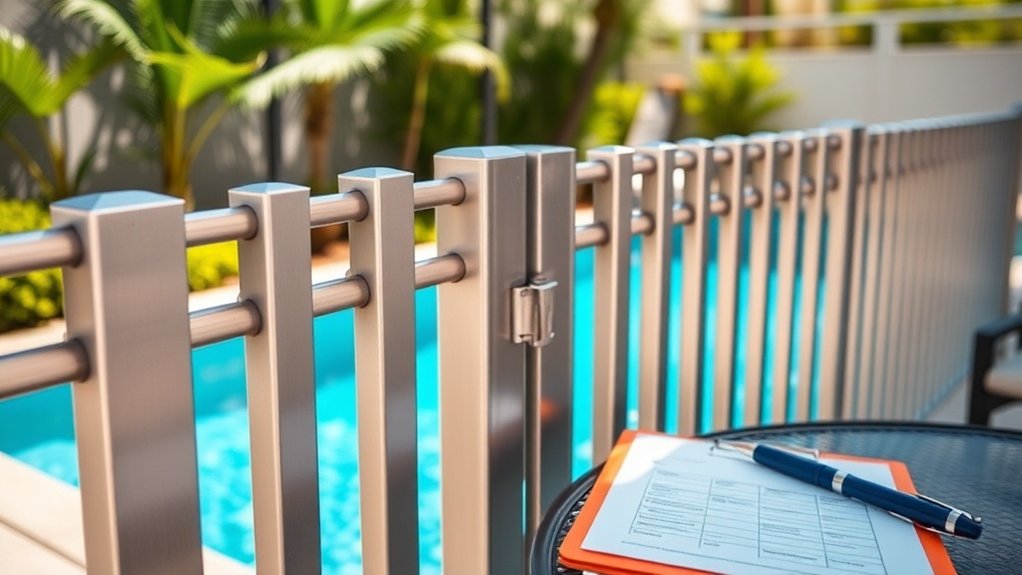
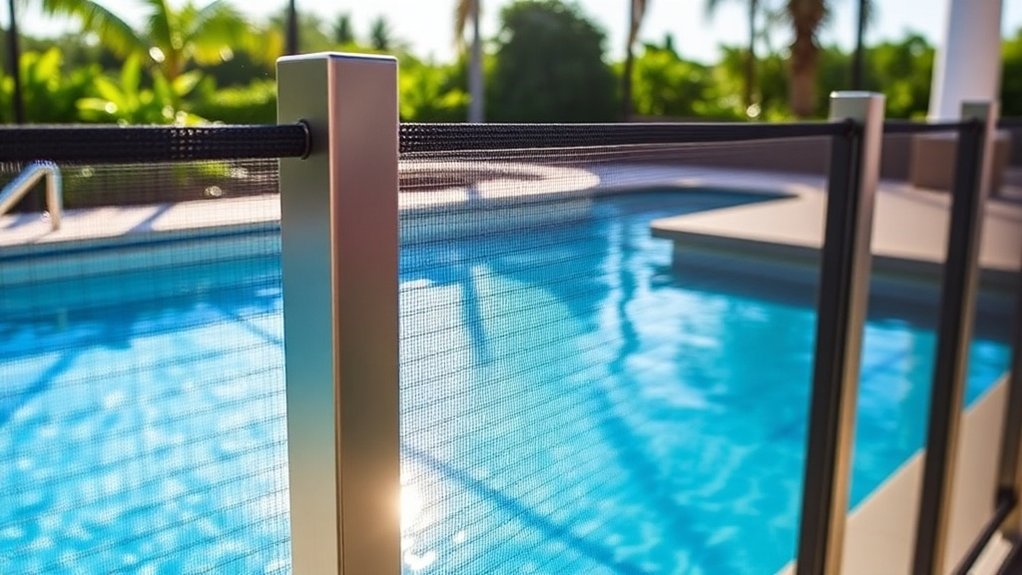
In Florida, pool fences must be at least 48 inches high to keep kids safe and prevent unauthorized access. They need to completely surround the pool and have gates that swing outward, close by themselves, and latch automatically. Make sure there are no gaps larger than 4 inches, and vertical bars should be spaced no more than 1 3/4 inches apart. Always check local regulations, as some areas might have stricter rules. For more details on safety features and compliance, stay informed about the latest regulations.
Overview of Florida Pool Barrier Regulations
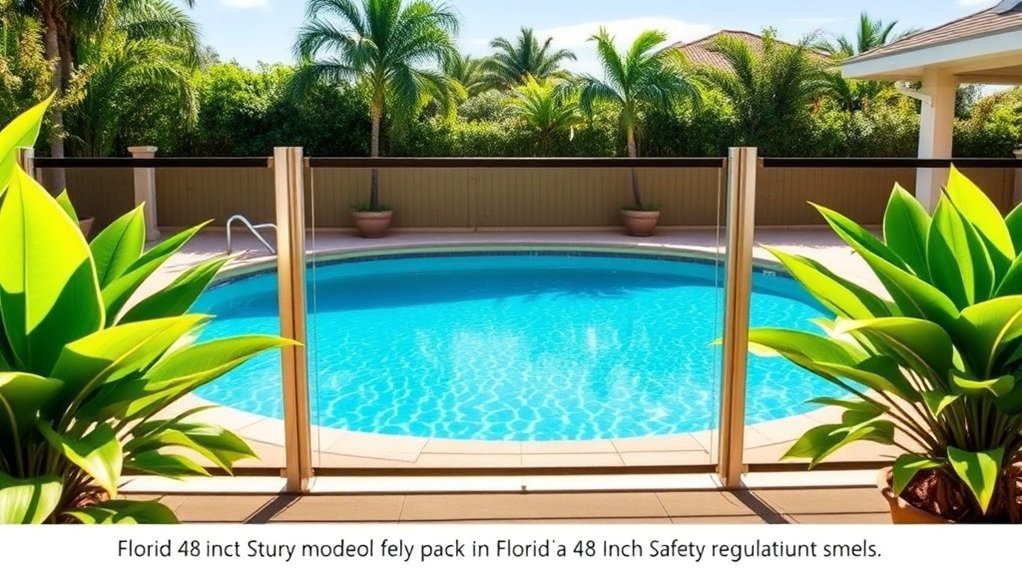
In Florida, pool safety is a top priority, especially for protecting young children from accidental drownings.
To comply with state regulations, your pool barrier must be at least 4 feet high and have no gaps larger than 4 inches. Vertical spaces must be no more than 1 3/4 inches to keep kids out. The barrier should completely surround the pool and shouldn’t be part of yard enclosures unless they meet the same standards. Additionally, hurricane-resistant options for pool fences are recommended to withstand harsh weather conditions.
Gates are also crucial: they should swing outward, close automatically, and latch on their own. The latch must be at least 54 inches off the ground, making it difficult for children to reach.
Following these guidelines is essential for ensuring safety, whether at home or in public pools, creating a safer space for families.
Importance of a 48-Inch Barrier Height
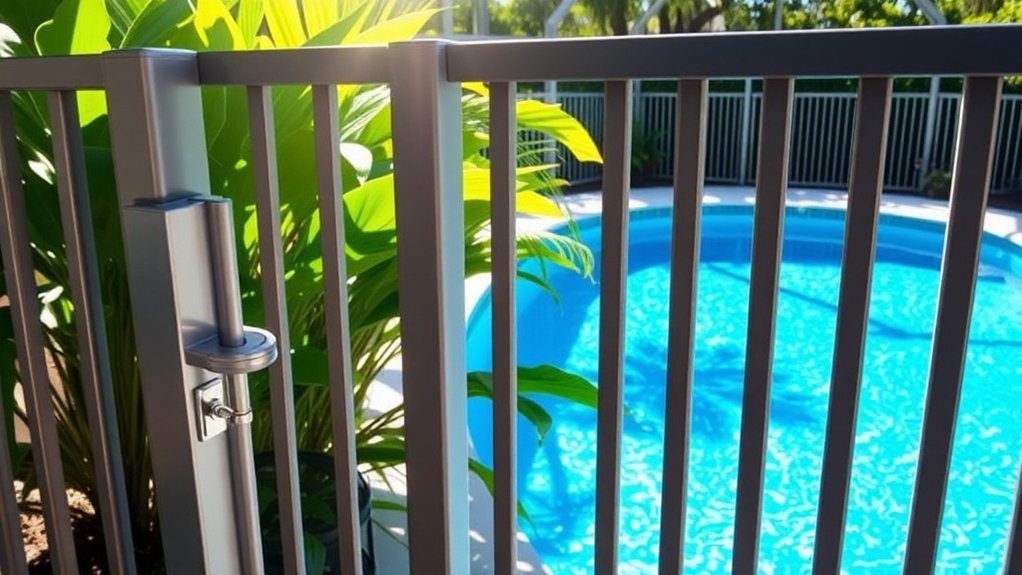
A 48-inch barrier height is essential for pool safety, significantly lowering the chances of children accessing the pool area without supervision. This height meets Florida’s legal standards and boosts child safety.
Here are three key advantages of a 48-inch barrier:
- Climb Prevention: Its design limits footholds, making it hard for kids to climb over.
- Access Control: It effectively blocks paths to the pool, preventing unauthorized entry.
- Regulatory Compliance: Following the Florida Building Code ensures your pool area is safe, minimizing drowning risks. Additionally, Florida’s Residential Swimming Pool Safety Act mandates that pool gates must be at least 4 feet tall to enhance safety. Furthermore, maintaining clear zones around fences helps prevent climbing opportunities and ensures compliance with safety regulations.
Investing in a 48-inch barrier is a smart move to protect your family.
Exceptions to the Height Requirement
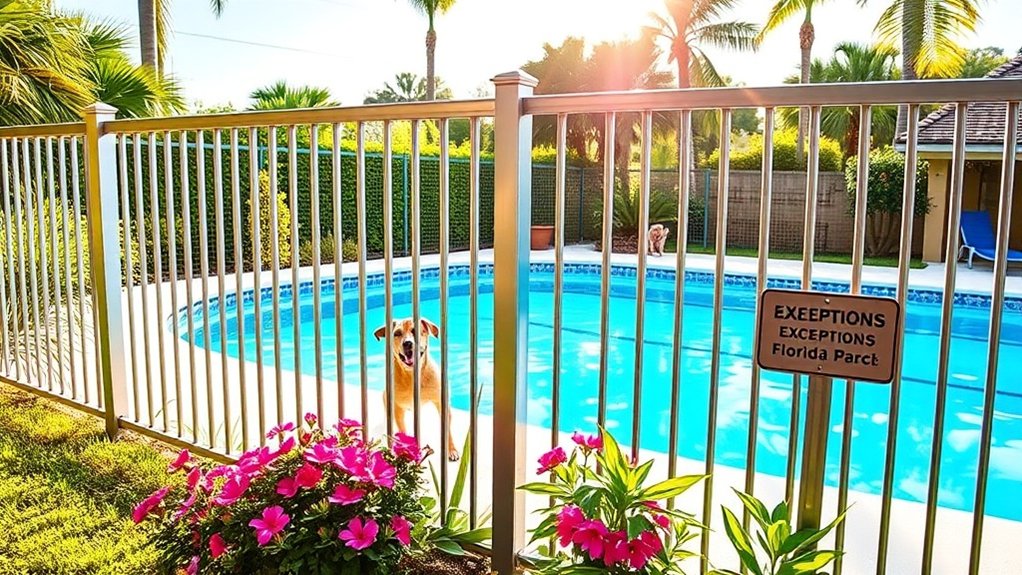
While the 48-inch barrier height is essential for safety, Florida’s regulations have specific exemptions for certain pool types.
For indoor pools, if you have a fully screened enclosure, you may not need an additional barrier, as long as all access points have self-closing, self-latching devices.
For above-ground pools with walls at least 48 inches high, those walls can serve as the barrier, negating the need for extra fencing. It’s important to remember that compliance with local drainage requirements is necessary to prevent flooding of neighboring properties.
If your above-ground pool has removable ladders, ensure they’re non-climbable or removed when not in use.
Always check local guidelines, as additional requirements may apply for both indoor pools and safety measures.
Gap and Spacing Limitations
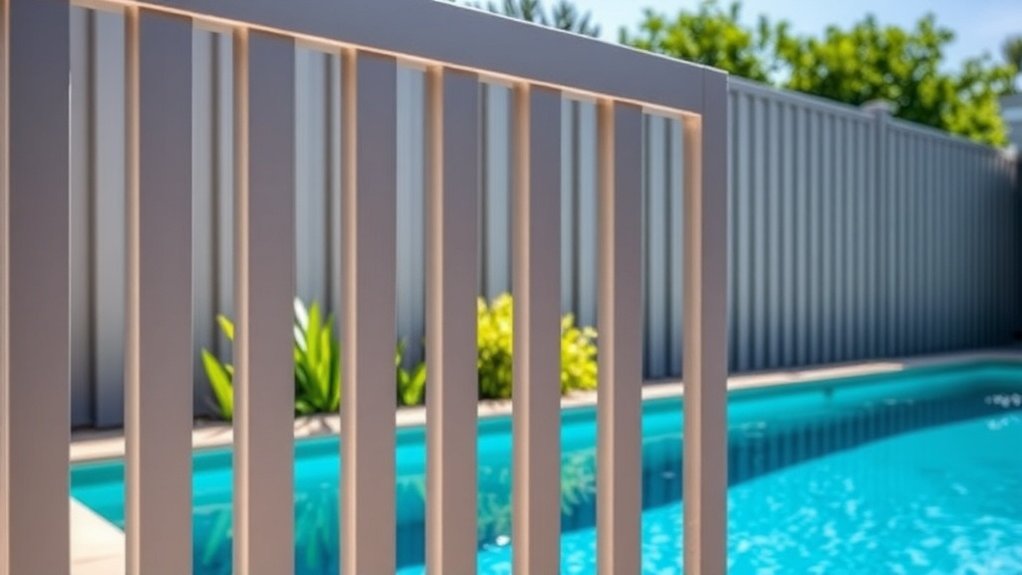
When installing a pool fence, follow strict gap and spacing rules: openings can’t be more than 4 inches wide, and the distance between horizontal rails must be at least 45 inches to prevent climbing.
These regulations are crucial for safety and keeping children away from the pool area.
Maximum Opening Sizes
In Florida, pool fence opening sizes are regulated for child safety. Here are the key requirements:
- Openings can’t be larger than 4 inches, including any gaps or decorative cutouts.
- If horizontal members are less than 45 inches apart, vertical spacing mustn’t exceed 1 3/4 inches.
- For gates, there should be no gaps larger than 1/2 inch within 18 inches of the latch.
These rules help ensure that children can’t squeeze through or climb over the fence, keeping your pool area secure.
Always check that your fence meets these standards to prioritize safety.
Horizontal Component Guidelines
To ensure pool safety, fencing must follow specific guidelines for horizontal components. If horizontal members are spaced less than 45 inches apart, they should be placed on the pool side to reduce climbing risks.
Vertical spacing shouldn’t exceed 1¾ inches to avoid creating footholds, and this limit also applies to any decorative cutouts.
For horizontal members that are 45 inches or more apart, these can be positioned on the outside, allowing vertical spacing up to 4 inches. However, decorative cutouts must still be limited to 1¾ inches.
Additionally, gate hardware and latch placement must consider the geometry of horizontal members to meet safety standards and prevent climbing hazards.
Climbability Considerations for Pool Barriers
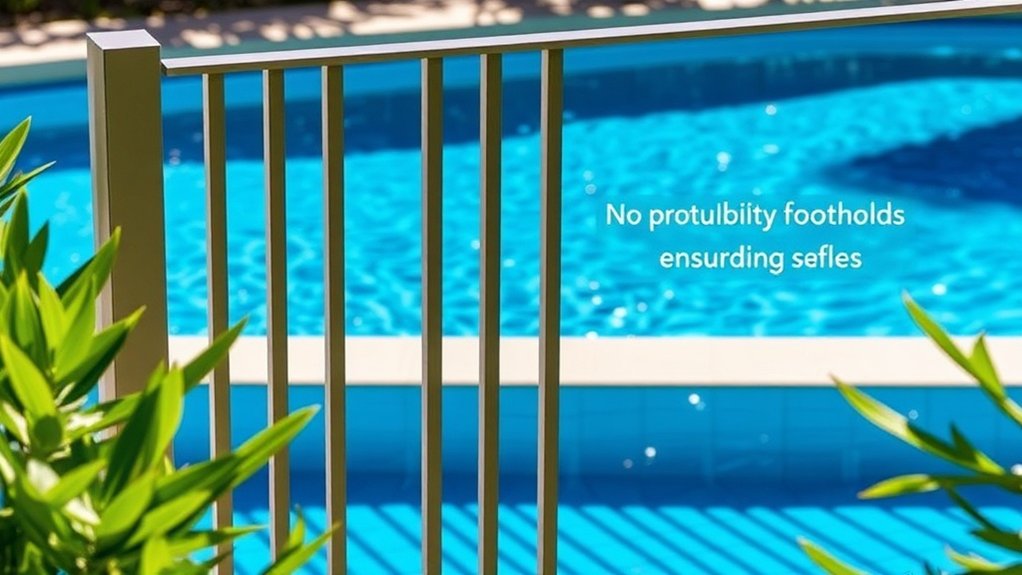
When designing pool barriers, it’s crucial to minimize climbability for child safety.
Here are key features to focus on:
- Vertical Pickets: Choose vertical pickets with spacing of 4 inches or less to prevent kids from finding footholds.
- Smooth Top Rail: Use a smooth, non-decorative top rail to avoid giving children a grip.
- Low Clearance: Keep the bottom clearance above ground to 2-4 inches or less to stop kids from crawling underneath.
Gate Design and Access Control
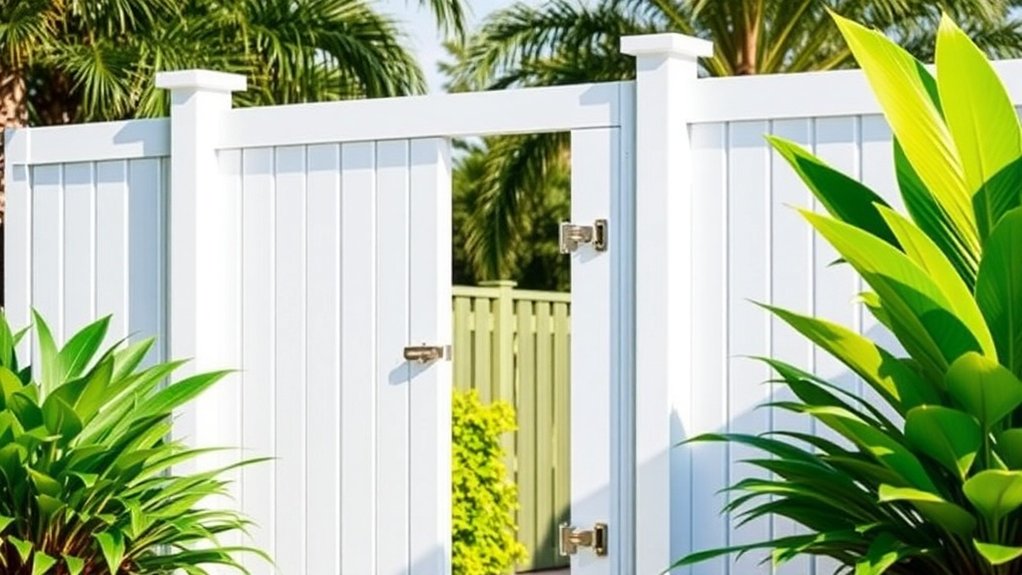
When designing pool access gates, ensure they’ve self-closing mechanisms and meet latch height regulations.
This self-closing feature prevents accidental openings, while the latch must be at least 54 inches above the ground to keep young children safe.
Following these safety guidelines is essential for compliance and protecting children.
Self-Closing Gate Mechanisms
Self-closing gate mechanisms are vital for pool safety, ensuring gates stay closed and secure.
Here are the key factors to consider for effective operation:
- Spring-loaded hinges should consistently provide the necessary force to close the gate over time.
- Adjustability is important for controlling the speed at which the gate closes, helping it respond to wind or alignment issues.
- Regular maintenance is crucial; check for worn springs or rust, as these can hinder the gate’s closing ability.
Latch Height Regulations
A well-designed gate is crucial for pool safety, and latch height regulations are key to ensuring that gates prevent unauthorized access. In Florida, latches must be at least 54 inches high, with the release mechanism also positioned above this height to keep children from reaching it. Additionally, incorporating features like controlled access points enhances the effectiveness of pool safety measures by regulating entry.
| Requirement | Specification |
|---|---|
| Latch Height | Minimum 54 inches |
| Release Mechanism Placement | At least 54 inches from ground |
| Barrier Latch Minimum Height | 45 inches for certain devices |
These regulations ensure that latches are effective and safe, preventing children from opening the gate. It’s important to comply with local variations to maintain pool safety standards.
Location and Continuity of Pool Barriers
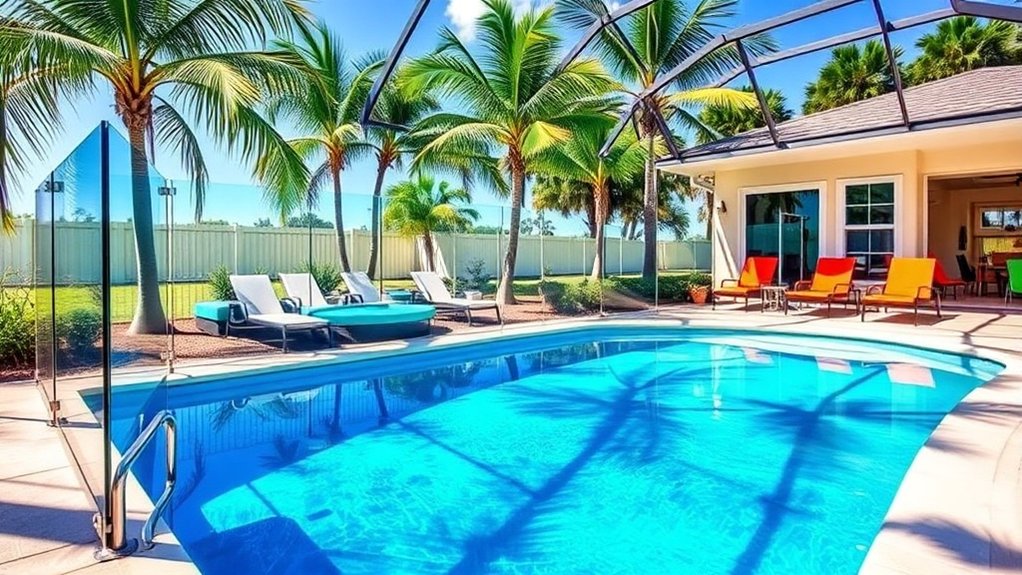
Proper placement and continuity of pool barriers are crucial for safety around swimming pools in Florida.
To meet regulations, follow these key guidelines:
- Complete Perimeter: Ensure the barrier fully encloses the pool with no gaps that could allow access.
- Continuous Structure: The barrier should be distinct from yard fences, using materials that meet safety standards.
- Climb-Prevention: Position the barrier to eliminate any climbable access points from nearby structures or equipment.
Materials and Standards for Pool Fences
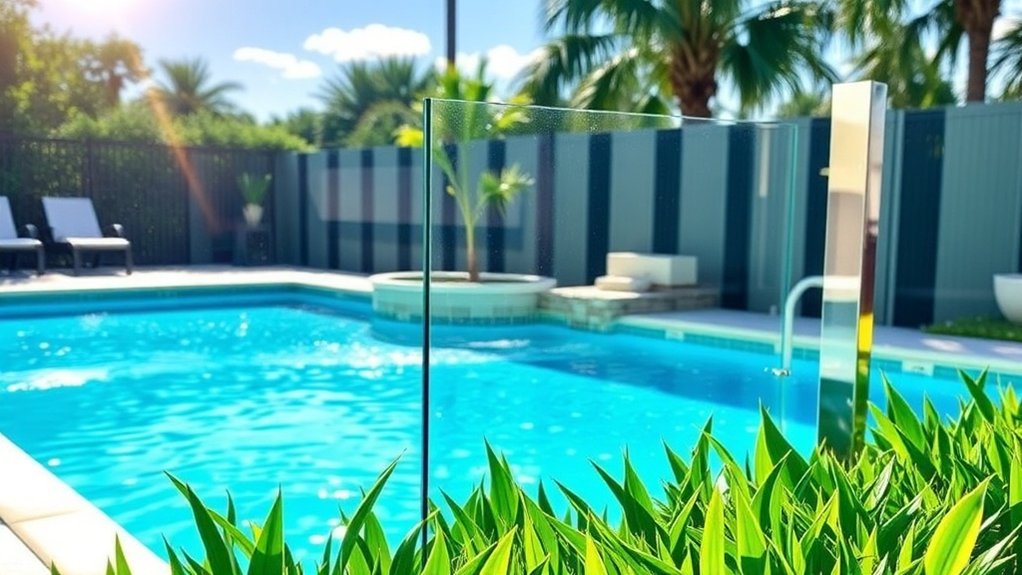
Pool fences in Florida must meet specific safety standards to protect children and pets. Here’s a quick overview of the material requirements:
| Material Type | Requirements |
|---|---|
| Metal (Aluminum/Steel) | Must be corrosion-resistant; vertical spacing ≤ 1.75 inches |
| Chain-link | Openings max 2.25 inches; slats ≤ 1.75 inches if needed |
| Wood | Must be pressure-treated; no climbable ledges |
These materials should withstand Florida’s weather for durability and safety. Secure fastening methods are crucial to prevent uplift, and gate hardware must comply with height regulations to ensure accessibility. Following these standards keeps your pool fence effective and compliant. Additionally, it is essential to understand local building codes to guarantee that your pool fence adheres to all safety requirements.
Inspection and Compliance Procedures
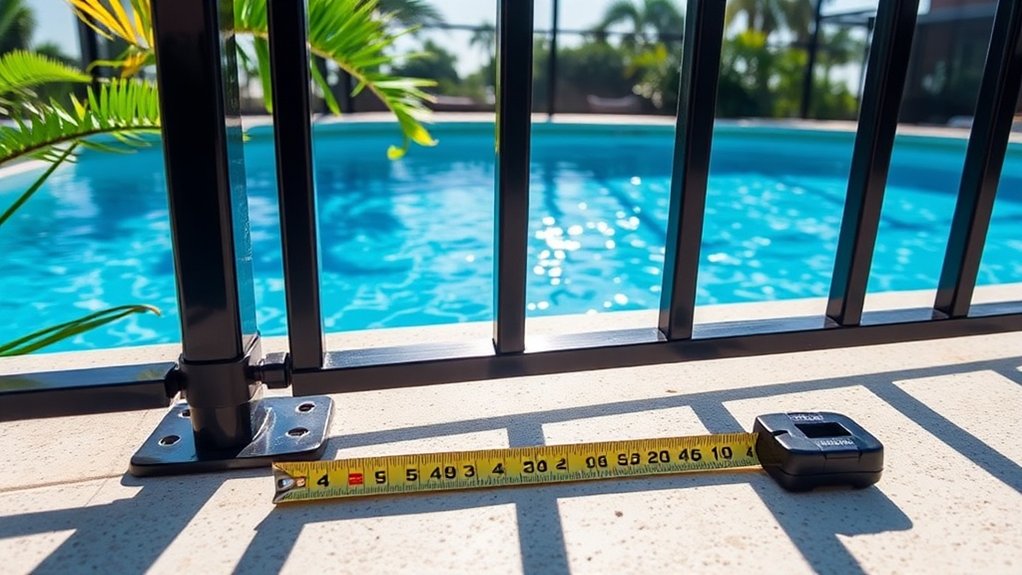
When planning a pool installation in Florida, it’s crucial to understand the inspection and compliance steps for barrier safety.
Here are the key elements to prepare for:
- Final Barrier Inspection: Ensure the barrier is at least 48 inches tall before you fill the pool.
- Gate Functionality: Check that gates close and latch automatically, with latches at least 54 inches off the ground.
- Documentation: Have your approved permits, site plans, and affidavits ready for the inspector.
Following these procedures is vital to ensure your pool barrier meets local regulations.
Ignoring these requirements can cause delays and extra costs, so it’s wise to be proactive.
Penalties for Noncompliance
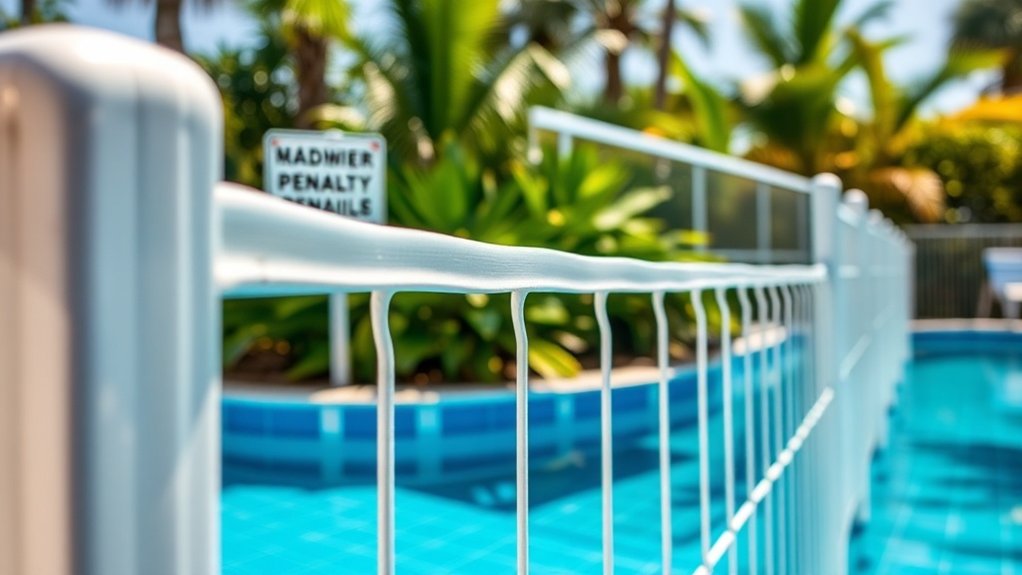
Failing to follow Florida’s pool safety barrier regulations can result in serious consequences, such as criminal charges and civil fines. Here’s a breakdown of the potential penalties you might face:
| Violation Type | Potential Penalties | Additional Notes |
|---|---|---|
| Criminal Misdemeanor | Up to 60 days in jail, fines up to $500 | You may qualify for deferred prosecution if you comply later. |
| Civil Fines | Daily fines until compliance is achieved | Costs can add up quickly if you don’t act. |
| Administrative Actions | Orders to repair or remove barriers | Unpaid fines could lead to liens on your property. |
| Liability in Lawsuits | Can be seen as negligence in legal claims | Your insurance may not cover incidents related to noncompliance. |
| Persistent Noncompliance | Designation as a public nuisance | Authorities may take action to force compliance. |
It’s crucial to understand these implications to stay compliant and avoid expensive penalties.
Local Jurisdictional Variations
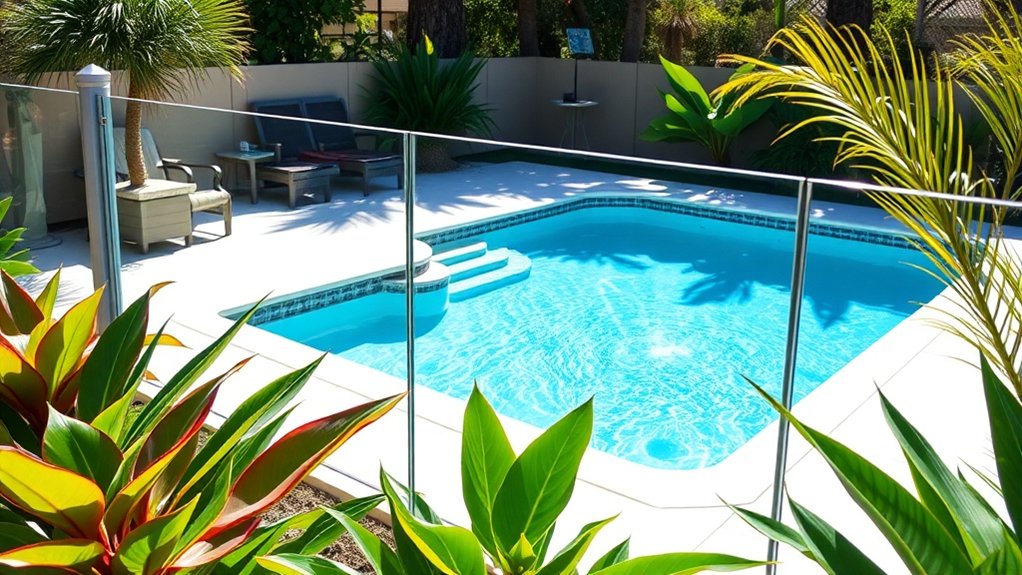
Local jurisdictions often have stricter pool fence requirements than the state’s 48-inch minimum.
When applying for a permit, be prepared for inspections that follow specific measurement standards, which can differ by area.
For example, some places might require fences to be 60 inches tall instead.
Additionally, regulations may dictate specific gate designs and materials, which can affect whether your project gets approved.
Stricter Local Requirements
Florida sets a minimum height of 48 inches for pool fences, but many local areas enforce stricter rules to boost safety.
Here are three common variations you might find:
- Height: Some places require fences taller than the state’s minimum, sometimes up to 60 inches.
- Design: Openings in the fence should be no bigger than 4 inches to stop children from squeezing through, and designs should be hard to climb.
- Gates: Gates must open outward, self-latch at 45 inches high, and may need alarms if they connect to a house.
Knowing these local regulations is crucial for safety and compliance around your pool.
Compliance and Inspections
To ensure your pool area meets local regulations, it’s crucial to understand compliance and inspection requirements, which vary by jurisdiction.
For example, in Orange County, you must have a final inspection before adding water to new or remodeled pools to confirm barrier code compliance. You’ll need to submit a Pool Barrier Affidavit and a Pool Safety Affirmation Form during the permitting process.
In Hillsborough County, additional engineering reviews are necessary, especially if your pool is near seawalls.
Fort Myers Beach requires inspections at each permit phase to ensure compliance.
Failing to meet these requirements can delay your certificate of occupancy or home sale approval, so staying informed about local standards is essential.
Frequently Asked Questions
Can I Install a Temporary Pool Barrier for Seasonal Use?
Yes, you can set up temporary pool barriers for seasonal use. Just ensure they meet height and design regulations. For example, if your local code requires a minimum height of 4 feet, make sure your barrier meets that requirement. Also, secure it properly to prevent accidents while the pool is in use.
What Are the Consequences of Failing a Pool Barrier Inspection?
Failing a pool barrier inspection can result in hefty fines, extra costs for reinspection, higher liability risks, and even criminal charges. For example, if your pool lacks proper fencing, you could face a fine and be held liable for any accidents. To avoid these serious consequences, it’s crucial to ensure your pool meets safety regulations.
Do I Need a Permit for Above-Ground Pool Barriers?
Yes, a permit is required for above-ground pools, including their barriers. This ensures that you meet safety standards for barriers, electrical components, and surrounding structures. Always check your local regulations before starting your project to avoid issues during your final inspection.
Are There Specific Materials Prohibited for Pool Barriers in Florida?
In Florida, not all materials are allowed for pool barriers. Regulations prohibit climbable features, weak mesh, and certain types of wood. Make sure your barrier meets these safety standards to protect children and ensure compliance.
How Often Should I Inspect My Pool Barrier for Compliance?
Inspect your pool barrier once a year, preferably before swim season. To stay safe, follow maintenance tips and consider professional inspections every two years to ensure compliance with regulations.
Conclusion
In Florida, a pool fence must be at least 48 inches high to ensure safety. This height acts as a vital barrier, preventing accidents and keeping loved ones safe from the pool. By following these regulations, you not only comply with the law but also create a secure environment for enjoyment. Prioritizing safety today helps avoid potential risks tomorrow. Make your pool a place of fun, not worry.