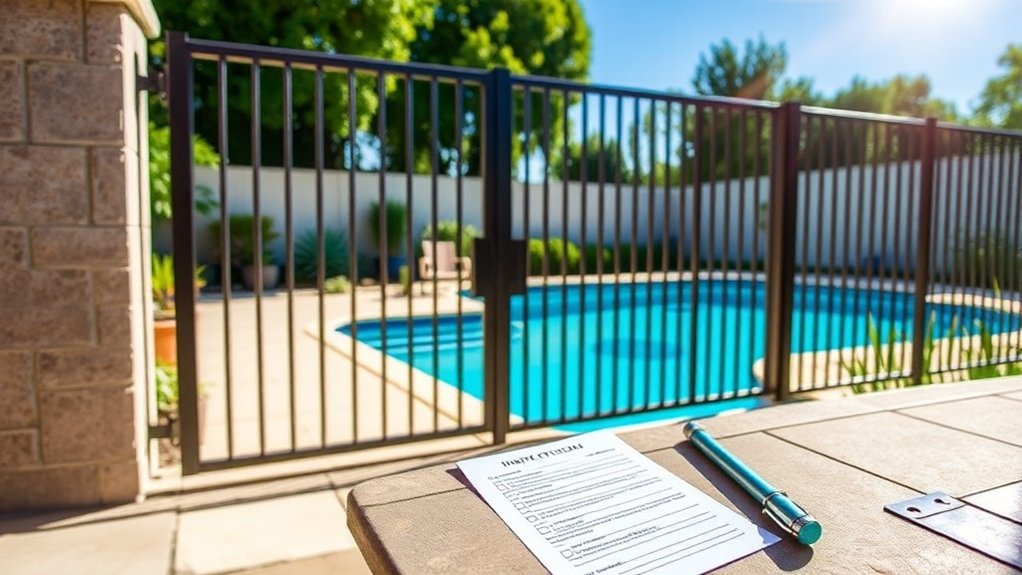

Self-latching gates must follow the 54-inch rule, meaning the latch should be no higher than 54 inches from the ground to keep young children away from pools. The gate needs to be at least 48 inches tall, with pickets spaced no more than four inches apart. It should swing outward and close by itself. Regularly check the hardware to ensure it meets these standards. Understanding these requirements is crucial for pool safety and can help in implementing other effective safety measures.
Importance of Self-Latching Gates
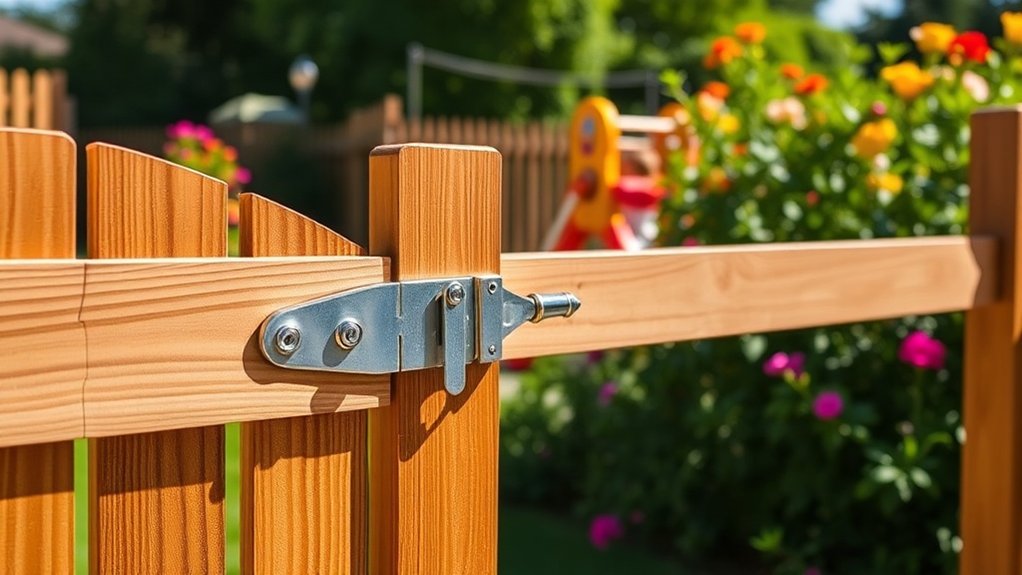
Self-latching gates are essential for safety, especially in areas where children and unauthorized access are concerns. They automatically close and lock after use, preventing accidental openings. This is crucial near pools, where gates must open outward and have latches out of children’s reach. Compliance with OSHA standards highlights the need for these self-closing mechanisms. Regular inspections ensure they function properly, reducing the risk of unauthorized access or accidents. Ensuring that gates meet OSHA’s safety requirements is vital for maintaining a safe environment, as failing to comply with local pool fencing regulations can lead to serious safety hazards.
Understanding the 54-Inch Rule
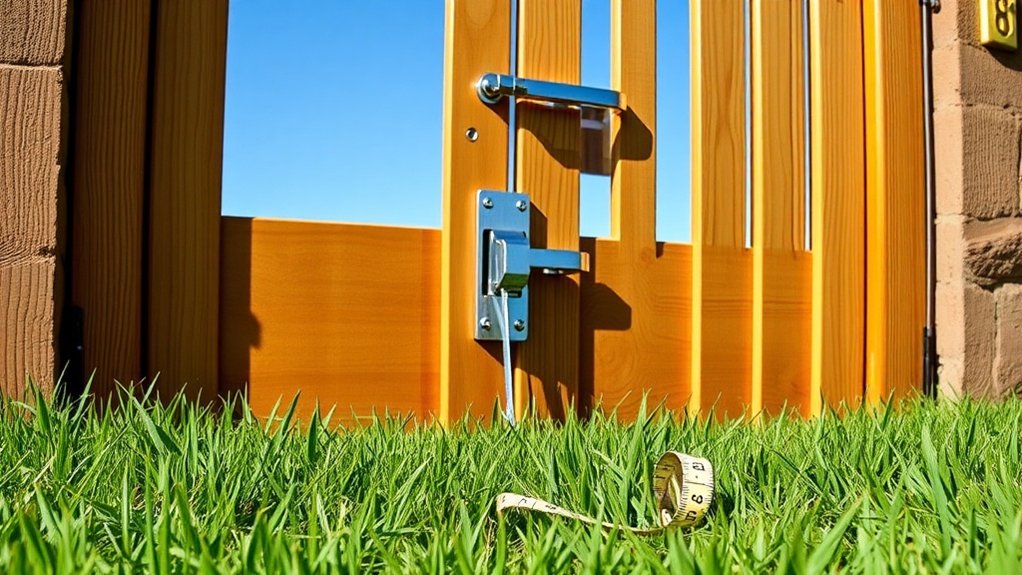
Understanding the 54-inch rule is crucial for pool safety. This regulation requires that latch release mechanisms be no higher than 54 inches from the ground. This height helps prevent young children from accessing pools without supervision. If a release mechanism is lower than this, it should be placed on the pool side to enhance safety further. Keeping these guidelines in mind can help ensure a safer environment around pools. Additionally, compliance with self-latching gate requirements is essential for maintaining safety and legal standards.
Importance of Height Compliance
The 54-inch rule is a vital safety measure that keeps young children from unsupervised access to pools. By requiring latches to be 54 inches high, it effectively prevents kids under five from reaching them. This significantly lowers the risk of drowning. Compliance with the state’s pool safety laws is crucial for protecting children from potential hazards. If gates don’t self-close and self-latch, it creates safety hazards, so regular maintenance is essential. Following this rule not only meets Arizona’s codes but also keeps children safer around pools.
Prioritize compliance to ensure child safety.
Mechanism Placement Guidelines
Proper placement of latch mechanisms is essential for pool safety and compliance with regulations.
Follow the 54-inch rule: mount the latch release mechanism at least 54 inches above ground level to keep it out of reach of toddlers. Install the latch on the gate side that’s farthest from the pool for added safety.
Ensure the latch is horizontally offset to maintain engagement without sacrificing height. Use strong, corrosion-resistant materials for durability.
Regularly check the latch to ensure it hasn’t settled or loosened, keeping it compliant with safety standards.
Barrier Height Requirements for Safety
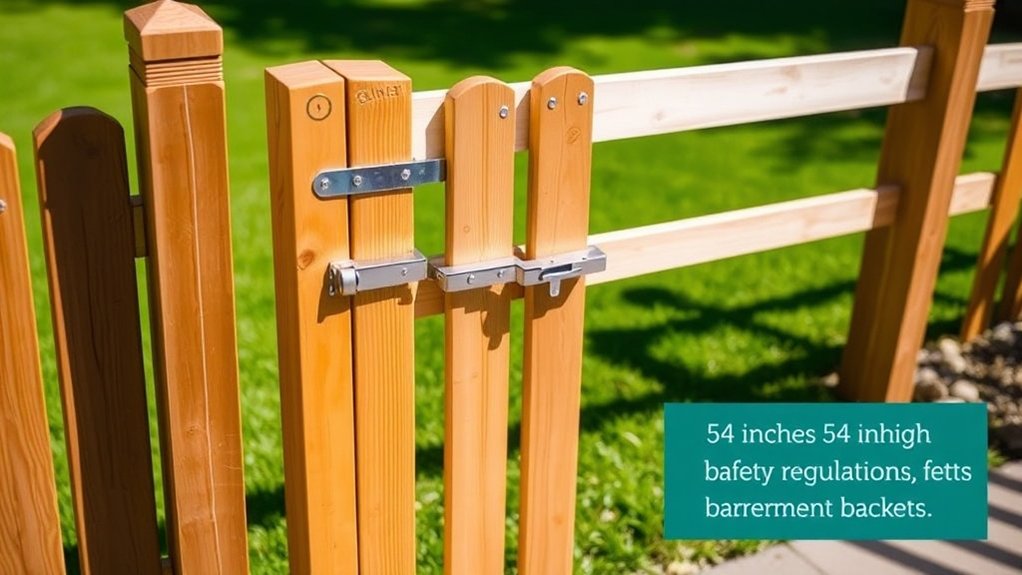
When designing safety barriers, it’s crucial to meet specific height requirements to prevent falls and injuries. For example, guardrails should be at least 42 inches high in general settings, with additional support from midrails and balusters. Using strong materials like steel increases durability and compliance.
Here’s a quick overview of barrier height requirements:
| Requirement | Height (inches) | Notes |
|---|---|---|
| General Industry | 42 (±3) | Guardrails at 4 feet or more |
| Construction Industry | 72 | Required at 6 feet or more |
| California Standards | 42-45 | 1-inch tolerance on height |
| Specialized Sectors | 34 | Exception for sight line issues |
Gate Opening and Mesh Specifications
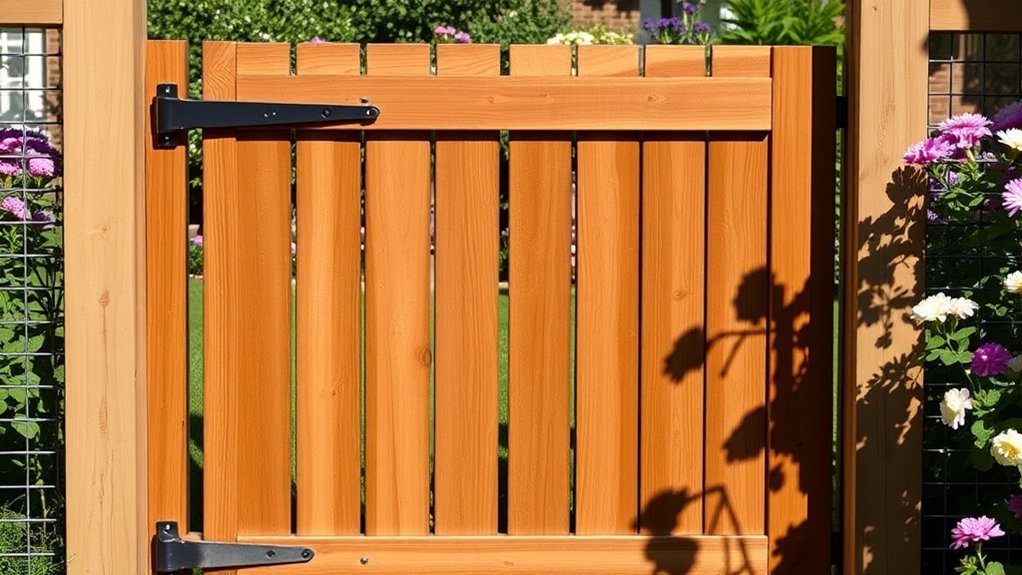
When assessing gate openings and mesh specifications, ensure that barriers prevent a 4-inch diameter sphere from passing through.
For chain-link fences, the maximum mesh size allowed is 1¼ inches, unless slats are used to reduce the openings.
Following these guidelines is crucial for safety and compliance with regulations.
Maximum Mesh Size
Understanding maximum mesh size is crucial for pool safety.
Typically, the maximum mesh size for chain link fences is 1¼ inches square, unless slats reduce the openings to 1¾ inches. Some local codes might allow for 1¾-inch openings, especially if the mesh faces the pool.
It’s important that slats are securely attached to maintain these standards, as larger openings can create hand and foot holds, raising safety concerns. Fencing not only enhances child and pet safety but also plays a significant role in preventing accidents around pools.
Always check your local regulations to ensure your pool barrier meets the required mesh size and safety standards.
Gate Opening Restrictions
To ensure pool safety, all gates must swing outward, away from the pool. This design helps prevent unauthorized access by children and ensures pedestrian gates close automatically with self-closing mechanisms.
Each gate should have durable, adjustable hinges for reliable operation.
For added security, install self-latching devices to keep gates securely closed. Latch heights must be at least 54 inches off the ground for gates taller than 48 inches.
Also, make sure there’s no gap larger than ½ inch near the latch to prevent easy breaches. Following these guidelines will help create a safe environment around your pool. Additionally, compliance with pool safety barrier requirements is crucial to ensure effective protection for children.
Additional Safety Devices for Pools
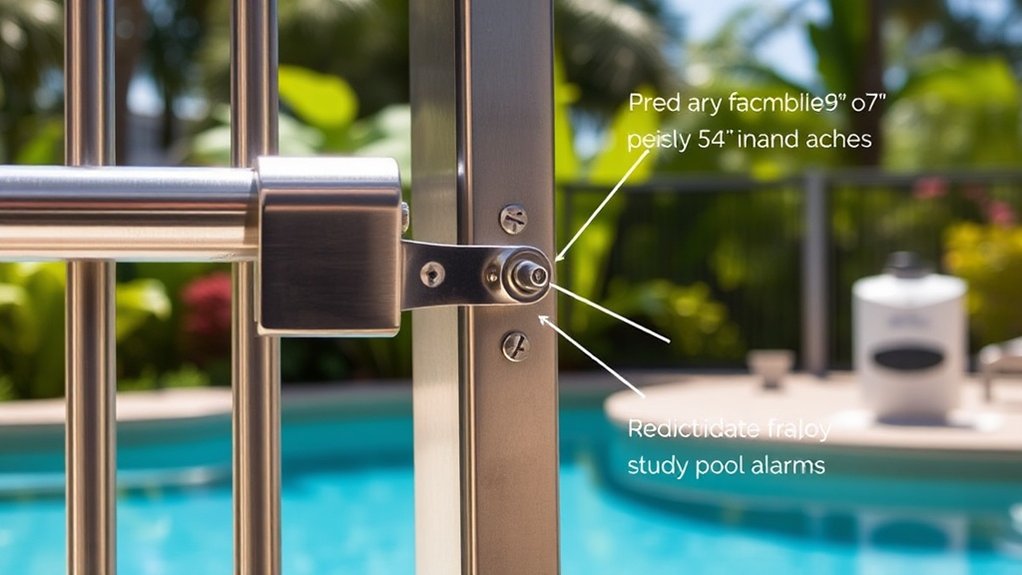
To ensure your pool area is safe, it’s crucial to add safety devices that protect against accidents. Pool alarms, including gate and door alarms, alert you when access points are opened, helping you stay aware of potential dangers. Anti-entrapment devices, such as safety drain covers, are essential for preventing serious injuries.
| Safety Device | Description | Compliance Standard |
|---|---|---|
| Pool Alarms | Alert when doors/gates are opened | UL 2017, Section 77 |
| Safety Pool Covers | Support 485 lbs per 5 sq ft, act as barriers | ASTM F1346-91 |
| Anti-Entrapment Devices | Prevent entrapment; should be replaced every 5-7 years | Virginia Graeme Baker Act |
Incorporating these devices significantly enhances safety for all pool users.
Compliance Checklist for Pool Gates
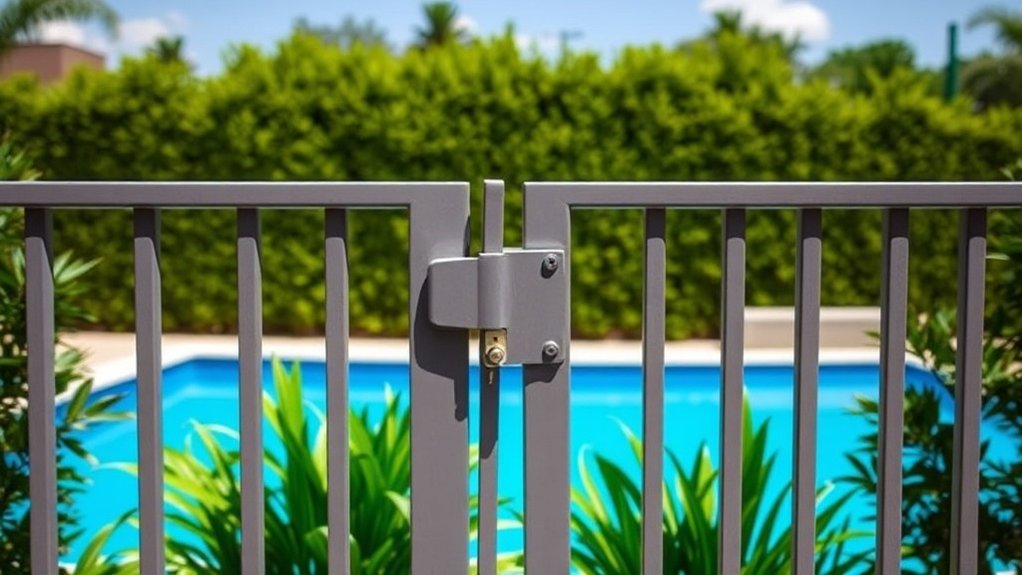
A solid compliance checklist for pool gates is vital for safety and meeting regulations. Here’s a streamlined checklist:
- Ensure the gate height is at least 48 inches, with pickets no more than four inches apart.
- Check that the self-closing mechanism works from any position and swings outward.
- Make sure the self-latching device engages automatically and is at least 54 inches off the ground.
- Inspect all hardware, like hinges and latches, to confirm they’re functional and free from rust.
- Schedule regular inspections to catch any damage or compliance issues early.
Using this checklist helps keep your pool area safe and compliant.
Common Mistakes to Avoid

When installing a self-latching gate, it’s important to avoid common mistakes to ensure safety and compliance.
One key mistake isn’t checking the latch height, which should generally be at least 54 inches to keep children safe.
Also, make sure your self-closing mechanism works properly by testing it from different angles and speeds.
Avoid using worn hinges or installing the gate to swing toward the pool, as these can create hazards.
Choose durable, weather-resistant latches that meet safety standards.
Lastly, remember to perform regular maintenance by checking hinges, fasteners, and latch alignment to prevent issues.
Benefits of Proper Pool Safety Measures
Implementing proper pool safety measures is crucial for enhancing safety and compliance. Here are the key benefits:
- Significantly reduces drowning risk for young children (ages 1–4).
- Helps you stay compliant with laws, preventing fines and liabilities.
- Lowers the number of emergency room visits due to swimming-related injuries.
- Makes your property more appealing and could lead to lower insurance costs.
- Saves money in the long run by investing in safety devices.
Frequently Asked Questions
Can I Install a Self-Latching Gate Myself?
Yes, you can install a self-latching gate yourself. Just make sure to follow safety guidelines, use the proper tools, and stick to the installation instructions. This will help ensure a secure and reliable setup.
What Materials Are Best for Building a Pool Gate?
When building a pool gate, opt for durable materials like aluminum or wrought iron. These metals resist rust and wear well in humid conditions. For a more aesthetic look, composite wood is a great choice, as it combines beauty with durability. Always ensure your materials comply with safety regulations and can handle the poolside environment.
How Often Should I Inspect My Pool Gate?
Inspect your pool gate at least once a year. If you have kids or pets, check it more frequently. Regular maintenance ensures your pool is a safe place for fun, not a risk for accidents.
Are There Any Exceptions to the 54-Inch Rule?
Yes, there are exceptions to the 54-inch rule, mainly regarding self-latching devices on gates. Always verify local regulations, as they may have stricter rules or specific requirements. For instance, some areas might allow lower heights if a gate has a secure self-closing mechanism.
What Should I Do if My Gate Doesn’T Meet Requirements?
If your gate doesn’t meet safety requirements, explore options like adding a temporary latch or blocking access. With over 200 pool-related accidents each year, it’s crucial to prioritize safety for your loved ones until you can make proper repairs.
Conclusion
In conclusion, it’s crucial for your pool gate to be self-latching and meet the 54-inch height requirement for safety. Did you know that nearly 70% of childhood drownings happen in residential pools? By ensuring your gate is the right height and functions properly, you significantly lower these risks. Regularly check your gate to ensure it complies with safety standards. Every safety measure you take not only protects your loved ones but also gives you peace of mind.