

Determining fence ownership between properties isn’t always straightforward. We’ll guide you through the process of identifying who owns the fence, starting with examining property documents and boundary markings. We’ll explain common misconceptions, legal rights, and responsibilities associated with fence ownership. Understanding these aspects is essential for maintaining good neighbor relations and avoiding disputes. We’ll cover scenarios like damaged fences and appearance disagreements, offering practical solutions. Clear communication strategies and mediation techniques can help resolve conflicts amicably. By the end, you’ll have an all-encompassing understanding of fence ownership issues and how to navigate them effectively.
Key Takeaways
- Property documents, including title deeds and land registry records, provide essential information about fence ownership.
- Boundary markings like T-marks and H-marks indicate ownership and shared responsibility for fences between properties.
- Fence post placement and installation practices often reflect ownership, with posts typically on the owner’s side.
- Legal rights and responsibilities, including maintenance obligations, vary based on local regulations and property boundaries.
- Communication with neighbors and reviewing historical precedents can clarify fence ownership when documentation is unclear.
Introduction
Understanding fence ownership is essential for property owners to avoid disputes and maintain good neighborly relations.
We often encounter misconceptions about who’s responsible for a fence situated between two properties.
Local zoning laws and regulations play a significant role in determining fence ownership and responsibilities.
In this article, we’ll clarify the legal aspects of fence ownership and provide guidance on determining rightful ownership and maintenance responsibilities.
Importance of understanding fence ownership
When it comes to property boundaries, knowing who owns the fence between two properties is imperative for homeowners and potential buyers alike. Understanding fence ownership helps prevent property disputes and boundary encroachments, which can lead to costly legal battles and strained neighbor relations.
It’s significant for determining maintenance responsibilities, as shared fences often require joint upkeep efforts. Zoning laws and regulations play a substantial role in establishing fence ownership and permitted structures. Homeowners should familiarize themselves with local ordinances to guarantee compliance and avoid potential conflicts.
Knowing who owns the fence also impacts decisions regarding fence aesthetics, such as painting or replacing panels. We must recognize that fence ownership can affect property value and influence potential buyers’ decisions.
Additionally, it’s crucial for insurance purposes, as liability for accidents or damage may depend on ownership status. By clarifying fence ownership, we can establish clear boundaries, manage shared responsibilities effectively, and maintain harmonious relationships with neighboring property owners while protecting our legal rights and financial interests.
Common misconceptions about fence ownership
Several common misconceptions about fence ownership persist among property owners, leading to potential conflicts and misunderstandings. We’ll debunk some prevalent fence myths and ownership assumptions to help clarify these issues. Many people believe the following:
| Myth | Reality | Implication |
|---|---|---|
| Fence on your side is yours | Not always true | Check property lines |
| Neighbors must share costs | No legal requirement | Discuss before installation |
| All fences are on property lines | Often inaccurate | Survey to confirm boundaries |
These misconceptions can lead to boundary disputes and strained neighborly etiquette. It’s essential to understand that fence ownership isn’t always straightforward. Assumptions about who owns a fence based on its placement or who paid for it can be incorrect. To avoid conflicts, we recommend reviewing property deeds, conducting surveys, and engaging in open communication with neighbors before making decisions about fence ownership or maintenance.
Determining Fence Ownership

When determining fence ownership between two properties, we’ll explore three key methods.
We’ll start by examining property documents, which often contain vital information about boundary lines and existing structures.
Next, we’ll discuss how to interpret boundary markings and survey data to establish the fence’s position relative to property lines.
Establishing clear boundaries is essential for preventing disputes with neighbors and simplifying maintenance responsibilities.
Checking Property Documents
We’ll now examine key property documents to determine fence ownership.
Title deeds and conveyances often contain explicit information about boundary responsibilities, while Land Registry records can provide official boundary details.
The Seller’s Property Information Form, typically completed during property transactions, may also offer insights into historical fence ownership and maintenance arrangements.
Title deeds and conveyances
To determine fence ownership, examining title deeds and conveyances is an essential step.
These documents often contain legal definitions and specific boundary information that can clarify property rights.
We’ll analyze title deed implications and navigate conveyance complexities to resolve potential disputes.
Land Registry records
Land Registry records offer three key advantages in determining fence ownership:
- Official documentation
- Historical property data
- Boundary dispute resolution
| Advantage | Benefit |
|---|---|
| Access | Verify property ownership |
| Precision | Accurate boundary details |
| Legal weight | Support in disputes |
| Maintenance | Clarify responsibilities |
These records provide authoritative information for fence ownership queries, facilitating legal documentation processes and establishing clear fence maintenance guidelines.
Seller’s Property Information Form
Another valuable resource for determining fence ownership is the Seller’s Property Information Form (SPIF).
This seller disclosure document often includes details about property boundaries and fence maintenance responsibilities. It may reveal neighborhood agreements or long-standing arrangements regarding fences.
Buyers should carefully review the SPIF to gain awareness of existing fence ownership and maintenance obligations before finalizing a property purchase.
This information can help prevent future disputes with neighbors.
Understanding Boundary Markings
When examining boundary markings to determine fence ownership, we need to understand the significance of T-marks and H-marks.
T-marks on property plans typically indicate that the fence belongs to the property on the T’s stem side.
H-marks, however, signify shared ownership of the fence between two adjoining properties.
We’ll explore these markings in detail to help clarify fence ownership disputes.
T-marks and their meaning
T-marks on property surveys serve as essential indicators of fence ownership.
These marks, represented by a ‘T’ symbol, typically appear on the side of the boundary line where the fence belongs.
Interpreting T-marks accurately is fundamental for determining ownership responsibilities.
The location and history of T-marks can provide valuable insights into property boundaries.
Understanding their significance aids in resolving disputes and clarifying maintenance obligations between neighboring properties.
H-marks for shared ownership
H-marks represent a distinct boundary marking that indicates shared fence ownership between adjacent properties.
These markings signify shared responsibilities and often stem from neighborly agreements. Understanding H-marks is essential in resolving boundary disputes and maintaining proper maintenance etiquette.
Legal interpretations of H-marks can vary, but they generally imply joint ownership and equal obligations for upkeep and repairs between neighboring property owners.
Other Indicators of Ownership
Beyond boundary markings, we can examine other indicators to determine fence ownership.
The placement of fence posts often reveals the owner, as they’re typically installed on the owner’s side of the property line.
We should also consider historical precedent in the neighborhood, as established patterns of fence ownership can provide valuable insight into current ownership disputes.
Fence post placement
On the subject of fence post placement, we can glean valuable information about ownership.
Generally, fence posts are installed on the owner’s side, with the “good” side facing the neighbor. This practice aligns with fence aesthetics and often reflects neighbor agreements.
In property disputes, boundary surveys and legal interpretations may be necessary to definitively determine ownership based on post placement, especially when historical records are unavailable or unclear.
Historical precedent in the neighborhood
When determining fence ownership, historical precedent in the neighborhood can provide valuable insights.
We’ll examine past ownership claims and historical boundary disputes to understand local fence traditions.
It’s essential to research historical survey findings and local fence laws, as these can reveal established patterns of ownership and responsibility.
This information can be particularly useful in resolving current disputes or determining fence ownership in ambiguous situations.
Legal Rights and Responsibilities

Let’s examine the legal rights and responsibilities associated with property fences.
We’ll explore maintenance and repair obligations, height restrictions and planning permission requirements, protocols for modifying existing fences, and property owners’ rights regarding their neighbors’ fences.
Understanding these legal aspects is essential for homeowners to avoid disputes and guarantee compliance with local regulations.
Maintenance and Repair Obligations
In accordance with property law, maintenance and repair obligations for shared fences typically fall on both neighboring property owners. We must understand that fence ownership rights often come with shared repair responsibilities.
It’s essential to establish property boundary clarity to determine each party’s legal obligations. Neighborly maintenance agreements can help prevent disputes and guarantee proper upkeep of the shared fence.
We recommend that property owners familiarize themselves with local regulations regarding fence maintenance. These laws may vary by jurisdiction but generally outline each party’s duties.
Common obligations include repairing damage, replacing worn sections, and maintaining the fence’s appearance. If one party neglects their responsibilities, the other may have legal recourse to enforce compliance.
Regular communication between neighbors can facilitate a cooperative approach to fence maintenance, potentially avoiding costly legal battles and preserving property values.
Height Restrictions and Planning Permission
Beyond maintenance considerations, property owners must be aware of legal restrictions governing fence height and construction.
Fence height regulations typically vary by location and are dictated by local zoning laws. We recommend consulting your municipal code or contacting your local planning department to determine specific height limitations for your property.
The planning permission process may be required for fences exceeding certain heights or those constructed with non-standard materials. Neighborhood guidelines and aesthetic considerations often play a role in these regulations, aiming to maintain community standards and property values.
Some areas enforce stricter rules for front yard fences compared to side or backyard fences.
Before erecting a new fence or modifying an existing one, it’s essential to research and comply with all applicable regulations.
Failure to adhere to these rules can result in fines or mandatory fence removal.
Making Changes to Existing Fences
When considering modifications to an existing fence, property owners must navigate a complex web of legal rights and responsibilities.
We must first determine fence ownership and consult local fence regulations before making any changes. Alterations to fence aesthetics, design, or materials require careful consideration of property boundaries and neighbors’ rights.
If we’re contemplating fence alternatives, it’s vital to understand zoning laws and homeowners’ association rules that may restrict certain types.
We should also be aware that significant modifications might necessitate permits or professional surveys.
It’s essential to communicate with adjacent property owners about proposed changes, as their consent may be required.
Rights Regarding Neighbor’s Fences
According to the principle of property rights, we’ve certain legal entitlements and obligations concerning our neighbor’s fences. Understanding these rights is vital for maintaining positive neighbor relationship dynamics and resolving potential property disputes.
When addressing fence ownership rights, we must consider:
- Boundary line understanding
- Fence maintenance responsibilities
- Property dispute resolution processes
- Legal limitations on modifications
We’re obligated to respect our neighbor’s fences, even if they encroach slightly onto our property. However, we retain the right to trim overhanging branches or vines from their side of the fence.
If a neighbor’s fence is in disrepair and poses a safety hazard, we can request its maintenance or repair. In cases of severe neglect, we may have legal recourse to compel action.
It’s essential to approach fence-related issues diplomatically, prioritizing open communication to preserve neighborly relations while protecting our property rights.
Common Scenarios and Solutions
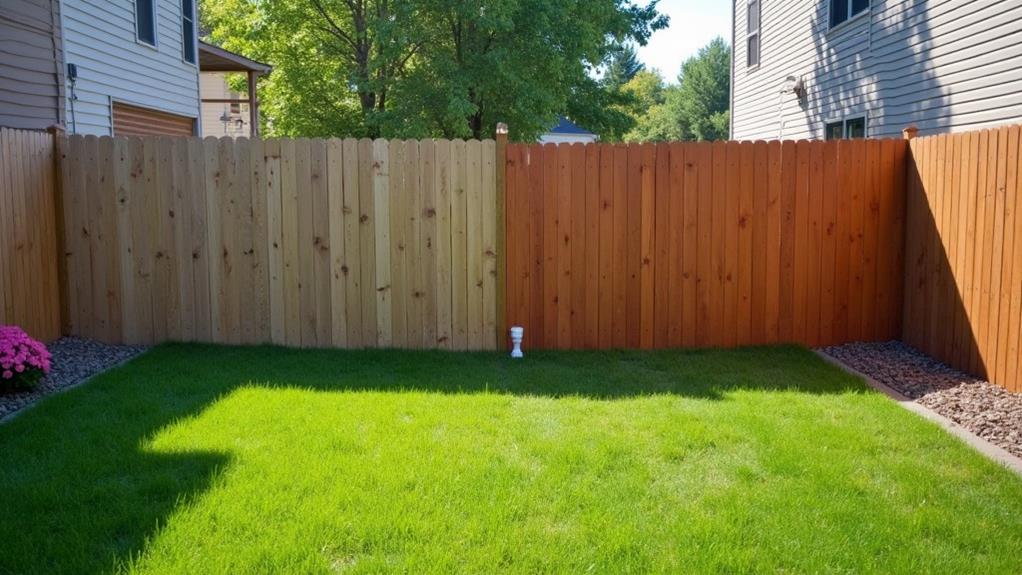
We’ll now address common fence ownership scenarios and their potential solutions.
These include situations involving damaged or fallen fences, disputes over fence appearance, shared ownership arrangements, and cases where ownership is unclear.
Understanding these scenarios can help property owners navigate fence-related issues more effectively and maintain positive relationships with their neighbors.
Damaged or Fallen Fences
Throughout the lifetime of a fence, damage or collapse can occur due to various factors, including severe weather, natural aging, or accidents.
When faced with a damaged or fallen fence, property owners should consider the following steps:
- Review fence insurance options
- Consult property line surveys
- Discuss shared fence responsibilities with neighbors
- Explore neighborly agreements for repairs
It’s essential to determine ownership and maintenance obligations before initiating repairs.
If the fence is jointly owned, both parties should contribute to its restoration. In cases where one party is solely responsible, they should bear the cost of repairs.
To prevent future issues, implement regular fence maintenance tips, such as inspecting for rot, reinforcing weak spots, and applying protective coatings.
Disputes Over Fence Appearance
Many disputes over fence appearance arise between neighboring property owners, often stemming from differing aesthetic preferences or maintenance standards. These conflicts typically involve fence aesthetics, such as color, material, or design choices.
Neighborly disputes can escalate when one party alters the fence’s appearance without consulting the other. To resolve such issues, we recommend open communication and compromise.
Consider establishing clear guidelines for boundary styles and maintenance responsibilities in writing. If personal tastes clash, explore options like dual-sided fencing that accommodates both parties’ visual preferences.
In cases where agreement remains elusive, consult local ordinances or homeowners’ association rules for guidance. Mediation services can also help navigate complex fence-related conflicts.
Shared Ownership Situations
While appearance disputes are common, shared ownership situations present unique challenges in fence management. Shared fences often require joint decision-making and cooperation between neighbors.
To navigate these situations effectively, consider the following:
- Establish clear fence design options agreeable to both parties
- Develop shared maintenance agreements outlining responsibilities
- Implement cost sharing strategies for repairs and replacements
- Utilize dispute resolution methods for disagreements
When approaching shared ownership, it’s essential to prioritize neighborly etiquette tips. Open communication and compromise are key to maintaining positive relationships.
We recommend documenting all agreements in writing to prevent future misunderstandings. If conflicts arise, consider mediation or legal consultation to resolve issues amicably.
When Ownership is Unclear
Fence ownership can become murky in certain situations, leading to confusion and potential disputes between neighbors. When property lines aren’t clearly defined or documented, boundary disputes may arise.
We often encounter cases where neither party has definitive proof of ownership. In these instances, it’s vital to consult local ordinances and legal definitions to determine fence ownership.
Common scenarios include fences built before current owners purchased their properties, or fences erected without proper documentation. To resolve these issues, we recommend conducting a professional land survey to establish accurate property lines.
Alternatively, neighbors can agree to shared ownership and maintenance responsibilities. If disputes persist, mediation or legal counsel may be necessary.
It’s essential to approach these situations diplomatically, as maintaining positive neighbor relations is often more valuable than winning a fence ownership battle.
Resolving Fence Disputes
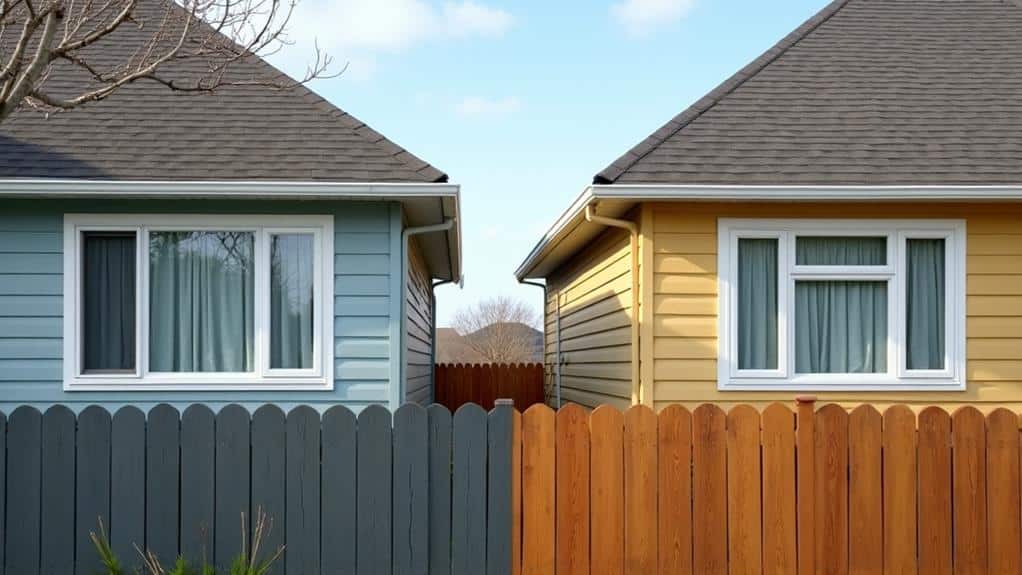
When facing fence disputes with neighbors, we’ll explore effective strategies for resolution.
We’ll examine communication techniques, mediation options, and the circumstances under which legal action may be necessary.
Our discussion will also cover when it’s advisable to seek professional help in managing complex fence ownership issues.
Communication Strategies with Neighbors
Effective communication is the cornerstone of resolving fence disputes with neighbors. When engaging in neighborly dialogues, we must employ conflict resolution techniques and practice effective listening.
Boundary etiquette plays an essential role in maintaining positive relationships while addressing property line issues.
To facilitate successful communication, consider these strategies:
- Approach conversations with a calm and open mindset
- Use “I” statements to express concerns without accusation
- Present factual evidence, such as property surveys or legal documents
- Propose mutually beneficial solutions
Mediation Options
Should direct communication with your neighbor prove ineffective in resolving fence disputes, mediation offers a valuable alternative. This process involves third-party involvement to facilitate conflict resolution between disputing parties.
Mediation techniques often include active listening, reframing issues, and exploring mutually beneficial solutions. We recommend seeking professional mediators who specialize in property disputes to guide the process effectively.
During mediation, both parties have the opportunity to express their concerns and work towards neighborly agreements. The mediator employs various communication strategies to help identify common ground and potential compromises.
Unlike litigation, mediation allows for more flexible and creative solutions tailored to the specific needs of both property owners. It’s often faster, less expensive, and more likely to preserve relationships than court proceedings.
Legal Recourse and When to Seek Professional Help
Pursuing legal action should be considered a last resort in fence disputes, but it may become necessary if other resolution methods fail. When seeking legal recourse, we recommend consulting an attorney specializing in property disputes and neighbor relations. They can provide expert legal advice and guide you through the complex process of resolving boundary agreements.
Consider seeking professional help when:
- Mediation attempts have been unsuccessful
- The dispute involves significant financial implications
- There’s a clear violation of local zoning laws or property rights
- The conflict is escalating and threatening neighbor relations
A lawyer can help navigate the legal landscape, potentially filing a lawsuit or representing you in court if necessary.
They’ll also assist in gathering evidence, such as property surveys and historical documents, to support your case.
Practical Tips for Homeowners
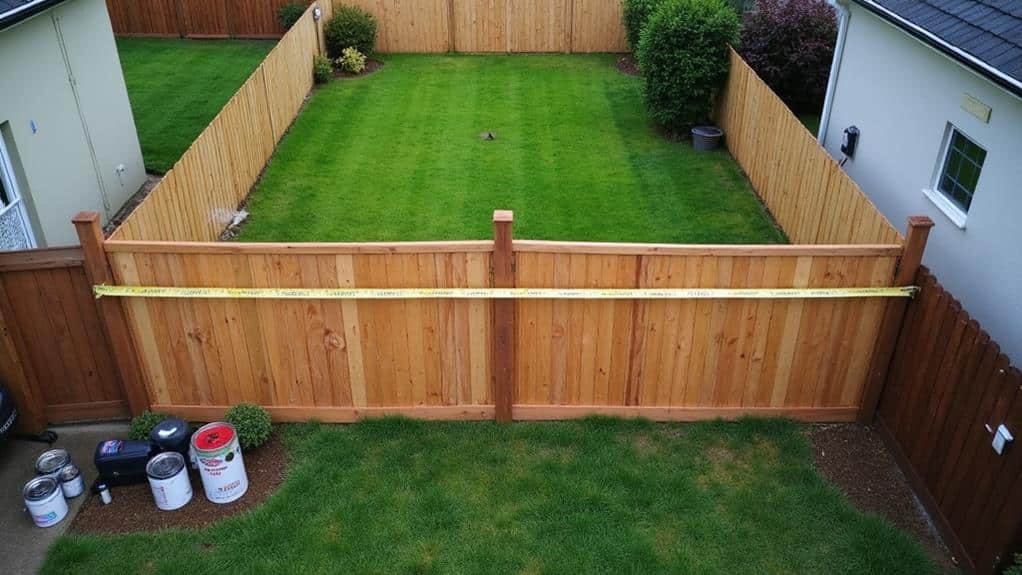
Let’s explore practical strategies for homeowners dealing with shared fences.
We’ll cover the importance of documenting fence ownership and agreements, maintaining positive relationships with neighbors, and planning ahead for future fence-related projects.
These tips will help you navigate potential fence disputes and guarantee clear communication about property boundaries.
Documenting Fence Ownership and Agreements
Documenting fence ownership and agreements is vital for homeowners to avoid potential disputes and legal issues down the line.
We recommend creating extensive legal documentation that clearly outlines property boundaries, fence maintenance responsibilities, and shared costs. This documentation should include:
- Detailed property surveys
- Written agreements with neighbors
- Fence design specifications
- Maintenance schedules and cost-sharing plans
When drafting these documents, consider fence design considerations that may impact future maintenance or property values.
Effective neighbor communication strategies are important for establishing mutually beneficial agreements.
We advise consulting with a legal professional to guarantee all documentation complies with local regulations and adequately addresses potential property boundary disputes.
By maintaining thorough records and open dialogue with neighbors, homeowners can minimize conflicts and protect their interests in the long term.
Maintaining Good Neighbor Relations
Maintaining good neighbor relations is paramount when dealing with shared fences and property boundaries. We must prioritize neighborhood etiquette and boundary respect to foster a harmonious living environment.
When addressing fence-related issues, it’s essential to engage in open, respectful communication with adjacent property owners. We should approach conflict resolution proactively, seeking mutually beneficial solutions through compromise and understanding.
Shared spaces, including fences, require collective responsibility and maintenance. We recommend participating in community engagement activities to strengthen relationships and establish a foundation of trust.
Planning for Future Fence Work
Four essential steps can help homeowners plan effectively for future fence work. These fence planning tips guarantee smooth execution and maintain good neighbor relations:
- Assess current fence condition and anticipate future needs
- Research local zoning laws and property line regulations
- Develop a thorough budget, including materials and labor
- Create a timeline for project implementation
When considering future maintenance strategies, we recommend establishing a regular inspection schedule and setting aside funds for repairs.
Neighbor communication methods should include written notifications and in-person discussions about design preferences and potential shared costs.
Budget considerations must account for materials, labor, permits, and unexpected expenses.
We advise exploring various design options that balance aesthetics with functionality and durability.
Frequently Asked Questions
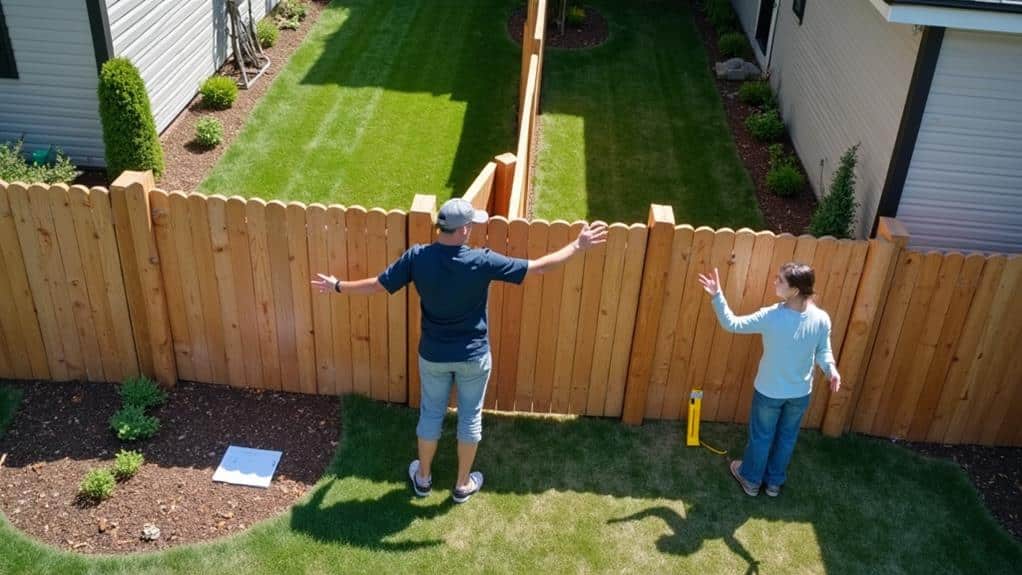
Let’s address some common questions that arise regarding fences between properties.
We’ll clarify issues such as whether you can compel a neighbor to repair their fence, who gets the “good side” of the fence, and if it’s permissible to attach items to your neighbor’s fence.
These questions often lead to disputes, so understanding the legal and practical implications is essential for maintaining neighborly relations.
Can I force my neighbor to repair their fence?
Property owners often wonder about their rights and obligations when it comes to shared fences. While you can’t typically force your neighbor to repair their fence, there are several strategies to address the issue:
- Communicate openly with your neighbor about fence maintenance responsibilities
- Propose a shared fence agreement to clarify legal obligations
- Consult local ordinances regarding property line disputes
- Consider mediation if direct communication fails
It’s essential to understand that fence ownership and maintenance duties can vary depending on local laws and property line demarcations.
In some cases, a fence may be considered jointly owned, requiring both parties to contribute to its upkeep. If your neighbor refuses to cooperate, you may need to seek legal advice to determine your options.
Remember that maintaining positive relationships with neighbors is often more beneficial than pursuing legal action, so exhaust all amicable solutions first.
Who gets the “good side” of the fence?
When it comes to fence construction, the question of who gets the “good side” often arises. Typically, fence aesthetics dictate that the finished side faces outward towards the neighbor’s property. This practice aligns with neighborly etiquette and can positively impact property value. However, maintenance preferences and legal considerations may influence this decision.
| Factor | Facing Outward | Facing Inward |
|---|---|---|
| Aesthetics | More appealing | Less attractive |
| Etiquette | Considerate | Potentially contentious |
| Maintenance | Easier for neighbor | Easier for owner |
| Security | Less secure | More secure |
We recommend discussing the fence orientation with your neighbor before installation. Some municipalities have specific regulations regarding fence placement and appearance. It’s essential to review local ordinances and homeowners’ association rules, if applicable. In cases where agreement can’t be reached, alternating the “good side” for each section of the fence can be a fair compromise.
Can I attach things to my neighbor’s fence?
While the orientation of a fence can impact neighborly relations, another common question arises regarding the use of an existing fence. Can you attach items to your neighbor’s fence? The answer depends on several factors, including property rights, attachment guidelines, and maintenance responsibilities.
Generally, it’s not advisable to attach anything to a fence you don’t own without permission. Consider these points:
- Fence aesthetics may be altered, potentially causing disputes
- Property rights could be violated, leading to legal issues
- Attachment guidelines may exist in local ordinances or HOA rules
- Maintenance responsibilities might shift if damage occurs
To maintain positive neighbor relations, always communicate your intentions before making any changes to a shared fence.
If the fence is solely on your property, you have more freedom to modify it. However, it’s essential to understand local regulations and property boundaries before proceeding with any attachments or alterations.
Conclusion

We’ve explored the key aspects of fence ownership, including legal considerations, property boundaries, and shared responsibilities.
Clear communication between neighbors and proper documentation of agreements are essential for avoiding disputes and maintaining positive relationships.
Recap of key points
Property boundary disputes often revolve around fence ownership. We’ve explored key aspects of determining fence ownership and resolving related issues.
To recap the essential points:
- Fence maintenance responsibilities depend on local laws and property line placement
- Boundary dispute resolution often requires professional surveys and legal consultation
- Neighbor communication tips include open dialogue and written agreements
- Property line clarification is vital for establishing ownership and responsibilities
Understanding these factors helps homeowners navigate fence-related conflicts.
We’ve discussed the importance of reviewing property deeds, local regulations, and historical records to determine fence ownership.
Additionally, we’ve outlined strategies for fence aesthetics considerations, emphasizing the need for mutual agreement on design and placement.
Importance of clear communication and documentation
Clear communication and documentation stand as the two most essential elements in resolving fence ownership disputes. We recommend employing effective negotiation tactics and proactive communication techniques to address potential conflicts early. Neighborly etiquette tips can help maintain positive relationships while discussing boundary issues. When engaging in boundary dispute resolution, it’s vital to document all agreements and conversations.
| Documentation Best Practices | Proactive Communication | Dispute Resolution |
|---|---|---|
| Record property surveys | Initiate discussions | Seek mediation |
| Keep maintenance receipts | Share fence plans | Consult legal advice |
| Store written agreements | Address concerns promptly | Negotiate fairly |
Frequently Asked Questions
Can I Paint My Side of a Neighbor’s Fence Without Permission?
We don’t recommend painting your side of a neighbor’s fence without permission. Fence maintenance responsibilities and shared fence ownership can be complex. It’s best to discuss your plans, following neighborly communication tips, to avoid potential property line disputes or legal issues.
How Do I Handle a Fence That Encroaches on My Property?
Don’t fence yourself in! We recommend addressing fence disputes through neighbor communication first. If unsuccessful, seek legal advice to clarify property boundaries. Resolution strategies may include surveys, mediation, or legal action to rectify encroachment issues.
What Are the Rules for Fences in Historic Districts?
We must adhere to strict zoning regulations in historic districts. Fence materials are often restricted to preserve historical aesthetics. Property rights may be limited, and maintenance responsibilities are typically heightened. Consult local historic preservation guidelines for specific requirements.
Can I Remove a Fence if It’s on the Property Line?
We’re diving into a labyrinth of property boundary disputes! Shared fence agreements and maintenance responsibilities are essential. Before considering legal fence removal, communicate with your neighbor. It’s imperative to navigate this technical process with precision and authority.
Are There Height Restrictions for Fences Between Properties?
We must consult local zoning laws for fence height regulations. Property line considerations are essential. Let’s communicate with neighbors to avoid boundary disputes. If issues arise, we’ll need to explore resolution strategies. Always check municipal codes before construction.
Conclusion
We’ve navigated the labyrinth of fence ownership, shedding light on the often murky boundaries between properties. Armed with this knowledge, we’re better equipped to tackle fence-related challenges head-on. Like skilled diplomats, we can now negotiate the delicate terrain of neighbor relations. Remember, a well-maintained fence isn’t just a barrier; it’s a symbol of mutual respect and clear communication. Let’s embrace these insights, ensuring our boundaries remain strong and our neighborly bonds even stronger.


