

The evolution of fencing accessories has changed significantly over time. Early gear prioritized safety, leading to the development of masks and padded bibs. During the Renaissance, the introduction of the rapier influenced both technique and style. By the 19th century, standardization of practices allowed for the use of modern materials, improving safety and performance. Today's equipment strikes a balance between protection and agility, reflecting advancements in technology and design. Understanding these changes helps appreciate the rich history of fencing.
Key Takeaways
The evolution of fencing accessories started with basic protective gear in ancient times, focusing on safety during training and combat. In the Renaissance, the rise of the rapier led to lighter materials and more detailed designs. The 19th century brought a standardization of fencing attire, enhancing safety and functionality while keeping up with fashion trends. Today, modern innovations use advanced materials for better comfort and mobility, boosting fencer performance in competitions. Additionally, technological advancements, like automated systems and eco-friendly materials, have transformed fencing from its classic roots to a contemporary sport.
Ancient Fencing Gear: The Beginnings of Protection

The evolution of fencing gear reflects the changing needs of fighters throughout history.
Ancient Egyptian carvings from 1190 BC depict early fencing scenes that highlight the importance of safety. Early innovations included masks and weapon tips designed to reduce injuries during training. The development of fencing education in Roman camps introduced protective measures that became foundational for future gear.
Romans used sticks with covered ends, emphasizing safety while practicing combat skills. As societies progressed, shields became common in battle, showing a proactive approach to defense.
The simple gear seen in Egyptian and Greek art suggests a balance between agility and protection, leading to the development of more advanced armor in later years.
The Renaissance Era: The Rise of the Rapier

The Renaissance saw a significant shift in fencing with the rise of the rapier, a weapon known for its speed and precision. This change impacted dueling practices, favoring skill over sheer strength.
Key elements of the rapier's popularity include:
- Craftsmanship: Artisans created lighter and more intricate hilts and blades that were both durable and visually appealing.
- Status Symbol: The rapier became a mark of nobility, symbolizing elegance and martial prowess.
- Fencing Techniques: Italian and Spanish schools introduced new techniques focused on speed and accuracy, influencing modern fencing. This evolution was driven by advancements in blade shape and hand protection that enhanced both mobility and defense.
The rapier not only changed how people fought but also became an important part of Renaissance culture, embodying sophistication and artistry.
Classical Fencing Accessories: A Blend of Function and Style

Classical fencing accessories showcase a unique combination of functionality and style. Each item, from the sleek fencing foil to the protective mask, demonstrates careful craftsmanship that meets the practical needs of the time. This combination not only improved performance in duels but also established a recognizable style that still influences modern fencing today. The emphasis on remaining true to source material is crucial, as it ensures that historical accuracy is maintained in the development of fencing accessories.
Historical Attire Evolution
Fencing attire has changed significantly over the years, shaped by both the sport's needs and fashion trends.
- Early depictions show swordsmen in fitted garments that highlighted their bodies.
- By the late 17th century, practicality took precedence, leading to the adoption of white shirts instead of bulkier clothing.
- The mid-19th century introduced standardized uniforms, signaling a move toward regulation in the sport.
This evolution illustrates the balance between style and function and emphasizes the role of uniforms in defining fencing's identity.
The journey of fencing attire, from luxurious to utilitarian, tells a compelling story of its history.
Functional Design Features
Classical fencing accessories blend functionality with style. Made from durable materials like steel and aluminum, they enhance comfort for long training sessions.
For example, wire masks provide safety while looking good. These accessories are versatile, adapting to different techniques and competition levels, allowing for personalization.
This balance of form and function makes classical fencing gear both effective and a reflection of individual style and tradition.
Evolution of Protective Masks: From Metal Mesh to Safety Innovations
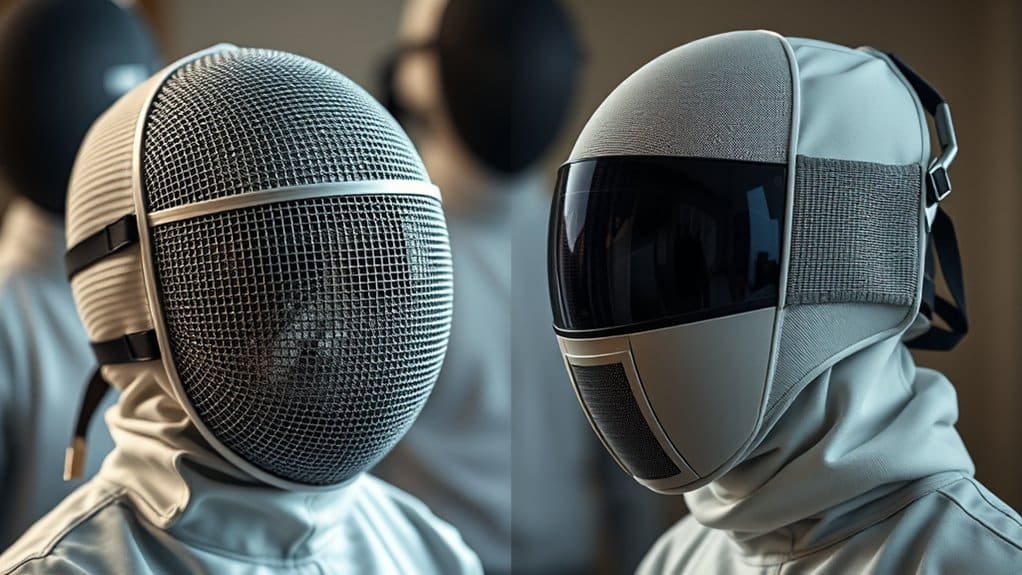
The evolution of fencing masks shows a clear progression from early metal mesh designs to today's advanced safety features.
Initially, these designs were inspired by theatrical masks and provided minimal protection. However, they paved the way for improvements like padded bibs and ear guards.
Today, modern masks are built for both durability and comfort, meeting high safety standards that enhance protection and performance for fencers.
Early Metal Mesh Designs
Early metal mesh designs were crucial in the development of protective masks for fencers. They transformed basic face covers into sturdy metal gear.
Key aspects of these designs included:
- Mesh Types: Initially, hexagonal mesh was common, but square mesh later became popular for its durability.
- Stronger Materials: The use of materials like steel significantly improved protection.
- Bib Addition: By the early 20th century, many designs included a bib for extra safety.
These advancements set the stage for modern fencing masks, showcasing a commitment to athlete safety through effective design and materials.
Modern Safety Features
The evolution of fencing masks showcases a strong focus on safety through innovative design.
Today's masks are made from advanced materials like 3D Optically Correct Polycarbonate, which provide great visibility and meet high impact resistance standards. V-shaped visors help deflect blades better than older designs.
Ergonomic features, such as adjustable straps and padding, ensure a comfortable fit and effective shock absorption.
Lightweight carbon fiber allows for better movement without compromising safety. Plus, anti-fog coatings and improved ventilation help you stay focused on your technique during matches.
When you wear a modern fencing mask, you can feel confident in its safety and design.
The Standardization of Fencing Attire in the 19th Century

As fencing grew in popularity during the 19th century, the need for standardized attire became clear for both safety and consistency among competitors.
However, achieving this standardization faced challenges due to the variety of styles and materials used.
- Early masks provided minimal face protection but eventually evolved to cover more of the face.
- Jackets transitioned from high collars to practical leather designs, but differences in color and fit persisted.
- Full-length trousers became more common, influenced by the fashion of the time.
The Introduction of Electric Scoring Gear
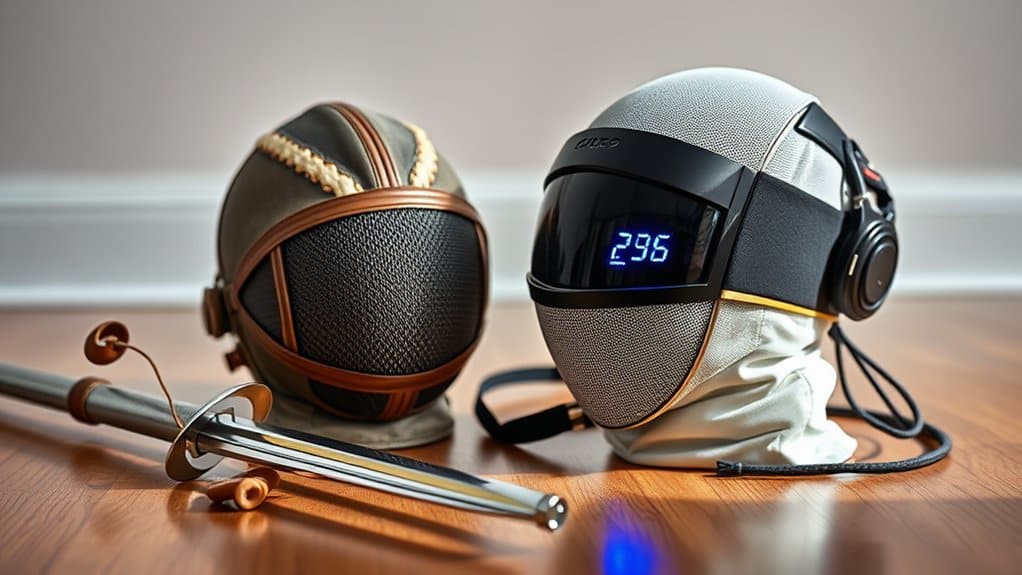
In the 19th century, standardized fencing attire paved the way for significant advancements in scoring technology. Early electric scoring experiments began around 1840 when Robert Houdin sought to simplify the judging process.
By 1885, a Belgian invention took things further, leading to Augustin Cabot's 1895 patent for a metallic jacket with battery connections. The first electronic scoring systems appeared in 1896, aiming to remove subjective judging.
As the 20th century progressed, resistance to electric scoring diminished, enhancing competition fairness. By the late 20th century, these systems became more reliable and easier to use, transforming the sport and improving the experience for spectators.
Modern Fencing Equipment: Balancing Safety and Mobility

When you step onto the fencing strip, balancing safety and mobility is crucial for your performance.
Modern fencing gear is designed to keep you agile while providing necessary protection. Here are key features to note:
- Protective Fabrics: Materials like Kevlar and ballistic nylon ensure safety without sacrificing flexibility.
- Jacket and Mask Design: Flexible jackets and strong steel masks protect you while allowing for quick movements.
- Footwear Innovation: Fencing shoes support fast footwork, helping you maintain balance and stability during matches.
The Impact of Technology on Fencing Accessories

Technology is reshaping fencing accessories, enhancing their functionality and appeal. Modern materials like aluminum and eco-friendly composites provide durability with low maintenance.
Innovations such as solar-powered lights and motion sensors improve both security and ambiance. Automated features, like wireless fencing systems, simplify setup and make matches run smoother.
Adjustable designs fit various landscapes, ensuring that fences are both practical and visually attractive. With customizable options, today's fencing accessories not only protect your property but also enhance its appearance. Additionally, the incorporation of security add-ons like spikes and anti-climb coatings further fortifies these modern fences against potential intruders.
Frequently Asked Questions
What Materials Were Used in Ancient Fencing Accessories?
In ancient fencing, warriors used bronze helmets for head protection and leather gloves for hand safety. These materials were crucial for minimizing injuries during training and battles, allowing fighters to engage effectively.
How Did Fencing Attire Influence Social Status in Historical Contexts?
Fencing attire has always represented social status. The uniforms not only showcased elegance but also followed the latest fashion trends. For instance, wearing a finely crafted jacket or ornate mask could signal one's wealth and position within elite fencing clubs. This created a sense of exclusivity, reinforcing the idea that fencing was a sport for the upper class.
What Are the Main Differences Between Fencing Weapons?
Fencing has three main weapons: foil, sabre, and epee, each with unique features. The foil is light and only targets the torso. The sabre, with its curved blade, allows for strikes to the upper body. In contrast, the epee is heavier and targets the entire body. Each weapon offers a different style of fencing, making the sport diverse and exciting.
How Has Fencing Footwear Evolved Over Time?
Fencing footwear has significantly evolved over time. Today's shoes prioritize performance, using advanced materials and ergonomic designs that improve agility and stability during matches. For example, modern fencing shoes often incorporate lightweight, breathable fabrics and specialized soles for better grip, enabling fencers to move quickly and confidently.
Why Are Electric Scoring Systems Important in Modern Fencing?
Electric scoring systems improve accuracy in fencing by accurately tracking valid touches, reducing the chances of human error and bias. For example, in a close match, these systems ensure that every point scored is correctly recorded, reflecting the true skill of the competitors. This technology has made fencing fairer and more reliable, allowing fans and athletes to focus on the strategy and talent displayed in each bout.
Conclusion
Fencing accessories have evolved significantly, prioritizing safety and functionality. For instance, since the 1930s, the introduction of electric scoring gear has improved scoring accuracy by over 90%. This advancement not only enhances safety but also boosts the sport's integrity. As fencing grows, balancing tradition with innovation will be crucial for athletes and fans alike.


