
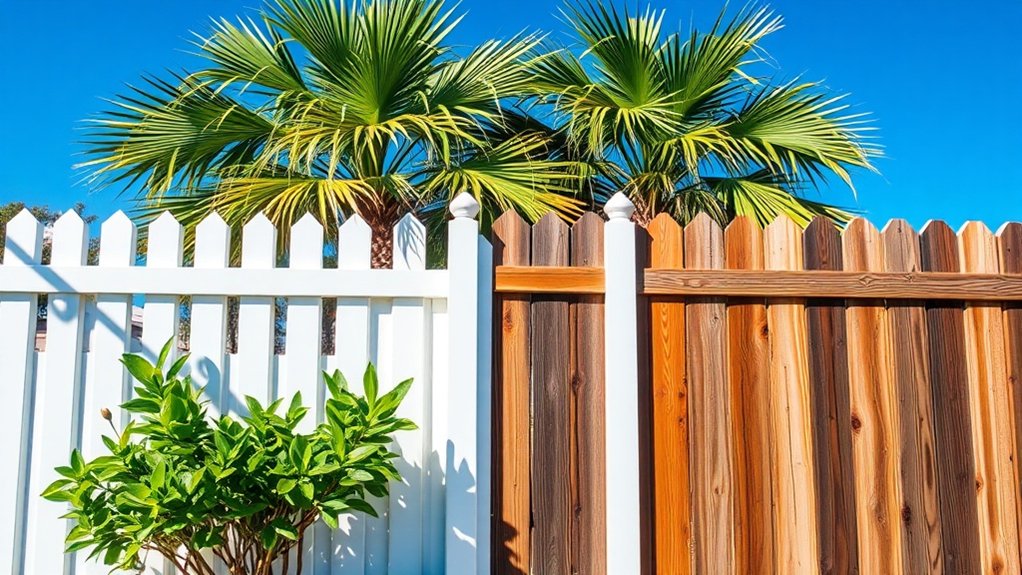
When comparing vinyl and wood fencing in Florida, vinyl is often the better choice due to its durability and low maintenance. It can withstand high winds and lasts 25-30 years, while wood typically lasts 12-20 years and requires regular refinishing. Although vinyl has a higher upfront cost, its long-term value and resistance to moisture make it a more cost-effective option. Keep these factors in mind to choose the right fence for your needs.
Cost Comparison
When comparing fencing costs, it’s crucial to look at both initial and long-term expenses.
Wood fencing typically costs $10 to $30 per linear foot, while vinyl ranges from $15 to $50, depending on the style. Installation also varies; wood installation averages $13.50 to $24 per linear foot, while vinyl can be $15 to $52. Over 20 years, wood may cost you $4,000 to $8,000 due to its high maintenance needs, whereas vinyl could be around $3,400 to $6,600, thanks to lower upkeep. Additionally, vinyl’s durability translates to lower overall expenses over time, making it a more economical and sustainable choice in the long run. Vinyl lasts longer—25 to 30 years—compared to wood’s 12 to 20 years, making vinyl a more economical and sustainable choice in the long run. Unlike wood, vinyl requires minimal maintenance, further contributing to its cost-effectiveness.
Durability Assessment
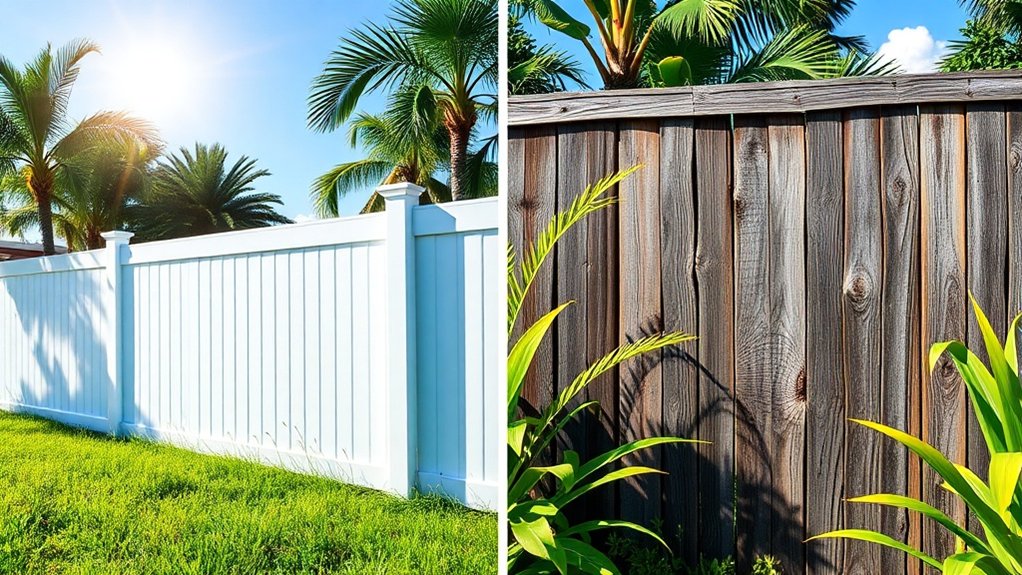
When comparing durability, vinyl fences clearly outshine wood. They resist Florida’s harsh climate and pests, lasting over 25 years with little upkeep. In contrast, wood is vulnerable to moisture and insects, which can significantly shorten its lifespan, especially in humid areas. High-Quality Materials are essential for ensuring long-lasting fence performance, making vinyl a superior choice. Durability and Weather Resistance is a key factor to consider when choosing between these materials.
Vinyl Resistance Factors
Vinyl fences are known for their durability, especially in tough environments like Florida. Key factors enhance their longevity and performance:
| Resistance Factor | Description |
|---|---|
| UV Resistance | Special stabilizers prevent fading and brittleness. |
| Water Resistance | Non-porous material stops rot and swelling. |
| Impact Resistance | Flexible design absorbs energy from impacts. |
| Thermal Stability | Engineered to reduce warping in high heat. |
| Repairability | Local damage can be easily fixed. |
These features make vinyl a smart choice for Florida’s challenging climate. With an average lifespan of 20 to 30 years, vinyl fences offer long-term value and reliability for homeowners. Additionally, their low maintenance requirements mean that homeowners can enjoy their fences without the hassle of frequent upkeep.
Wood Lifespan Limitations
Wood fences have a limited lifespan, especially in Florida’s tough climate. Without treatment or proper maintenance, they typically last only 5–10 years due to wood rot and insects.
Even pressure-treated wood or cedar, with regular care, usually lasts around 10–20 years. UV damage can worsen deterioration, making the wood brittle and more prone to decay.
To prolong their life, you need to seal them every 2–3 years and repair any rotted boards. The salty air can also cause corrosion, adding to maintenance costs.
While wood can be functional, it often doesn’t last as long as more durable materials, requiring constant investment and attention.
Storm Performance Comparison
In Florida, where severe weather is common, choosing the right fencing material is crucial.
Vinyl fencing is a top choice because it withstands strong winds of 100–130 mph without breaking, thanks to its reinforced posts and deep concrete footings. It redirects wind forces effectively, holding up even in hurricanes.
In contrast, wood fences often snap or collapse under such pressure. Vinyl also resists moisture, so it won’t rot or warp in Florida’s humidity. Plus, UV-resistant options ensure it lasts against the sun.
With proper installation that meets Miami-Dade hurricane codes, vinyl is clearly the better option for Florida’s stormy conditions.
Maintenance Requirements
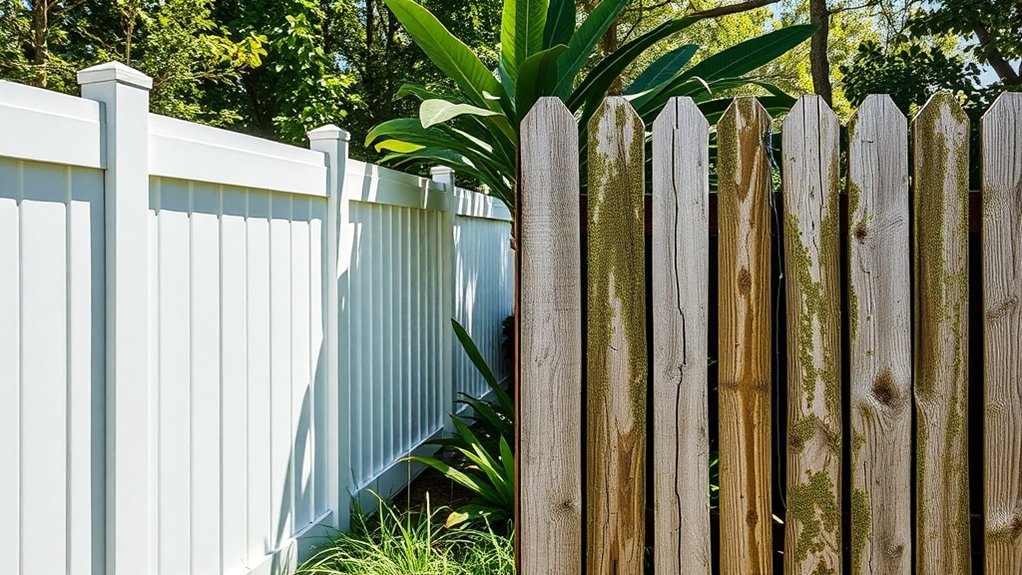
When it comes to maintenance, vinyl fences are a breeze. They only need a good cleaning once a year and occasional checks.
On the other hand, wood fences require more effort: you’ll need to clean them yearly, refinish them every few years, and regularly inspect for damage.
These differences can greatly affect your overall costs and the time you spend on upkeep.
Vinyl Maintenance Advantages
Vinyl fences are low-maintenance and easy to care for.
Cleaning is simple—just use a garden hose to rinse off dirt, and a mild detergent with a soft cloth works for grime twice a year. For stubborn stains, a vinegar-water solution does the trick without harming the fence.
Checking for issues is also straightforward; seasonal inspections help catch cracks or loose posts early. Just shake the posts and check the gates for stability once a year.
Regularly clearing leaves and debris prevents mold, and choosing vinyl with UV inhibitors helps avoid fading in the Florida sun.
With no need for painting or sealing, vinyl fences are a hassle-free choice.
Wood Maintenance Challenges
Wood fences are beautiful but require regular maintenance to stay in good shape. Without proper care, they can suffer from wood rot and insect damage.
Here are some essential maintenance tasks:
- Clean regularly: Use mild soap and soft brushes; aim for a deep clean once a year.
- Inspect monthly: Look for loose boards, rust, and any signs of rot.
- Seal every 2-3 years: Resealing helps protect against weather damage.
- Trim surrounding plants: This improves airflow and helps with drainage.
Skipping these steps can lead to costly repairs and a shorter lifespan for your fence.
Long-Term Maintenance Costs
Long-term maintenance costs for fencing materials can greatly affect your budget.
Vinyl fences usually have lower costs because they require less upkeep, with yearly expenses for cleaning and inspections typically between $100 and $200.
On the other hand, wood fences need more frequent maintenance, costing between $200 and $500 annually for painting, staining, pest control, and repairs for rot and damage.
While vinyl repairs can be pricier per incident, their lifespan of 20 to 30 years means you’ll likely spend less overall compared to wood, which needs constant care.
Therefore, vinyl is often a more economical choice in the long run.
Aesthetic Appeal
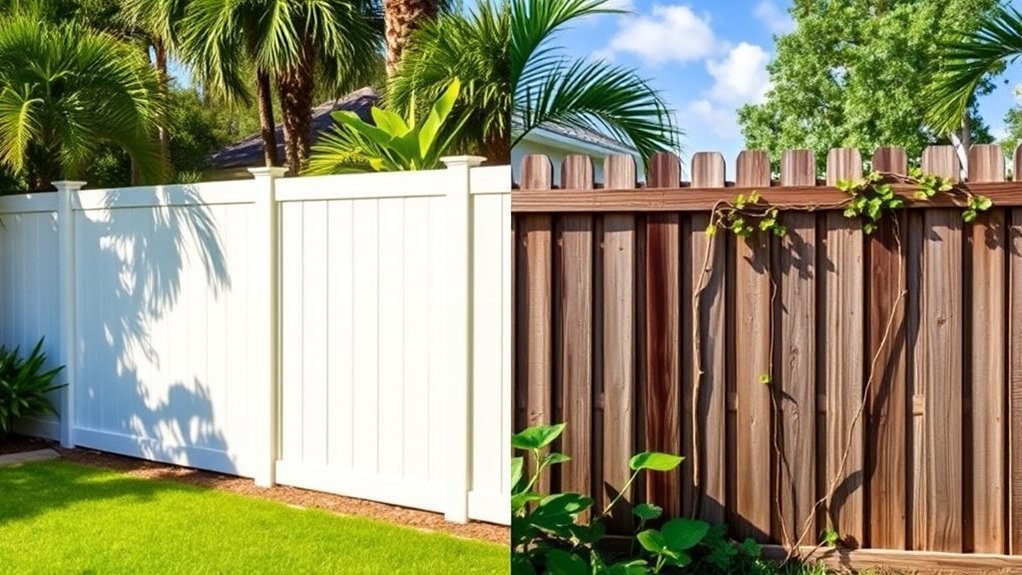
When deciding between vinyl and wood fencing, aesthetic appeal plays a key role.
Here’s a quick comparison:
- Visual Texture: Wood has a warm, natural look with unique grain patterns, while vinyl offers a sleek, modern appearance with uniform lines.
- Design Flexibility: Wood can be customized into various profiles and designs, whereas vinyl comes in pre-made styles that limit creativity.
- Color Choices: You can paint or stain wood for different finishes, but vinyl is restricted to a set palette that’s hard to change.
- Durability: High-quality vinyl keeps its color and shine longer, while wood needs regular maintenance to stay looking fresh.
Ultimately, your choice should reflect your personal style and complement your property’s look.
Performance in Florida Climate
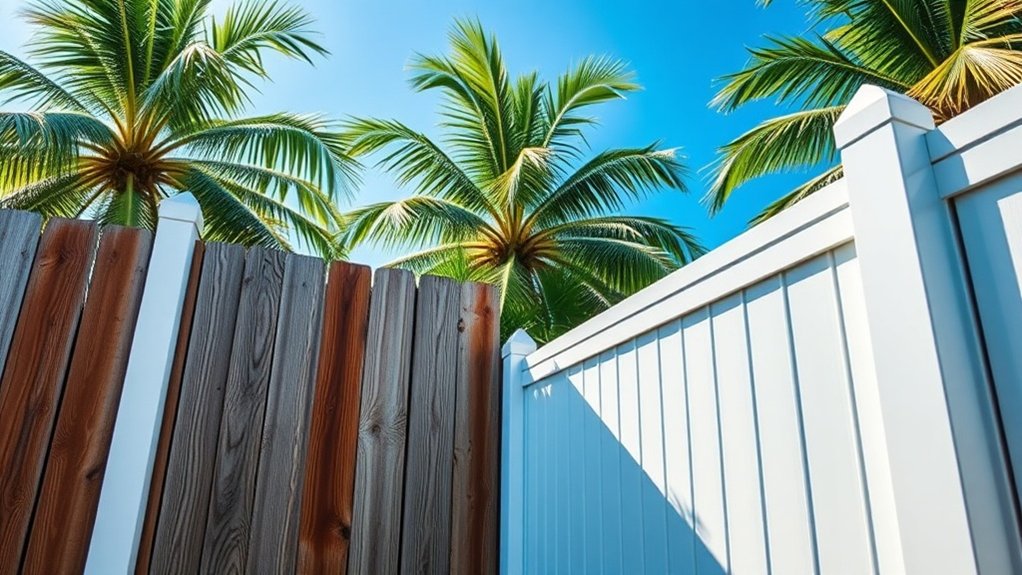
When choosing a fencing material in Florida, it’s crucial to consider the climate. Both vinyl and wood have pros and cons related to moisture, UV exposure, and pests.
| Feature | Vinyl | Wood |
|---|---|---|
| Moisture Resistance | Won’t rot, non-porous | Prone to rot, porous |
| UV Stability | Colorfast, UV-stabilized | Fades quickly, needs repainting |
| Wind Performance | High wind ratings | Needs deep posts for stability |
| Pest Resistance | Insect-resistant | At risk from termites |
Your choice will depend on local weather conditions, aesthetics, and durability needs. Consider what works best for your situation to withstand Florida’s unique challenges.
Long-Term Value
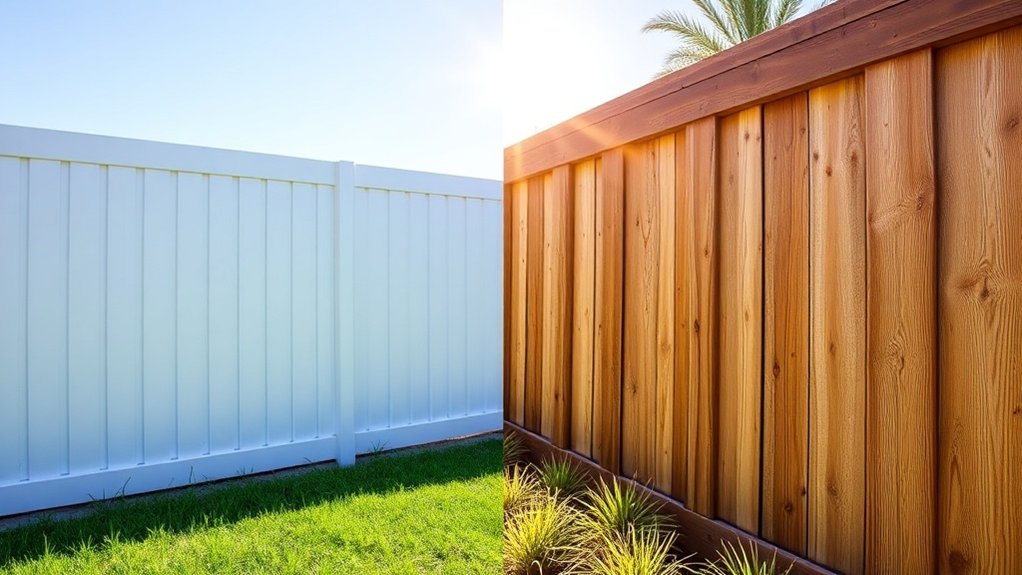
When choosing between vinyl and wood fences, it’s important to consider their long-term value.
Here’s a quick comparison:
- Initial Costs: Wood costs about $13.50–$17 per foot, while vinyl ranges from $16.70–$22.50 per foot.
- Maintenance: Wood needs regular upkeep, leading to higher long-term costs. Vinyl requires much less maintenance.
- Lifespan: Wood lasts 10–20 years with care, whereas vinyl can last 20–30 years or more.
- Depreciation: Wood loses value faster due to maintenance demands, while vinyl retains its value longer.
For homeowners in Florida, investing in vinyl generally offers better long-term value and lower replacement costs, making it a smarter choice.
Environmental Impact
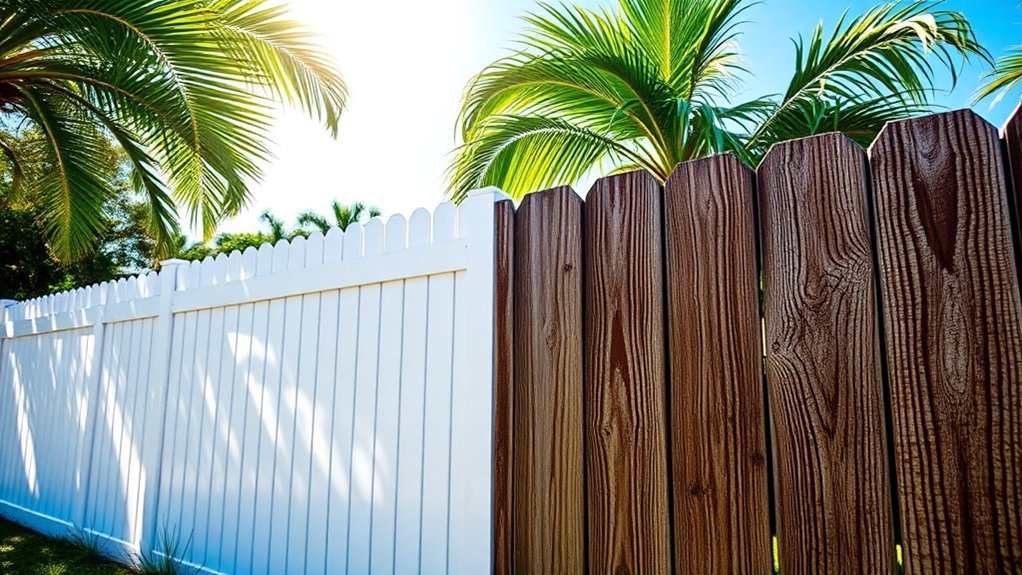
Evaluating the environmental impact of vinyl and wood fences is crucial for informed choices. Here’s a straightforward comparison:
| Aspect | Vinyl Fences | Wood Fences |
|---|---|---|
| Material Source | Made from fossil-fuel-derived PVC | Sourced from renewable forests |
| Lifespan & Maintenance | Lasts 20-30 years with minimal chemicals | Lasts 5-15 years, needs chemical treatments |
| Recycling Potential | Limited recycling options | Can be reclaimed and reused |
Vinyl production is energy-heavy and can produce harmful byproducts, while sustainably sourced wood is a renewable option. However, wood often needs maintenance that may involve chemicals. Vinyl fences struggle with recycling, leading many to end up in landfills despite being potentially recyclable.
Final Thoughts on Choosing the Right Fence
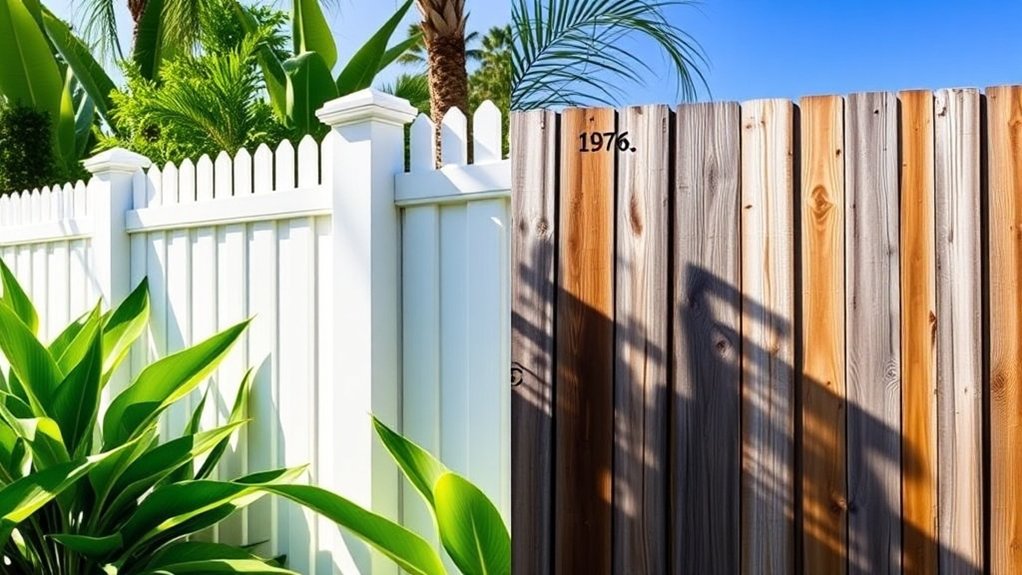
When choosing a fence for your property, consider the pros and cons of vinyl and wood. Your decision should reflect your preferences and long-term goals. Here are key points to think about:
- Durability: Vinyl fences can last 20-30 years, while wood typically lasts 12-20 years if well-maintained.
- Cost: Vinyl installation can range from $3,000 to over $6,000, but it usually costs less in upkeep over time.
- Maintenance: Vinyl needs minimal care, while wood requires regular staining and sealing to keep it looking good.
- Aesthetics: Wood offers a classic, natural look, while vinyl has a contemporary, fade-resistant appearance.
Choose a fence that fits your lifestyle and the Florida climate, ensuring it meets your needs effectively.
Frequently Asked Questions
Can I Install a Vinyl Fence Myself?
Yes, you can install a vinyl fence yourself. Start by taking accurate measurements and ensuring your posts are aligned correctly. Gather the necessary tools, assess your terrain, and plan for concrete curing time to ensure your project goes smoothly. For example, if you’re on uneven ground, you may need to adjust your post heights. With careful planning, you can achieve great results on your own.
How Does Vinyl Fencing Affect Property Value?
Vinyl fencing can significantly increase your property’s appeal, making it more attractive to potential buyers. It’s a durable, low-maintenance option that can boost your home’s value. When you sell, you might recoup 50% to 70% of the installation costs, making it a smart investment.
Are There Color Options for Vinyl Fencing?
Yes, vinyl fencing comes in a variety of colors, including standard and specialty options. While these colors are durable, remember that textured finishes might need specific cleaning methods to keep them looking good.
Can I Paint a Vinyl Fence After Installation?
Yes, you can paint a vinyl fence after installation, but it’s generally not advised. Painting can lead to adhesion problems, resulting in chipping and peeling. Additionally, it might void any warranties you have. If you do choose to paint, make sure to properly prepare the surface to ensure the best results.
What Is the Best Time to Install a Fence in Florida?
The ideal time to install a fence in Florida is between November and April. This dry season reduces delays caused by rain, allows materials to adjust better, and ensures smoother project execution in pleasant weather.
Conclusion
In summary, the choice between vinyl and wood fencing in Florida hinges on factors like cost, durability, and local climate. Vinyl fences can last 25-30 years, while wood fences usually last 15-20 years, making vinyl the more durable option. When choosing a fence, think about your budget, how much maintenance you want, and the look you want to achieve. The right fence not only enhances your property but also holds up against Florida’s weather, ultimately affecting your home’s value and curb appeal.