
To safely and efficiently remove a fence, you’ll need to assess the project, gather vital tools, and take proper precautions. Start by examining the fence’s condition and surrounding area. Equip yourself with appropriate removal tools and personal protective gear. Before breaking ground, conduct utility checks and clear the work area. Follow specific techniques based on your fence type: wooden, chain-link, metal, or vinyl. Remove components systematically, starting with gates and panels before tackling posts. Sort materials for proper disposal or recycling, and clean up the site thoroughly. By following these steps, you’ll guarantee a smooth and hazard-free fence removal process. The details that follow will guide you through each important stage.
Key Takeaways
- Assess the fence condition, material, and surrounding area to plan the removal process effectively.
- Gather appropriate tools and personal protective equipment based on the fence type and project scope.
- Conduct utility checks and clear the work area of obstacles before beginning removal.
- Remove fence components systematically, starting with gates and panels before tackling posts and concrete footings.
- Sort and dispose of materials properly, filling post holes and grading the area for future use.
Assessing Your Fence Removal Project
Before initiating a fence removal project, it’s essential to thoroughly assess the situation. Examine the fence condition, noting any structural issues, rot, or damage. This evaluation will inform your removal strategy and help identify potential hazards.
Consider the fence’s material, height, and length, as these factors influence the tools and techniques you’ll need. Popular fence styles and materials vary widely, which can impact the complexity of removal.
Establish a realistic removal timeline based on the fence’s intricacy and your available resources. Factor in any local regulations or permits required for fence removal. You’ll also need to determine the disposal method for the removed materials, whether it’s recycling, repurposing, or proper waste management.
Assess the surrounding landscape, including nearby structures, utilities, and vegetation. Identify any obstacles that might complicate the removal process. If the fence is shared with neighbors, communicate your plans and address any concerns they may have.
Consider hiring professionals if the project involves challenging elements like concrete footings or electrical components.
Evaluate your tools and safety equipment, ensuring you have everything necessary for the job. By conducting a thorough assessment, you’ll be well-prepared to execute a safe and efficient fence removal project.
Essential Tools and Equipment
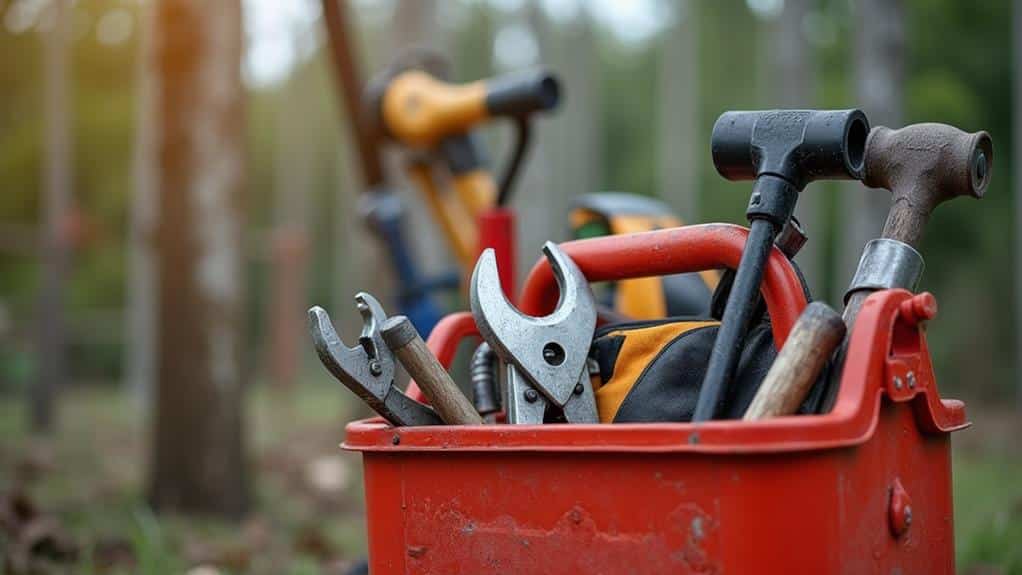
Once you’ve completed your assessment, gathering the right tools and equipment becomes your next priority. The specific removal tools you’ll need depend on your fence type and material.
For wooden fences, you’ll require a pry bar, reciprocating saw, and hammer. Metal fences may necessitate bolt cutters, an angle grinder, and wire cutters. Chain-link fences often demand specialized tools like tension bar pullers and fence pullers.
When removing vinyl fences, which are known for their durability and low maintenance, you may need additional tools like a heat gun to soften the material for easier disassembly.
Essential equipment types include personal protective gear such as safety glasses, work gloves, and steel-toed boots. You’ll also need a wheelbarrow or cart for debris removal, and a sturdy ladder for taller fences.
Don’t forget measuring tools like a tape measure and level to guarantee precise cuts and alignments during removal.
For larger projects or stubborn posts, consider renting heavy-duty equipment like a post puller or mini excavator. These machines can greatly reduce labor and time.
If you’re dealing with concrete footings, a jackhammer or demolition hammer will be indispensable. Remember to check local regulations regarding power tool usage and noise restrictions before beginning your fence removal project.
Safety Precautions and Preparations
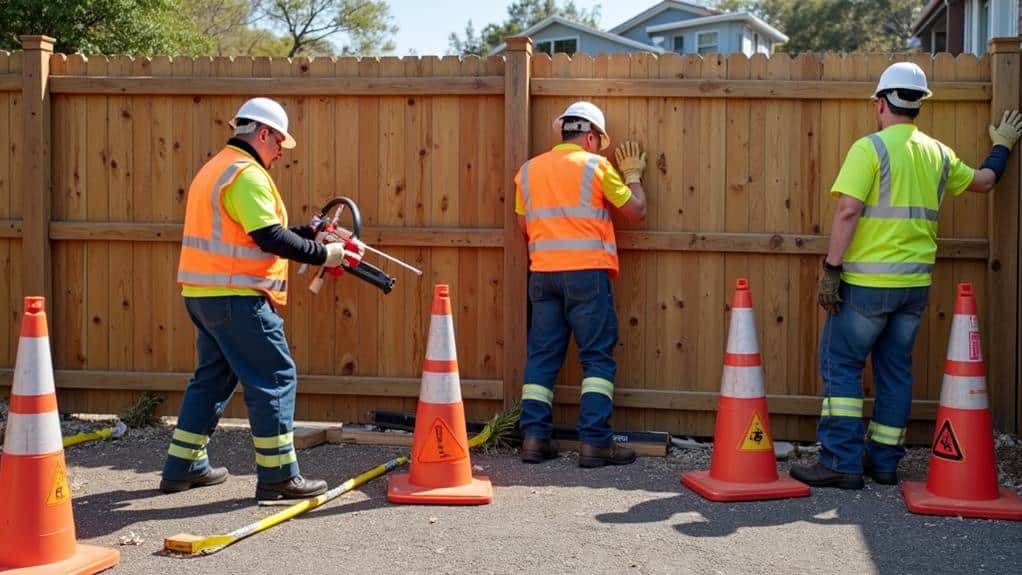
Safety-first mindset is vital when starting on a fence removal project. Before you begin, make sure you’re equipped with proper personal protective equipment (PPE). This includes safety glasses, work gloves, steel-toed boots, and a hard hat. Long sleeves and pants are also recommended to protect against scratches and splinters.
Consider the property boundaries and any shared fencing with neighbors to avoid potential disputes during the removal process.
Conduct thorough utility checks before breaking ground. Contact your local utility companies to mark underground lines, preventing accidental damage to gas, water, or electrical services. This step is essential for both safety and legal compliance.
Prepare your work area by:
- Clearing the fence line of vegetation and debris
- Identifying and addressing potential hazards like unstable soil or overhead power lines
- Setting up a designated area for tools and removed materials
Assess the fence’s condition and structure. Identify any rot, rust, or instability that might affect the removal process.
Plan your approach based on the fence type and materials. For metal fences, consider using a cutting torch or angle grinder. Wooden fences may require pry bars or reciprocating saws.
Inform neighbors of your project, especially if the fence is shared. This courtesy can prevent misunderstandings and make for a smooth removal process.
Step-by-Step Removal Techniques

With the necessary preparations complete, you’re ready to begin the fence removal process. Different fence types require specific removal methods, so identify your fence material before proceeding. Understanding the cost of fence installation can help you appreciate the value of salvaging materials during removal, potentially offsetting future expenses.
For wooden fences, start by removing any gates or loose boards. Use a pry bar to detach boards from rails, working from one end to the other. Once boards are removed, extract posts by digging around the base and rocking them back and forth. For concrete-set posts, break up the concrete with a sledgehammer before removal.
Chain-link fences require a different approach. Begin by removing the tension bands and top rail. Unwind and remove the mesh fabric, then extract the line posts. Finally, remove corner and gate posts, which may require more force due to deeper concrete footings.
For metal panel fences, unbolt or unscrew panels from posts. Remove posts as you’d for wooden fences.
Vinyl fences often snap together, so carefully separate sections before removing posts.
Regardless of fence type, work methodically and maintain awareness of your surroundings. Properly dispose of materials according to local regulations, and fill any holes left by post removal.
Disposal and Site Cleanup

After completing the fence removal process, you’ll need to address the disposal of materials and site cleanup. Proper debris management is vital for environmental responsibility and site safety.
Sort materials into categories: metal, wood, concrete, and miscellaneous. Contact local recycling facilities to determine which materials they accept. Many metal components can be recycled, while wood may be repurposed or disposed of separately.
For efficient disposal and recycling materials:
- Rent a dumpster for large-scale projects or use a truck for smaller removals
- Separate recyclable materials from general waste to maximize recycling efforts
- Check local regulations for proper disposal of treated wood or hazardous materials
Once materials are removed, focus on site cleanup. Fill post holes with soil, compacting it to prevent future settling.
Remove any remaining debris, including small metal fragments or concrete chips. Grade the area to guarantee proper drainage and prevent water accumulation.
If landscaping is planned, prepare the soil by tilling and adding amendments as needed. Finally, inspect the entire area for any overlooked items or potential hazards.
Proper disposal and thorough cleanup will leave your property ready for its next use.
Frequently Asked Questions
Can I Remove a Fence Without Notifying My Neighbors?
You shouldn’t remove a fence without notifying your neighbors. It’s essential to respect property rights and maintain open neighbor communication. Consult local regulations and property lines before proceeding. Unilateral fence removal can lead to legal complications.
How Do I Handle Property Line Disputes During Fence Removal?
You’re facing a property line dispute? Don’t panic. First, commission property surveys to establish precise boundaries. Then, seek boundary agreements with neighbors. If unresolved, consult a real estate attorney before proceeding with any fence removal or alteration.
What Are the Legal Implications of Removing a Shared Boundary Fence?
You’ll face legal implications if removing a shared boundary fence without consent. Shared ownership dictates mutual agreement. Consult boundary agreements and local laws. Unauthorized removal can lead to disputes, property damage claims, and potential litigation. Always obtain written permission.
Are There Any Eco-Friendly Alternatives to Traditional Fence Disposal Methods?
You’ll find several eco-friendly alternatives to traditional fence disposal. Consider recycling options for metal or wood components. Repurpose materials for landscaping or DIY projects. Look for local facilities that accept sustainable materials for proper processing and reuse.
How Soon After Fence Removal Can I Start a New Landscaping Project?
You can start landscaping immediately after fence removal. However, it’s advisable to conduct a thorough soil assessment first. Begin landscape preparation by evaluating soil quality, removing debris, and addressing any compaction issues before implementing your new design.
Conclusion
You’ve now equipped yourself with the knowledge to tackle fence removal safely and efficiently. Remember, proper planning and adherence to safety protocols are essential. Have you considered the potential challenges specific to your project? By following the techniques outlined, you’ll minimize risks and streamline the process. Always dispose of materials responsibly and restore your site. With these tools and methods at your disposal, you’re ready to successfully complete your fence removal project.