If you’re in South Florida’s High-Velocity Hurricane Zones (HVHZ), knowing the fencing standards is crucial. Strict building codes ensure your fence can handle winds over 175 mph, safeguarding your property. You’ll need permits for installation and must follow height regulations. Durable materials like galvanized chain-link and aluminum work well but require specific maintenance. Steer clear of common installation errors to keep your fence compliant and secure. Stay informed about the best options and maintenance tips to protect your home.
Understanding HVHZ: What It Means for Homeowners
Understanding High-Velocity Hurricane Zones (HVHZ) is crucial for homeowners in Miami-Dade and Broward Counties. These areas experience some of the strongest hurricane winds in the U.S., with a history of 57 hurricanes since 1851. After Hurricane Andrew in 1992, Florida implemented stricter building codes for HVHZ, making them more rigorous than those in non-HVHZ areas. Homeowners must use HVHZ-approved products to ensure their homes can withstand extreme winds and flying debris. HVHZ compliance is necessary for windows, doors, and other installations to enhance safety and resilience against hurricanes. Staying informed about these requirements helps you better protect your property and adapt to safety standards in hurricane-prone areas.
Importance of Strict Building Codes in HVHZ
In the High Velocity Hurricane Zone (HVHZ), strict building codes are vital for safety and protecting your property. These rules ensure that buildings can endure severe weather, improving their strength during hurricanes. Following these codes helps prepare your home for storms, minimizes damage, and provides peace of mind. For instance, using reinforced windows can prevent breakage from flying debris, keeping your home safer. Additionally, compliance with enhanced codes ensures better safety standards, as they are developed from ongoing research into wind resistance. Understanding zoning laws is also crucial, as they dictate specific regulations for fencing and other structures that contribute to overall property safety.
Hurricane Preparedness Strategies
Hurricanes pose a serious threat to Miami-Dade and Broward counties, making strict building codes in High-Velocity Hurricane Zones (HVHZ) essential. These codes ensure that homes and businesses can withstand strong winds and impacts. For example, they require that walls, roofs, and windows pass rigorous testing to meet high standards. This not only protects your property but can also reduce repair costs after a storm. Following these codes is important for safety, and it can lower insurance premiums and boost your property’s resale value. Additionally, compliance with Florida’s roofing code ensures that your home is equipped with the necessary features to withstand extreme weather conditions. Proper fencing materials are also vital in hurricane preparedness, as they can significantly enhance the overall resilience of your property. Prioritizing these strategies is crucial for effective hurricane preparedness in South Florida.
Structural Integrity Assurance
Strict building codes in High-Velocity Hurricane Zones (HVHZ) are vital for protecting homes and businesses in Miami-Dade and Broward counties. These codes cover everything from choosing durable materials for fences to designing entire buildings. You need to use impact-resistant materials that comply with Miami-Dade NOA or Florida Product Approval standards. This ensures that fences and structures can handle wind speeds of up to 200 mph. Features like continuous load paths and proper reinforcement also help maintain stability during hurricanes. By following these rules, you not only safeguard your property but also strengthen your home’s ability to withstand severe weather. Additionally, selecting durable materials ensures long-lasting performance against harsh weather conditions.
Fencing Code Requirements for South Florida
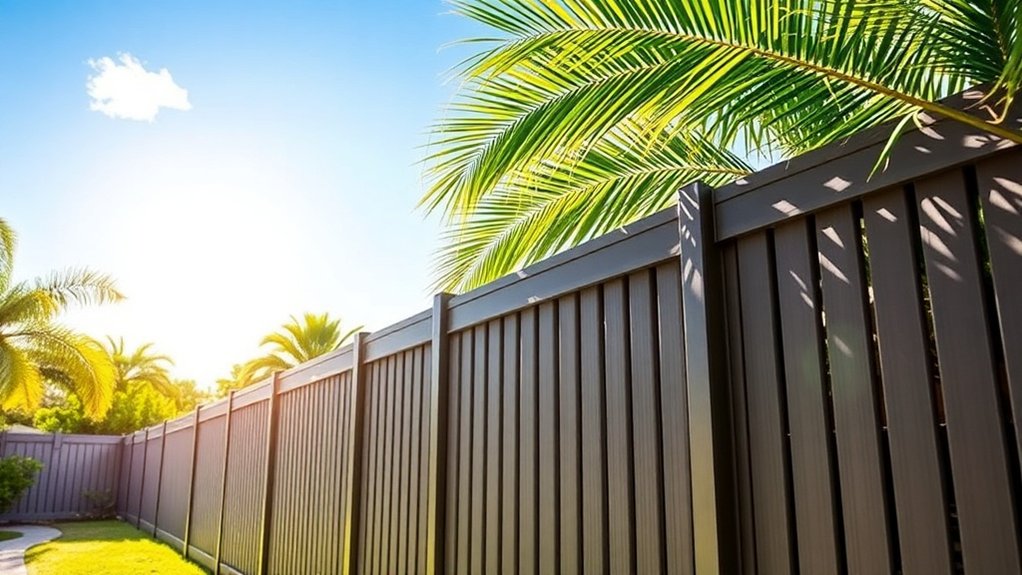
If you’re planning to install a fence in South Florida, particularly in the High-Velocity Hurricane Zone (HVHZ), it’s crucial to follow the strict code requirements for safety and durability.
The 2023 Florida Building Code requires fences to withstand wind speeds of over 175 mph, especially in Broward and Miami-Dade counties where enforcement is strict.
For fences up to six feet tall, there are specific rules for post installation and spacing to ensure they remain sturdy.
You’ll also need a permit, which typically costs between $200 and $400, and may require engineer-sealed drawings or manufacturer approvals.
Wood Fence Specifications for HVHZ Compliance
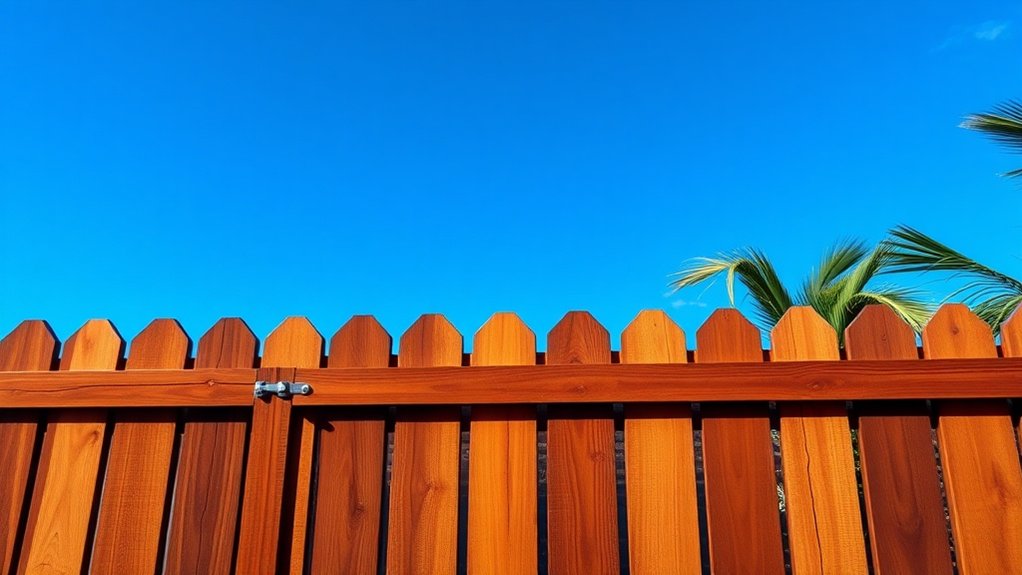
When installing a wood fence in a High Velocity Hurricane Zone (HVHZ), it’s crucial to follow specific guidelines for post spacing, concrete footings, and height limits.
For example, posts should be spaced no more than 6 to 8 feet apart to ensure stability. Use at least a 12-inch deep concrete footing to anchor each post securely.
Additionally, the fence height shouldn’t exceed 6 feet to comply with regulations. Adhering to these standards is key to protecting your property from severe weather.
Post Spacing Requirements
Post spacing is crucial for ensuring your wood fence meets HVHZ standards, especially in high wind areas.
Typically, posts should be spaced 6 to 8 feet apart. For taller fences or in windy locations, opt for 6-foot spacing for better stability.
If you’re using 8-foot panels, aim for 8-foot spacing or slightly less, like 7.5 feet, to properly support the weight.
Always check local regulations, as requirements may vary based on fence height and soil conditions. This ensures your fence is durable and safe.
Concrete Footing Specifications
Concrete footings are crucial for ensuring your wood fence meets HVHZ standards, especially in windy areas.
To provide strong support, your footings should be at least 10 inches in diameter and your posts must be buried at least 2 feet deep. This setup helps your fence endure winds up to 175 mph.
For added strength, use #4 dowels for wall connections, extending 20 inches above and below the joint.
Make sure there’s a minimum of 3 inches of concrete cover over the reinforcement to protect it from the elements.
If your footings exceed 30 inches in width, add cross bars to prevent bending and boost your fence’s durability against hurricanes.
Height Limitations and Design
To ensure your wood fence meets HVHZ standards, it’s important to know the height limits and design requirements. Your fence should be no taller than 6 feet unless you have full engineering approval.
For a 6-foot fence, use 4×4 posts spaced every 4 feet; for a 5-foot fence, space them every 5 feet. If your fence is over 4 feet, make sure to include at least three 2×4 rails for stability.
Use decay-resistant materials and corrosion-resistant fasteners. Since your fence must withstand winds of 175+ mph, following the Florida Building Code is crucial for safety and durability in South Florida.
Chain-Link Fence Specifications for High Winds
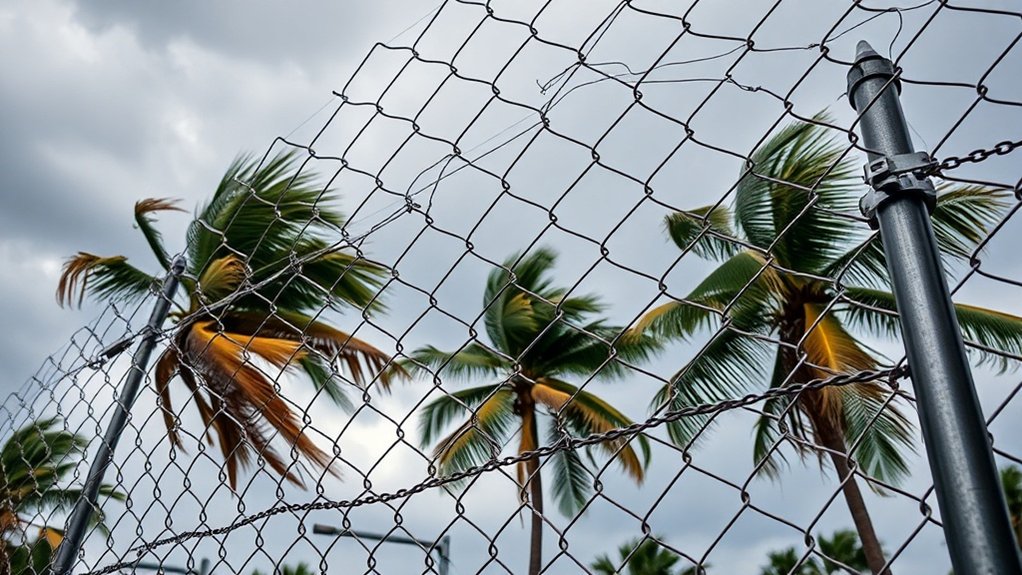
To ensure your chain-link fence can handle high winds, focus on these key specifications:
- Fabric Strength: Choose high-strength fabric with a minimum yield strength of 50,000 psi.
- Wire Gauge: Use 11 gauge wire for fences over 6 feet tall.
- Mesh Size: Opt for smaller mesh sizes, like 1-3/4 inches, to improve wind resistance.
- Line Posts: Use galvanized steel posts with a minimum footing depth of 24 inches.
- Footings and Spacing: Ensure proper design for footings and spacing to enhance stability against wind loads.
Following these guidelines will help your fence stand strong during storms.
Choosing the Best Materials for Hurricane Resistance
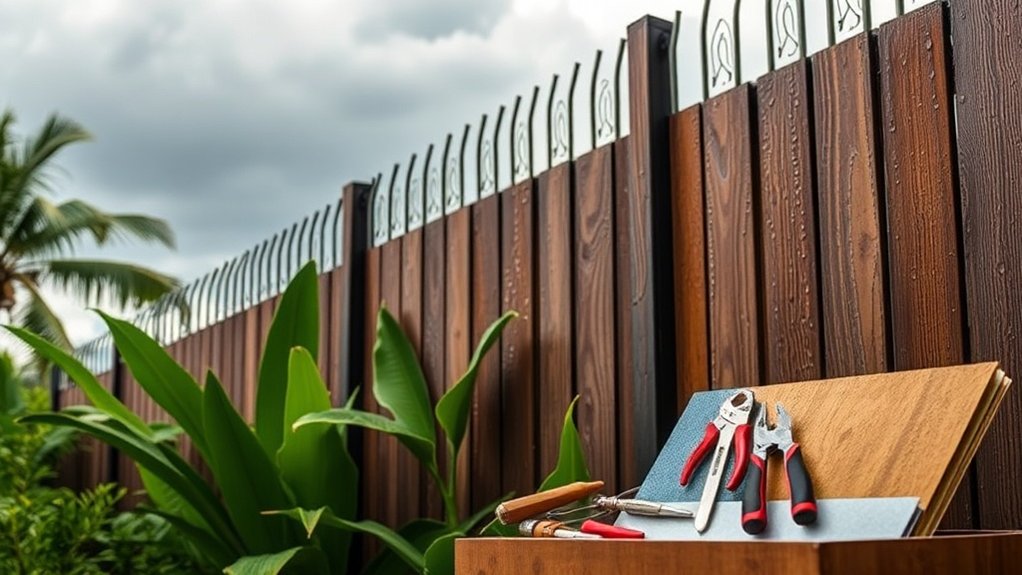
When selecting materials for hurricane-resistant fencing, consider the benefits of galvanized chain-link versus aluminum and steel.
Galvanized chain-link is lightweight and resistant to corrosion, making it effective against strong winds.
On the other hand, aluminum and steel offer superior strength, helping your fence endure severe weather.
Both options have their advantages, so choose based on your specific needs for durability and protection.
Galvanized Chain-Link Benefits
When it comes to hurricane-resistant materials, galvanized chain-link fencing is an excellent choice. Its durability and corrosion resistance make it ideal for coastal areas like South Florida.
The hot-dip galvanizing process coats the steel in zinc, dramatically reducing rust and extending the fence’s lifespan to up to 50 years in optimal conditions.
The flexibility of the chain-link fabric allows it to bend during high winds without breaking, enhancing its performance.
You can also opt for vinyl coatings for added UV protection and durability.
Choosing galvanized fencing ensures you get a long-lasting and effective barrier against the elements.
Aluminum and Steel Durability
Choosing materials for hurricane-resistant fencing is crucial for durability and performance. Here’s a quick comparison of aluminum and steel:
| Feature | Aluminum Benefits | Steel Drawbacks |
|---|---|---|
| Wind Resistance | Withstands winds up to 160 mph | Withstands only up to 150 mph |
| Corrosion Resistance | Naturally rust-resistant | Prone to rust without treatment |
| Structural Integrity | 98% integrity post-hurricane | 93% survival rate over 7 years |
| Maintenance | Low maintenance, easy to clean | Needs regular rust-proof coatings |
| Longevity | Lasts 20-50 years with minimal wear | Lasts 20-50 years but requires upkeep |
Aluminum is ideal for coastal areas due to its flexibility and corrosion resistance, while steel offers higher strength but demands more maintenance. Choose wisely based on your specific needs!
Permitting Process for Fencing in HVHZ
Understanding the permitting process for fencing in High-Velocity Hurricane Zones (HVHZ) is crucial for ensuring compliance with local regulations.
Here’s a simplified breakdown of the key steps:
- Submit a notarized permit application along with two sets of site plans.
- Include engineer-sealed structural drawings or Florida Product Approval documentation if required.
- Ensure your project meets HVHZ impact and wind-load testing standards.
- Be prepared for an inspection before receiving your certificate of completion.
Zoning Rules for Residential Fences
When planning to install a residential fence, it’s crucial to understand the zoning rules in your area regarding height, placement, and materials. These regulations differ by municipality, affecting your design options.
Here’s a quick overview:
| Aspect | Regulations |
|---|---|
| Front Yard Height | Maximum 4 feet |
| Side/Rear Yard Height | Up to 6 feet (or more) |
| Setback Requirement | Usually 15 feet |
| Visibility Triangles | No obstructions allowed |
| Prohibited Materials | Chain link in front yards |
Make sure your fence meets these zoning rules to avoid fines or removal. Always check local codes for detailed requirements, especially about materials and visibility. Understanding these guidelines will help you save time and money!
Special Considerations for Pool Fences
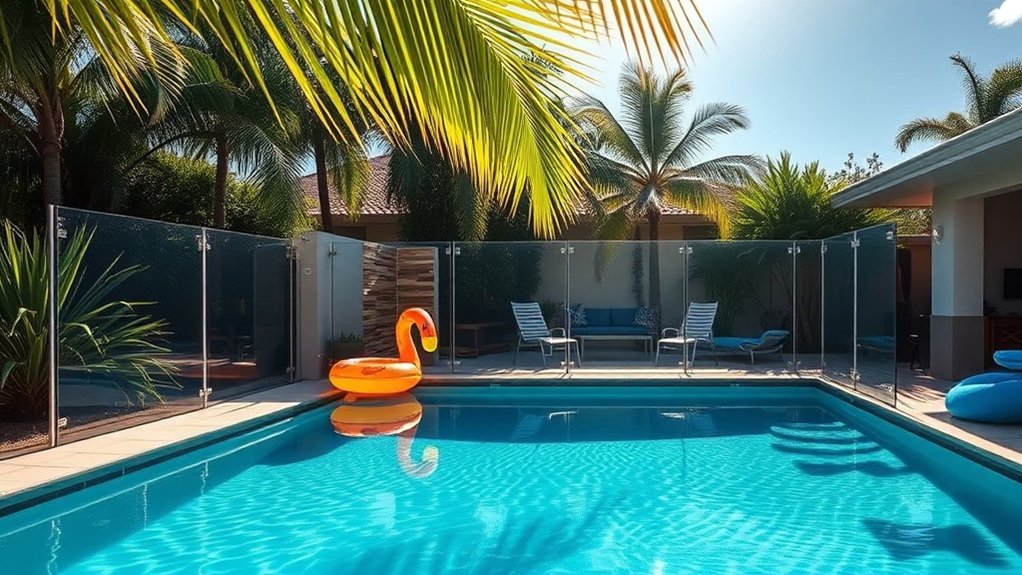
When installing a pool fence, it’s crucial to follow specific safety regulations, especially in residential areas. Here are some key points to consider:
- Height: Ensure your fence is at least 4 feet tall; some regions may require it to be 5-6 feet.
- Gaps: Keep gaps between fence panels no larger than 4 inches, and make sure vertical pickets are spaced no more than 1 3/4 inches apart.
- Gates: Install gates that close and latch automatically, swing outward, and have latches positioned at least 54 inches above the ground.
- Wind Load: If you’re in a high-velocity hurricane zone (HVHZ), confirm that your fence complies with wind load standards as outlined in the Florida Building Code.
Maintenance Tips for HVHZ Fences
To keep your HVHZ fence in great condition, regular maintenance is essential due to high winds and coastal conditions. Here’s a quick overview of different materials and their care:
| Material | Maintenance Tips | Cost Benefits |
|---|---|---|
| Vinyl | Wash every 3 months; no staining needed | Saves $4,000-10,000 over 20 years |
| Composite | Check once a year; use UV sprays | 90% less maintenance than wood |
| Wood | Stain every year; inspect every 3 months | Costs $3,000-6,000 over 12 years |
Choose the right material for your needs, and you’ll ensure your fence lasts longer and saves you money.
Common Mistakes to Avoid When Installing Fences
When installing a fence, paying attention to key details is crucial to avoid costly mistakes. Here are four common pitfalls to steer clear of:
- Neglecting Permits: Always secure the necessary building permits to avoid fines or having to take your fence down.
- Ignoring Property Lines: Get a current property survey and mark utility lines to prevent disputes with neighbors and damage to underground utilities.
- Improper Post Depth: Ensure your posts are buried at least one-third of their height. This is especially important in sandy soil to resist strong winds.
- Choosing Poor Materials: Use hurricane-rated materials and avoid untreated wood to ensure your fence lasts against South Florida’s tough weather.
Being mindful of these details can save you from expensive issues later!
Frequently Asked Questions
How Do I Know if My Fence Meets HVHZ Standards?
To ensure your fence meets HVHZ standards, follow these steps:
- Check the installation guidelines for materials and post specifications.
- Verify the wind resistance ratings of the materials used.
- Confirm that you have the necessary local permits.
If you’re uncertain about any aspect, don’t hesitate to consult a professional for guidance.
Can I Install a Fence Without a Permit in HVHZ?
In HVHZ areas, you must get a permit to install a fence. This ensures your fence meets local building codes and hurricane standards. Always check the permit requirements before starting your project.
What Is the Cost Difference for Hvhz-Compliant Fencing?
Building a strong barrier around your home with HVHZ-compliant fencing can be more expensive. It typically costs 20-50% more than standard options due to the need for reinforced materials and specialized installation. You can expect to pay between $35-$70 per linear foot for aluminum or vinyl fencing.
Are There Specific Colors or Styles Mandated for Fences?
There are no specific color or style requirements for fences under HVHZ. However, local codes or homeowners’ associations (HOAs) may have their own guidelines. It’s important to check these regulations to ensure your fence meets aesthetic standards.
How Often Should I Replace My Fence in HVHZ?
Replace your fence when it reaches the end of its lifespan: vinyl lasts about 20 years, while wood typically lasts around 12 years. To maximize their durability, clean vinyl regularly and stain wood annually. Staying on top of maintenance can help you avoid expensive replacements later on.
Conclusion
In South Florida’s stormy seasons, HVHZ fencing is essential for protecting your home. By adhering to local codes and using the right materials, you can create a strong barrier that keeps your property safe. Regular maintenance is key to ensuring your fence remains durable. By avoiding common mistakes, you can ensure that your outdoor space stays secure during every storm.