
Florida Pool Fence Law Explained: Statute 515.29 Complete Guide

Florida’s Statute 515.29 mandates that residential pools have safety barriers at least 4 feet high to prevent drowning, especially for kids. These barriers must completely surround the pool without any gaps. Gates should swing outward, close automatically, and have secure latches. It’s crucial to follow these rules to avoid legal penalties. Local jurisdictions may have additional requirements, so it’s worth checking for specifics in your area. For a clear understanding of all the rules and best practices, keep reading about this vital law.
Overview of Florida’s Residential Swimming Pool Safety Act
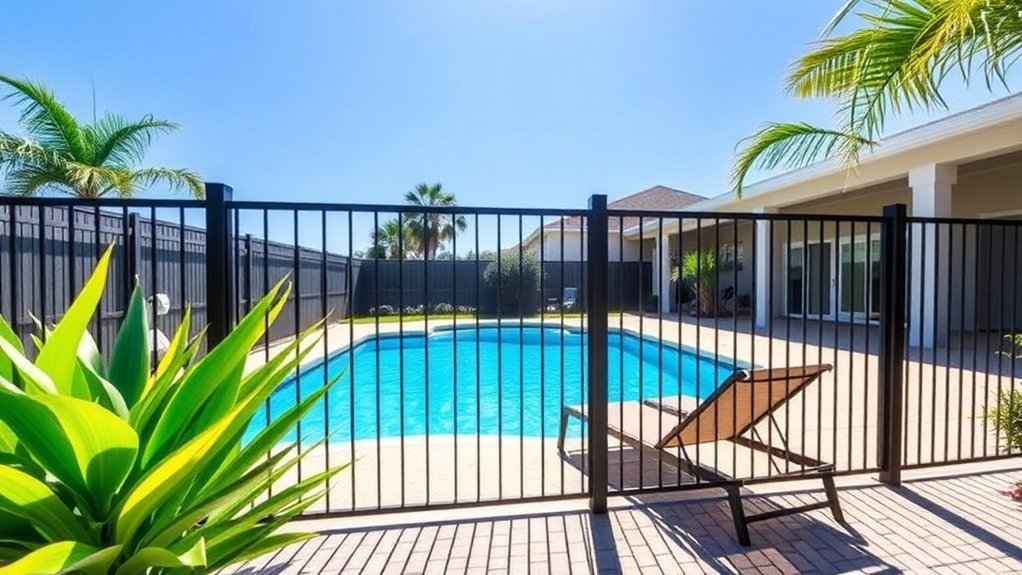
If you own a swimming pool at home in Florida, it’s crucial to know about the Residential Swimming Pool Safety Act. This law requires certain safety measures to protect young children and others.
First, your pool must be surrounded by a barrier that’s at least 4 feet high. This barrier should completely enclose the pool and shouldn’t be connected to any yard fences unless they meet safety standards.
Make sure there are no gaps or features that could allow kids to climb over or crawl under the fence.
Access gates must open outward and be equipped with a self-closing and self-latching mechanism, with the latch positioned out of reach of children. It’s important to remember that Florida has the highest drowning death rate for children ages 1-4 in the U.S., making these safety measures even more vital.
If you’re installing a new pool, you also need to include at least one safety feature, such as a compliant barrier or exit alarms.
Following these regulations is crucial for keeping everyone safe and helps you avoid penalties during inspections.
Purpose and Scope of Statute 515.29
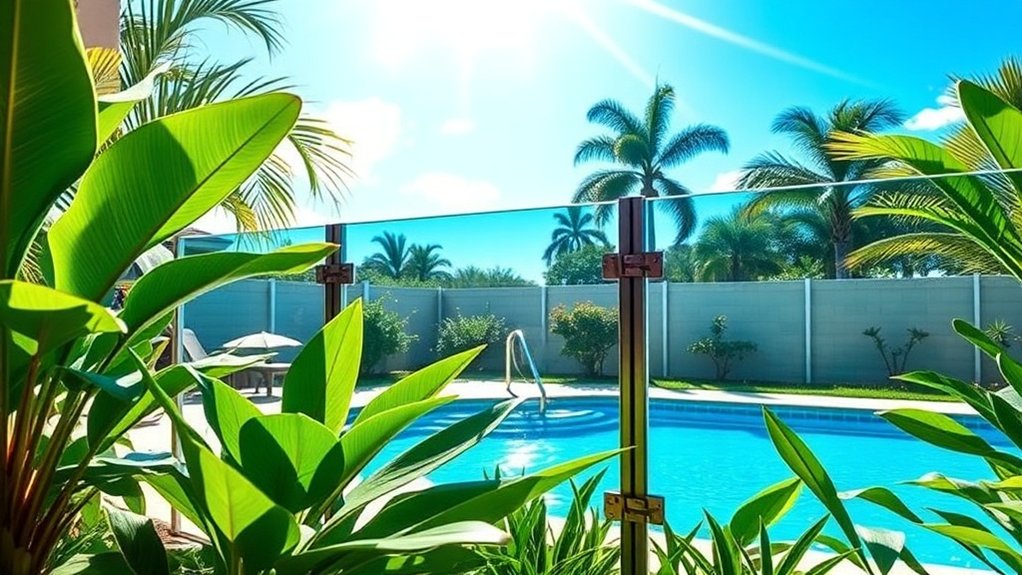
Statute 515.29 is crucial for Florida pool owners as it aims to enhance safety and prevent drowning. This law requires all new residential pools, spas, and hot tubs to have at least one safety feature to keep unsupervised individuals away. Drowning is a major risk for young children and vulnerable seniors in Florida, making this statute important. The Department of Health provides resources and safety education to help pool owners comply and understand the need for supervision. Constant adult supervision is emphasized as a crucial measure in reducing submersion incidents.
Minimum Barrier Requirements for Pool Safety
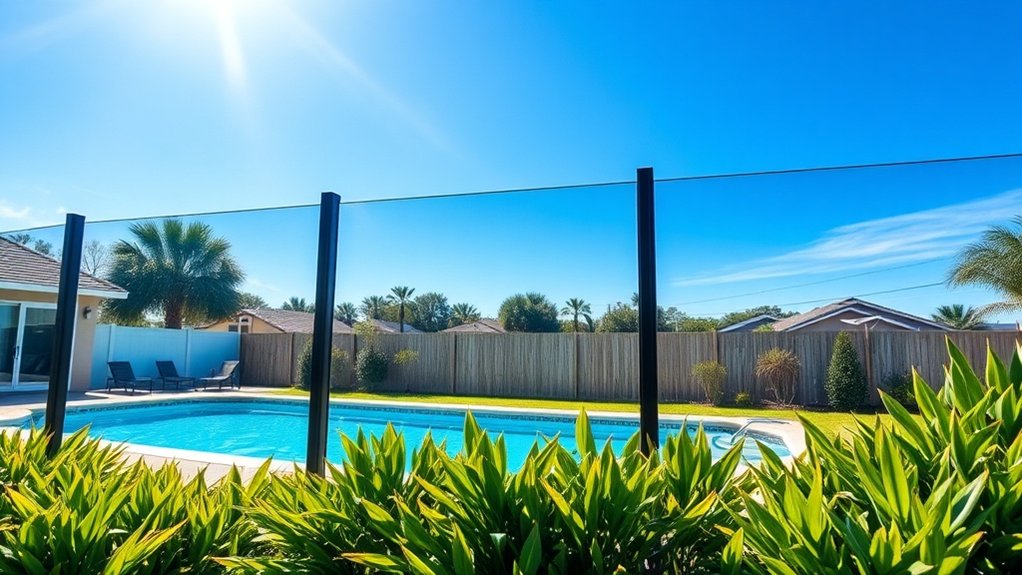
To ensure pool safety, Florida law requires pool owners to meet specific barrier standards. The barrier must be at least 48 inches tall on the side away from the pool and have no more than a 2-inch gap from the ground. Openings should be limited to 4 inches to stop children from getting through. Additionally, the barrier must be hard to climb, with horizontal elements spaced at least 45 inches apart. Fences must resist a force of 50 pounds without breaking. These rules follow national safety standards (ASTM F2286) to keep your pool area secure and reduce drowning risks. Compliance with safety requirements is essential for all fence types to ensure maximum protection for young children.
Following these guidelines is crucial for your safety and peace of mind.
Gate and Access-Control Specifications
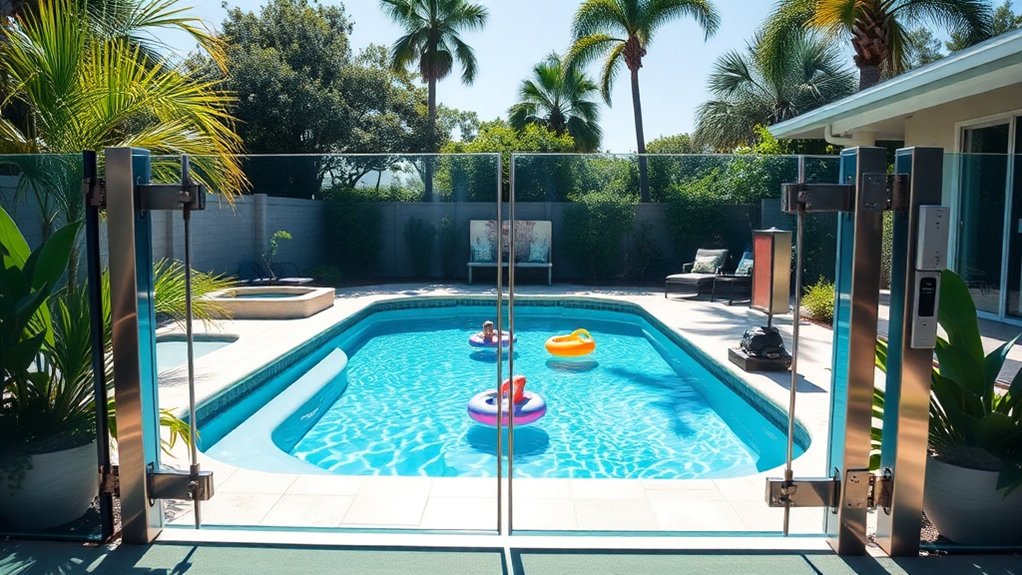
For pool safety, gates must open outward and have reliable self-closing and self-latching mechanisms.
This design prevents unauthorized access and helps keep children safe.
Following these requirements is crucial for compliance and ensuring a secure pool area.
Gate Design Requirements
Gate design is essential for pool safety, ensuring secure access that meets regulations. Here are the key requirements:
- Outward Opening: The gate should open away from the pool to prevent children from pushing it open.
- Self-Closing Mechanism: It must close automatically without needing a push, with enough force and speed to ensure it closes reliably every time.
- Clear Path: Ensure the gate area is free from debris or anything that might block it, like settled ground.
- Child-Proof Release: The mechanism to open the gate should be on the pool side, out of reach of young children.
- No Climbing Aids: Check that nearby structures have no gaps or protrusions that a child could use to climb over.
Latching Mechanism Specifications
To improve pool safety, the latching mechanism of your gate needs careful consideration.
Here are the essential requirements:
- Self-closing gates: These should automatically return to a closed position to limit access.
- Self-latching locking devices: These should engage as the gate closes, providing a secure lock to prevent unauthorized entry.
- Release mechanism location: Place it on the pool side, at least 54 inches high, so that children can’t reach it.
Structural and Material Standards for Barriers
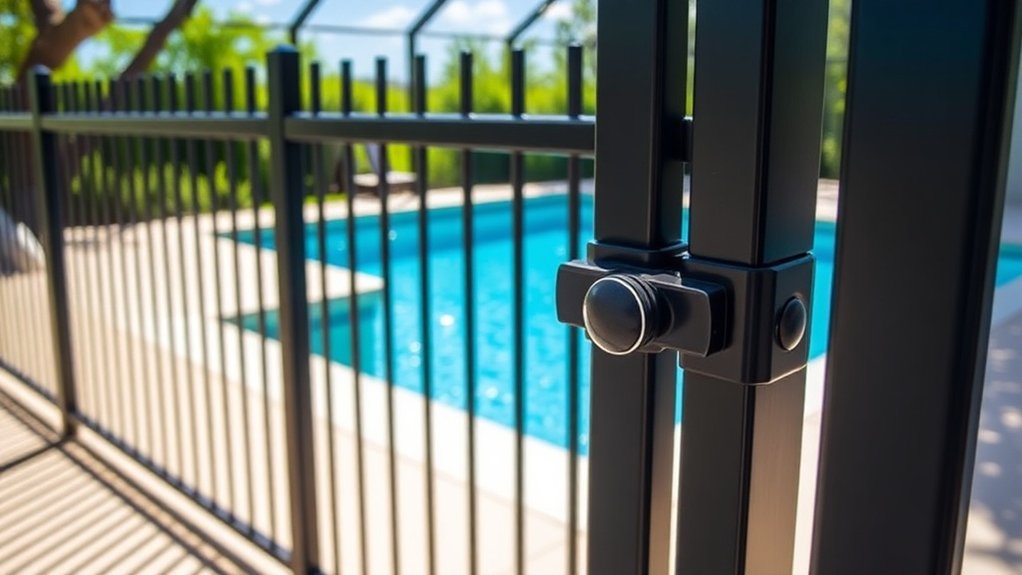
When installing a pool barrier, it’s crucial to choose durable materials and follow recommended vertical spacing to ensure safety. For example, using materials like sturdy metal or strong mesh can help prevent kids from climbing over. Additionally, adhering to local pool fencing regulations is essential for maintaining safety and compliance.
Barrier Material Specifications
To ensure safety around swimming pools, it’s crucial to follow specific barrier material standards.
Here are the key points:
- Removable mesh fencing must meet ASTM F2286-05 standards.
- Power safety covers should comply with ASTM F1346-91 performance requirements.
- Barriers must be designed without gaps to prevent children from slipping through.
Using the right materials is essential for safety and to keep kids safe.
Recommended Vertical Spacing
Once you have the right barrier material, it’s crucial to follow recommended vertical spacing for pool barriers to ensure child safety and meet regulations. Here’s a simple breakdown of the spacing guidelines:
| Condition | Vertical Spacing |
|---|---|
| Horizontal members ≥ 45 inches | Maximum 4 inches |
| Horizontal members < 45 inches | Maximum 1 3/4 inches |
| Decorative cutouts | Max 1 3/4 inches wide |
| Chain link mesh size | Max 2 1/4-inch square |
Make sure to measure correctly. For example, check that gaps around hinges and cutouts don’t exceed 1 3/4 inches. This ensures a 4-inch sphere can’t fit through, making your pool area safer. Additionally, a well-constructed fence can enhance child and pet safety, providing a secure environment for family activities.
Climbability Reduction Techniques
Climbability reduction techniques are essential for keeping pools safe, especially for young kids.
Here are some key features to consider for a secure pool area:
- Use smooth, rounded vertical posts to prevent climbing aids.
- Limit horizontal rails on the outside and make them round or sloped to remove footholds.
- Space vertical pickets closely to eliminate hand and toe grips.
These simple design choices can significantly enhance pool safety.
Compliance Options for Pool Safety Features
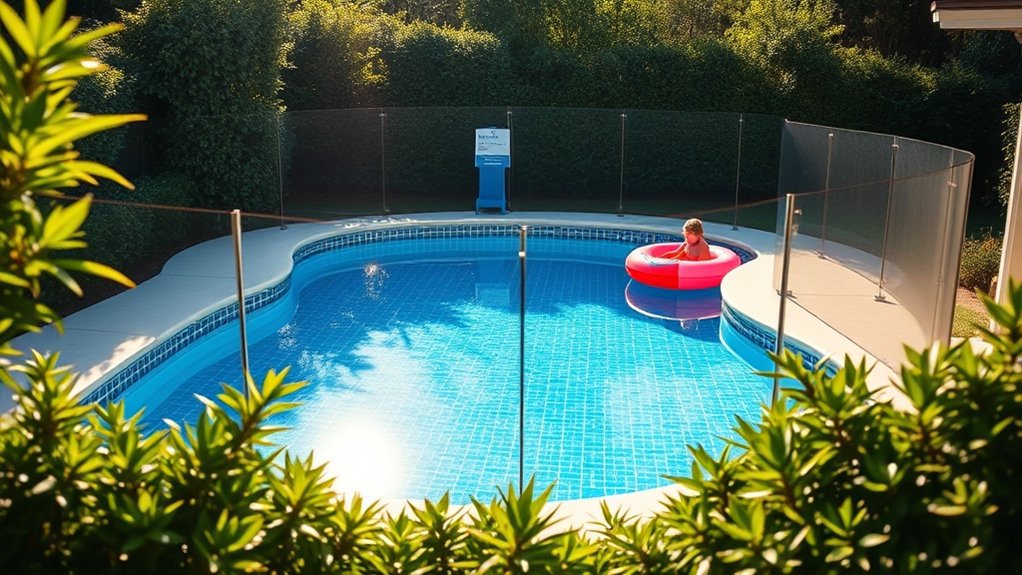
Ensuring pool safety is crucial for homeowners. Here are key compliance options to consider:
- Fencing: Install a minimum 4-foot non-climbable barrier around your pool.
- Gates: Use self-closing and self-latching gates to secure access.
- Door Access: Make sure all doors leading to the pool are equipped with safety devices that are out of reach for young children.
- Pool Covers: Choose approved pool covers that can support weight and prevent access, avoiding simple tarps.
- Alarms: Consider adding in-pool and perimeter alarms for extra protection.
Maintaining these compliance measures is essential to ensure safety and avoid penalties.
Inspections and Documentation Requirements
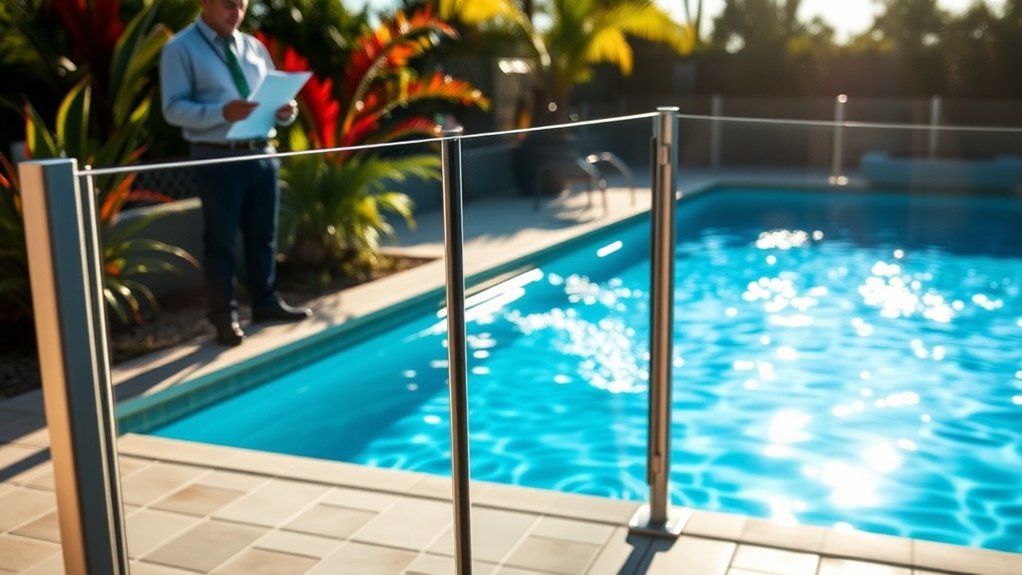
To ensure your pool meets Florida’s safety regulations, follow these key steps for inspections and documentation:
- Confirm safety features comply with Florida Statute 515.29 or approved alternatives.
- Submit a pool barrier affidavit outlining your chosen safety feature.
- Provide proof of compliance with ASTM standards for alarms and safety covers.
During inspections, the inspector will check barriers, gates, and alarm systems for compliance.
Keep essential documents on-site, like manufacturer approvals and compliance certifications, to avoid violations.
Penalties for Noncompliance With Pool Safety Regulations
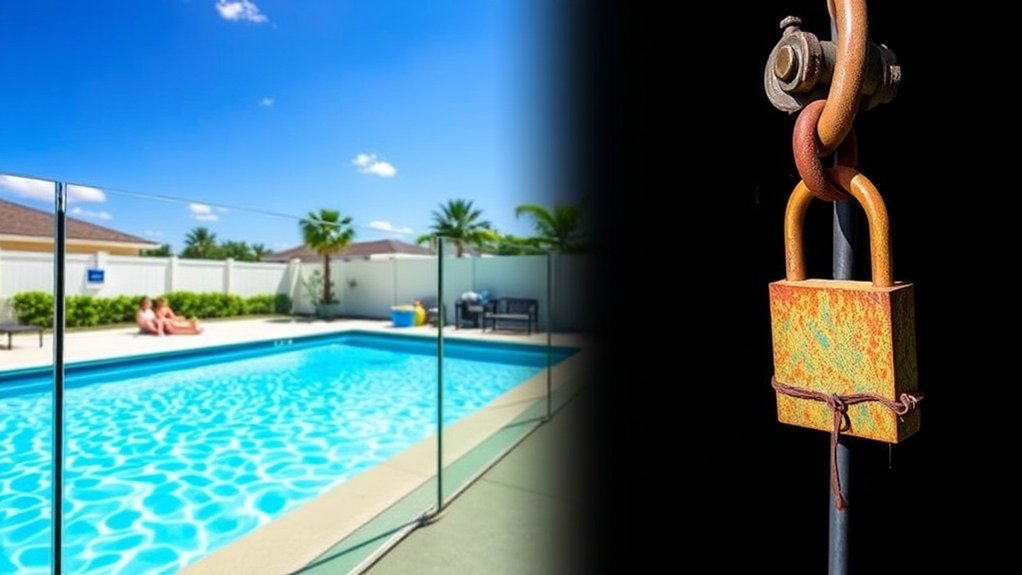
Failing to follow Florida’s pool safety regulations can result in serious penalties, including criminal charges and civil liabilities. For not equipping a new residential pool with required safety features, you may face second-degree misdemeanor charges, leading to fines or even jail time. Local authorities can issue citations based on reports of violations, which can escalate your penalties. Moreover, if someone is injured or drowns due to your noncompliance, you could be held civilly liable.
| Type of Penalty | Description |
|---|---|
| Criminal Penalty | Second-degree misdemeanor with potential fines or jail time |
| Civil Liability | Greater risk for negligence claims |
| Attractive Nuisance | Increased liability if children are harmed |
| Administrative Fines | Varies by local jurisdiction |
| Remediation Window | 45 days to comply after receiving a summons |
Special Situations and Limitations in Barrier Use
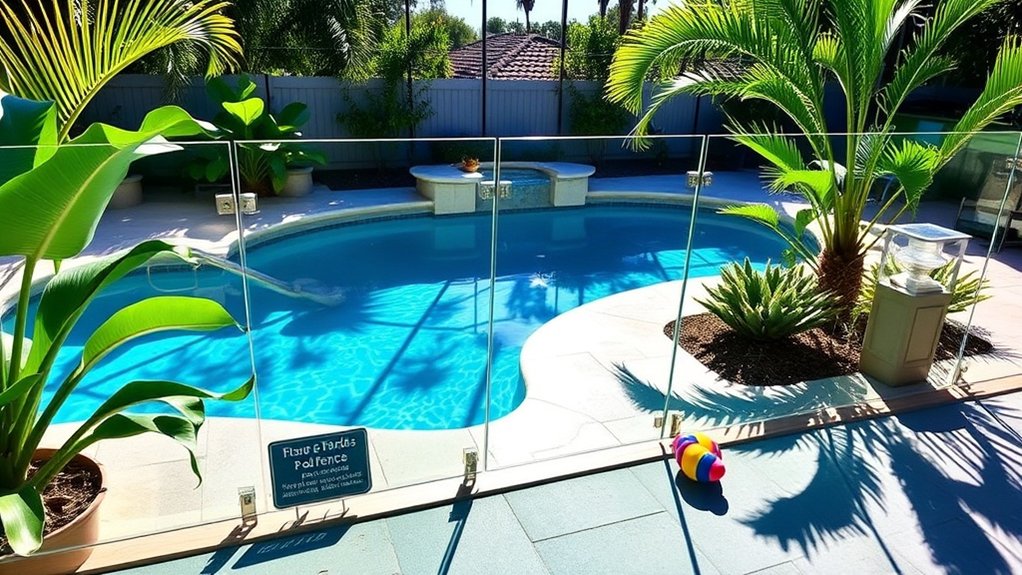
Understanding special situations and limitations in barrier use is crucial for complying with Florida’s pool safety regulations. Here are key points to consider:
- Aboveground Pools: Ensure barriers are securely mounted. Always lock or remove ladders to prevent access.
- Dwelling Walls as Barriers: These can be used, but be sure there are no direct access doors to the pool.
- Barrier Placement: Keep barriers away from the pool edge to avoid accidental falls.
Best-Practice Recommendations for Pool Safety
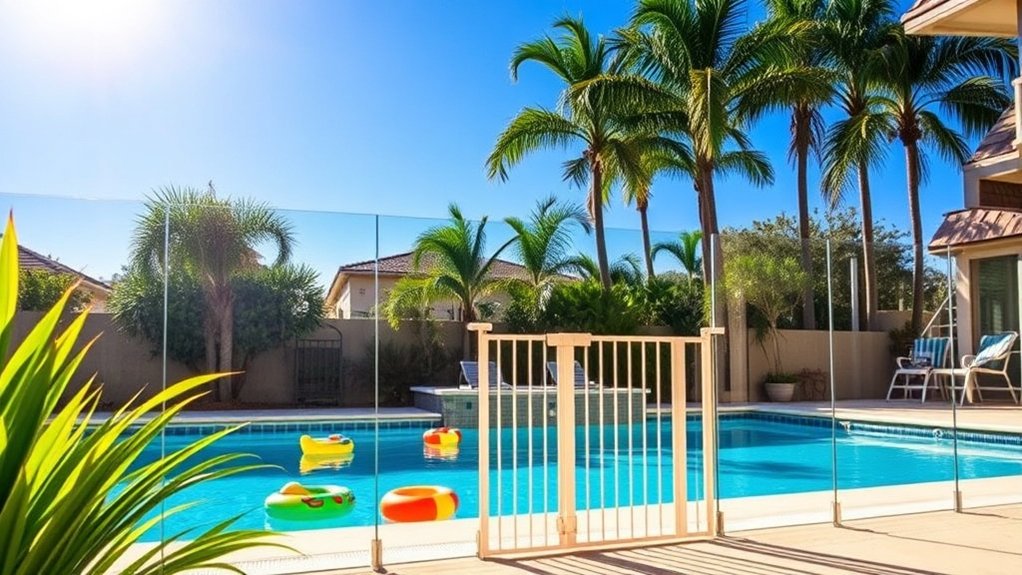
To ensure a safe pool environment, it’s essential to go beyond basic barrier requirements.
Start by installing self-closing, self-latching gates that are at least 54 inches high to keep young children out. Adding exit alarms on doors and windows leading to the pool can alert you if someone tries to access the area.
Consider using a safety pool cover when the pool isn’t in use or during off-seasons. Regularly check these safety features and make sure everyone in your family understands pool safety rules.
Local Jurisdiction Variations and Considerations
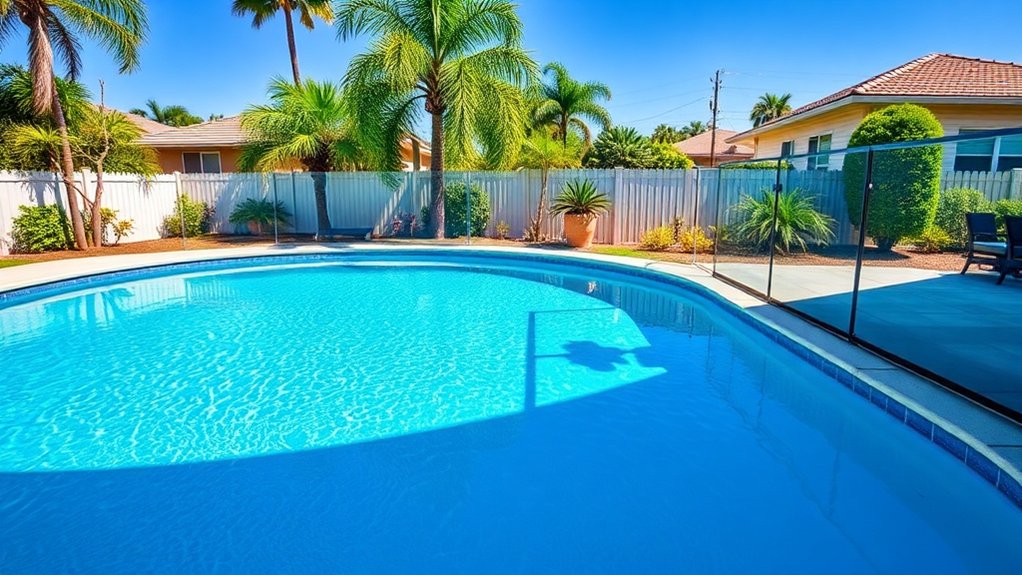
When dealing with Florida’s pool fence laws, remember that local jurisdictions may have their own rules that go beyond state requirements.
It’s crucial to understand these differences to ensure compliance and avoid delays.
- Some cities might require detailed barrier plans and additional inspections.
- Areas prone to hurricanes may enforce stricter standards for materials and designs.
- Pay attention to local ordinances, like gate latch height, to avoid fines.
Ignoring local regulations can lead to delays in securing necessary permits.
Always check with your local building department to ensure you meet all specific requirements.
Frequently Asked Questions
What Types of Barriers Are Considered Compliant Under This Statute?
Compliant barriers include wooden or wire fences, aboveground pool structures, and non-dwelling walls. Ensure the barrier is at least four feet high and has no gaps for safety.
Can I Use a Decorative Fence as a Pool Barrier?
Yes, a decorative fence can serve as a pool barrier, but it must meet safety standards. Ensure it’s at least 4 feet high, has no gaps, and follows spacing guidelines for vertical elements. For example, if the fence has slats, they shouldn’t be spaced too far apart to prevent a child from slipping through.
Are Inflatable Pools Subject to These Safety Regulations?
Yes, inflatable pools must follow safety regulations. Just like any pool deeper than 24 inches, ensure you have proper barriers, meet height requirements, and remove ladders when not supervised. This keeps everyone safe while enjoying the water.
How Often Do I Need to Inspect My Pool Barrier?
Inspect your pool barrier at least once a year to ensure safety. If you have small kids or live in a busy area, check it twice a year to keep everything secure.
What Should I Do if My Barrier Is Damaged?
If your barrier is damaged, first secure the area to prevent accidents, and inform anyone nearby. Begin repairs right away to ensure safety. Use the right materials, and if you’re unsure, consider hiring a licensed contractor to get it done properly.
Conclusion
In summary, knowing Florida’s pool safety laws is crucial for homeowners. By meeting minimum barrier requirements, ensuring gates function properly, and following structural standards, you can keep your family safe. Compliance is not just about avoiding fines; it’s about creating a secure space. Stay informed and prioritize safety so you can enjoy your pool worry-free.
More South Florida fence guides
More guides from the yard

Need the materials for this job?
Chain link, vinyl, aluminum and gates, with contractor pricing for everyone and no minimum order.
Ask us about your project
Send the details and we’ll come back with a materials list and a price.