
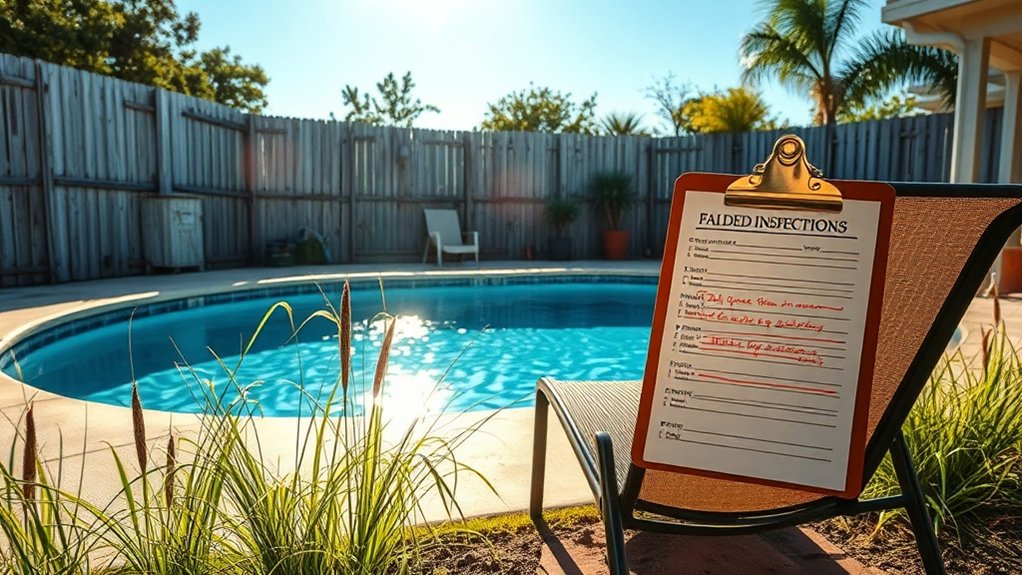
If your pool fence fails inspection, you’ll receive a notification listing the issues and deadlines for fixes. Ignoring these can lead to fines and legal trouble. Common problems include broken gate locks or fences that aren’t tall enough. To resolve this, hire licensed contractors for repairs and consider temporary safety measures. To prevent future issues and ensure safety, follow the key strategies outlined below.
Immediate Outcomes of a Failed Inspection
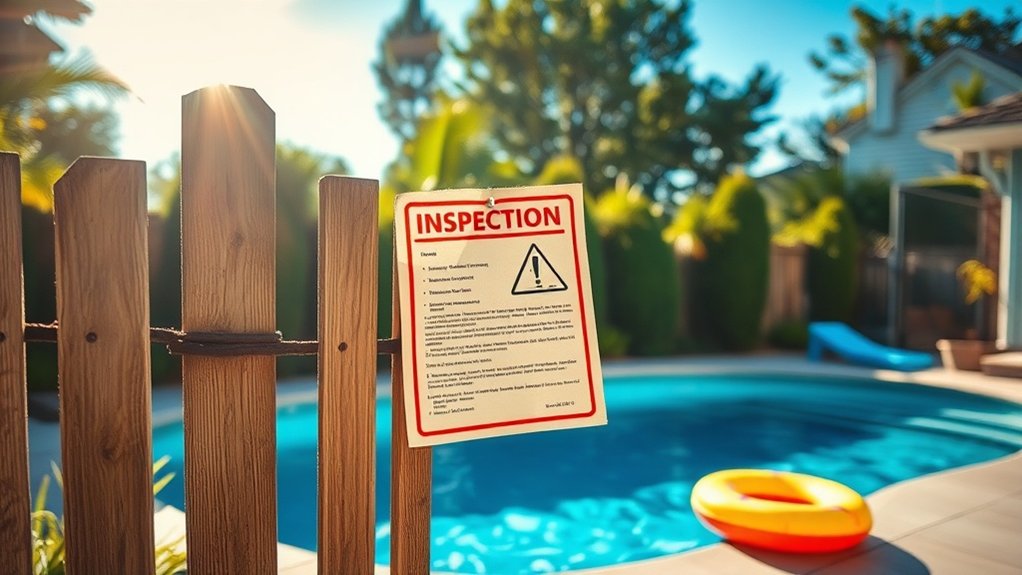
If your pool fence inspection fails, you’ll get an immediate notification outlining specific issues and what needs fixing. This notice will include deadlines, usually set by local authorities, requiring you to make corrections within 30 to 90 days. Keep the inspection report, which will have photos and measurements of the problems. The inspector might suggest temporary safety measures, like securing the pool area or removing climbable items, until you make the repairs. It’s important to remember that all pools with over 300mm of water must have a safety barrier in place. Once you’ve addressed the issues, you’ll need to schedule a reinspection and provide evidence, such as receipts and updated photos. If you don’t meet the deadlines, you could face further enforcement actions.
Financial Penalties for Non-Compliance
Ignoring pool safety regulations not only endangers lives but can also result in hefty fines.
In Florida, not having proper safety features for residential pools is a second-degree misdemeanor, with fines ranging from hundreds to thousands of dollars based on the violation’s seriousness. Pool safety fences are critical measures to protect loved ones, particularly children and pets, from accidents and drowning incidents. Regular inspections are essential to ensure compliance with local codes and prevent unexpected penalties.
If you don’t address these issues quickly, you could face escalating costs. Moreover, non-compliance may lead to denied homeowners insurance claims, increasing your risk.
To avoid these penalties, consider attending a state-approved drowning prevention education program and installing required safety features within 45 days. This can help you save money and maintain a clean record.
Legal and Liability Risks Involved
Neglecting pool safety regulations can lead to serious legal and liability issues. Here’s what you might face:
- Criminal charges for major safety-code violations
- Evidence of negligence in personal injury lawsuits
- Higher insurance premiums or even policy cancellations
- Potential criminal records for repeated offenses
- Large settlements that exceed your liability coverage
These risks become even more serious if an injury or drowning occurs, especially if it involves child endangerment. Additionally, failing to adhere to pool fence law can result in civil liability for injuries or drownings related to non-compliance.
Insurance companies may deny claims related to noncompliant pool barriers, which can leave you exposed.
It’s crucial to understand these risks to safeguard yourself and your property from significant legal and financial troubles.
Common Reasons for Pool Fence Failures
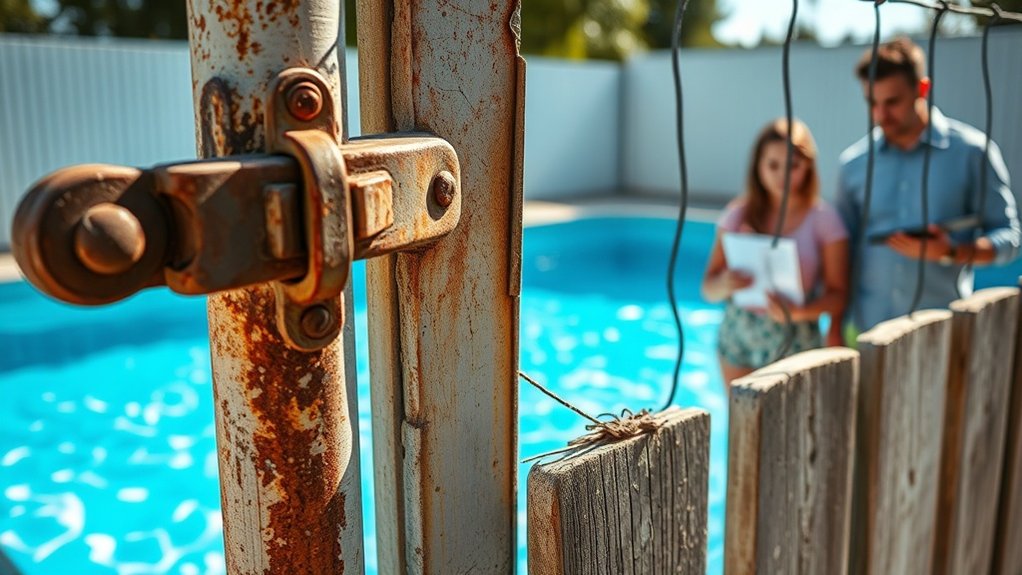
When inspecting pool fences, you’ll often find common issues that can compromise safety.
Frequent problems include faulty gate mechanisms, inadequate height, and gaps that allow climbing.
It’s crucial to address these issues quickly to keep your pool area secure and in line with safety regulations.
Gate Mechanism Issues
Gate mechanism issues are a leading cause of pool fence safety failures, putting users at risk.
Common problems include:
- Sagging due to misaligned hinges.
- Worn self-closing springs that fail to keep the gate shut.
- Loose or broken latches that won’t engage properly.
- Gates swinging inward toward the pool, which is against safety codes.
- Debris that prevents the gate from closing fully.
Regular inspections can catch these issues early, helping to keep your pool area safe.
Maintaining your gate mechanisms is crucial to avoid costly repairs and dangerous situations.
Height Compliance Failures
Height compliance failures pose serious risks during pool safety inspections, often resulting in citations and expensive fixes. Accurate height measurement is crucial, with many codes mandating a minimum height of 48 inches. Local compliance standards can vary, adding to the complexity. Common issues include:
| Issue | Impact |
|---|---|
| Measuring from pool side | Immediate failure notice |
| Barrier below required height | Fails inspection |
| Objects within 3 ft of the fence | Reduces effective height |
| Ground erosion under the fence | Triggers noncompliance |
Additionally, understanding zoning laws and height requirements is essential to avoid potential fines or legal disputes.
Gaps and Climbable Objects
To maintain safety and compliance around your pool, it’s crucial to eliminate gaps and climbable objects. Here’s what to check for:
- Gaps over 100mm between vertical fence elements
- Open space beneath the fence larger than 900mm
- Items like furniture or toys in the non-climbable zone
- Horizontal rails spaced 900mm or less, which can encourage climbing
- Ground erosion that creates large gaps
Regularly inspect your pool area to spot these issues early. By fixing gaps and removing climbable objects, you significantly improve safety for children. Additionally, addressing these concerns can enhance your property value and ensure peace of mind. Don’t ignore these important factors to prevent inspection failures.
Steps to Repair and Achieve Compliance
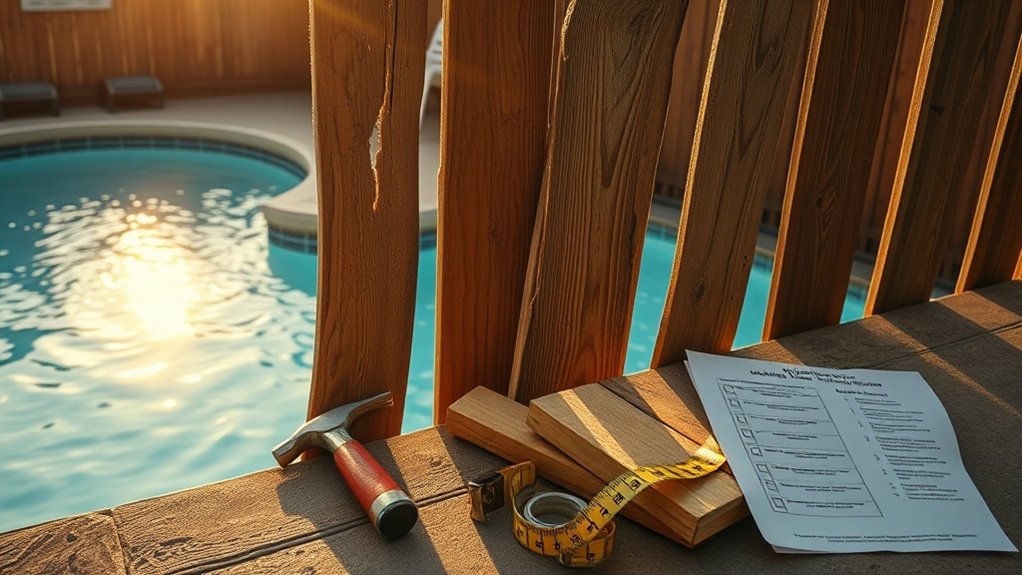
To achieve compliance, start by identifying the specific issues listed in your non-compliance certificate.
Once you’ve found these problems, it’s important to get professional help for any repairs that need expert attention.
Fixing these issues quickly not only ensures safety but also helps you avoid fines.
Identify Compliance Issues
When inspecting your pool fence, it’s crucial to spot compliance issues that can create safety risks or violate local codes.
Use a checklist to ensure everything meets standards. Here are the main areas to check:
- Height: Your fence should be at least 48 inches tall, or 60 inches in stricter areas.
- Gaps: Look for gaps larger than 4 inches and vertical spacing between fence members exceeding 1.75 inches.
- Gates: Make sure gates close and latch on their own.
- Climbability: Check for designs that prevent climbing and ensure there are no footholds or handholds.
- Structural Integrity: Ensure the fence fully surrounds the pool and complies with local regulations.
Spotting these issues early helps you fix them quickly and keep your pool safe.
Engage Professional Help
After finding compliance issues during your pool fence inspection, it’s crucial to act quickly.
Hire licensed contractors or pool-safety specialists to ensure the repairs meet local codes. Check their licensing and insurance first.
Get a clear list of what needs fixing, along with product details for any replacement materials to ensure they pass safety standards.
Schedule measurements on-site to get accurate estimates and timelines. For structural repairs, choose technicians experienced with pool materials.
Don’t forget to obtain any necessary permits and work with local authorities.
Lastly, keep records of all repairs for your re-inspection to help you achieve compliance and maintain a safe pool area.
Safety and Prevention Measures to Consider
If your pool fence inspection fails, act quickly to ensure safety, especially for children. Here are some essential steps to take:
- Lock all gates and set up temporary barriers to prevent access.
- Always supervise children and non-swimmers, and designate an adult to watch over them.
- Keep climbable items like furniture and toys away from the fence.
- Secure pool covers and lock doors to close off access points.
- Display clear warning signs with emergency contact information.
Taking these precautions can help keep everyone safe around your pool.
Importance of Regular Inspections and Maintenance
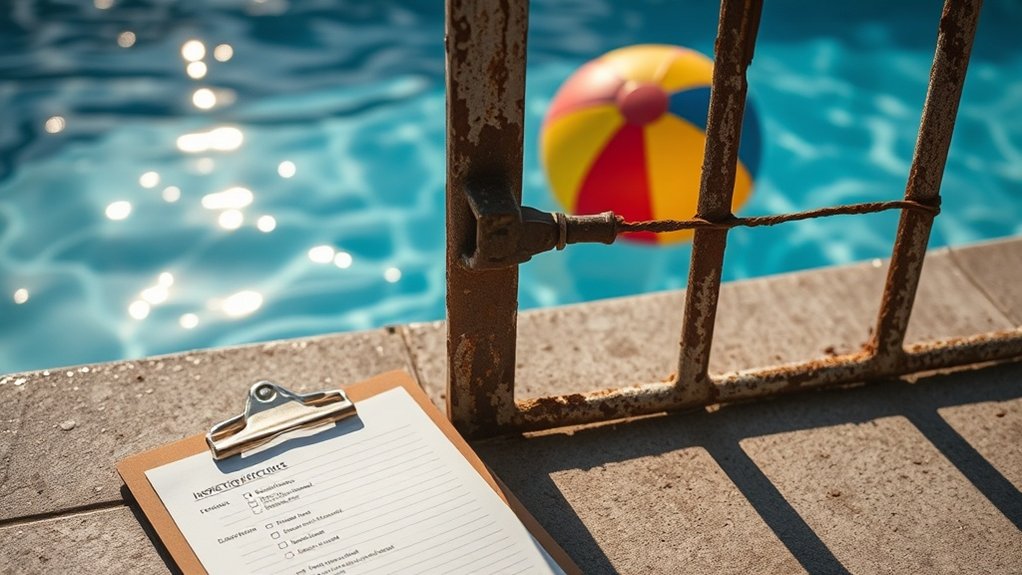
Regular inspections and maintenance of your pool fence are crucial for safety and compliance with local regulations. By routinely checking your fence, you can identify issues before they become costly problems. Here are some quick maintenance tips:
| Inspection Focus | Maintenance Tips |
|---|---|
| Barrier Height | Ensure it meets local height standards |
| Gate Functionality | Test that it closes and latches on its own |
| Climb-Resistant Design | Eliminate any footholds or sharp edges |
| Alarm Compliance | Check that alarms and covers work properly |
| Surface Integrity | Look for rust, rot, or loose panels |
Stay proactive to keep your pool area safe!
Frequently Asked Questions
How Long Do I Have to Fix the Issues After a Failed Inspection?
After a failed inspection, you usually have 60 days to fix the issues, but this can vary based on local regulations. It’s important to tackle repairs right away to prevent fines or additional penalties. For instance, if a building’s fire alarm system fails, addressing it quickly can keep you compliant and safe. Stay organized and proactive to ensure you meet the deadline.
Can I Appeal Against a Non-Compliance Citation Issued?
Yes, you can appeal a non-compliance citation. About 30% of property owners win their appeals by actively engaging in the process, discussing the impact of the citation, and showing their efforts to comply with code regulations. For example, if you’ve made repairs or improvements, sharing that information can strengthen your case.
Will My Insurance Cover Fines and Repair Costs?
Insurance usually doesn’t cover fines or repair costs from non-compliance. For instance, if you get a fine for not following safety regulations, your policy won’t help pay it. Always check your coverage limits, as penalties can be hefty, leaving you responsible for both fines and repairs.
What if My Pool Is Not Used During the Inspection Period?
Even if your pool isn’t in use, it still needs regular maintenance and inspections. Just like a garden that can overgrow, an unused pool can face issues like algae buildup or safety hazards. Ignoring these responsibilities can lead to fines and increased risks. Keep your pool in check, even if nobody’s swimming.
Can I Sell My Home With a Failed Pool Fence Inspection?
Yes, you can sell your home with a failed pool fence inspection, but it could reduce your home’s value. Fixing pool safety issues before selling can make your home more appealing to buyers and help you avoid potential legal troubles or tough negotiations. For example, a buyer may be hesitant to purchase a home with safety concerns, so addressing these issues can lead to a smoother sale.
Conclusion
A failed pool fence inspection can have serious consequences, including fines and legal issues. Common reasons for failure include gaps, improper height, and damaged gates. By regularly checking and maintaining your fence, you can keep your family and guests safe. It’s worth investing time to prevent accidents. Regular inspections also ensure compliance and provide peace of mind, making your pool a safer place.
