
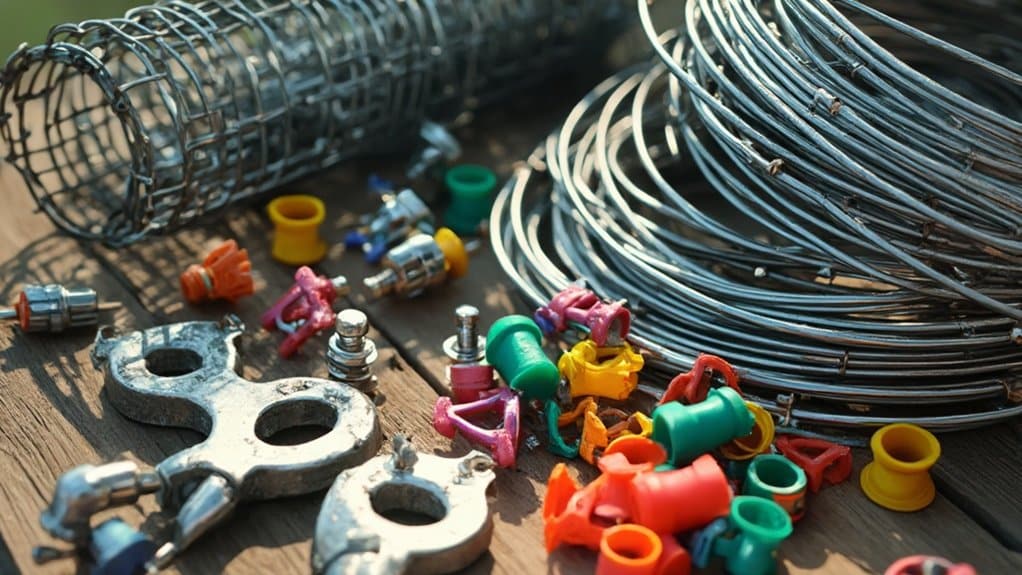
To build a strong, secure fence, it’s essential to know about wire and mesh accessories. Start with different types of fence mesh, such as welded or galvanized, based on how durable you need it to be. Don’t overlook vital components like chain link mesh, posts, and rails. For installation, tools like measuring tapes and wire cutters are crucial for a proper fit. Regular maintenance is important for longevity, so inspect your fence for any damage periodically. Keep exploring for new ways to enhance security and functionality in your fencing project.
Key Takeaways
- Key accessories for fence mesh installation include measuring tape, wire cutters, pliers, fence ties, and tension wire to ensure a secure fit.
- For added stability, use post and corner fittings, tension bars, and truss rods.
- Enhance security with features like anti-climb technology and galvanized finishes to protect against intruders and weather damage.
- Regular maintenance is crucial; check for damage, clean, and treat rust to prolong the life of your fence mesh.
- To avoid installation errors, take precise measurements and follow local regulations for quality and durability.
Types of Fence Mesh

When choosing fence mesh, it’s important to know the different types available, as each serves unique purposes.
Welded mesh is a great option for both homes and businesses due to its strength and durability.
Galvanized mesh is popular for outdoor use because its zinc coating protects against rust.
Stainless steel mesh offers excellent rust resistance, while aluminum mesh is lightweight and easy to handle.
For gardens and pest control, chicken wire is a go-to choice.
Woven wire mesh combines style and function, making it suitable for architectural designs and livestock fencing. Additionally, metal fencing options can provide long-lasting durability and minimal maintenance, making them a practical choice for various applications.
Chain Link Fence Components
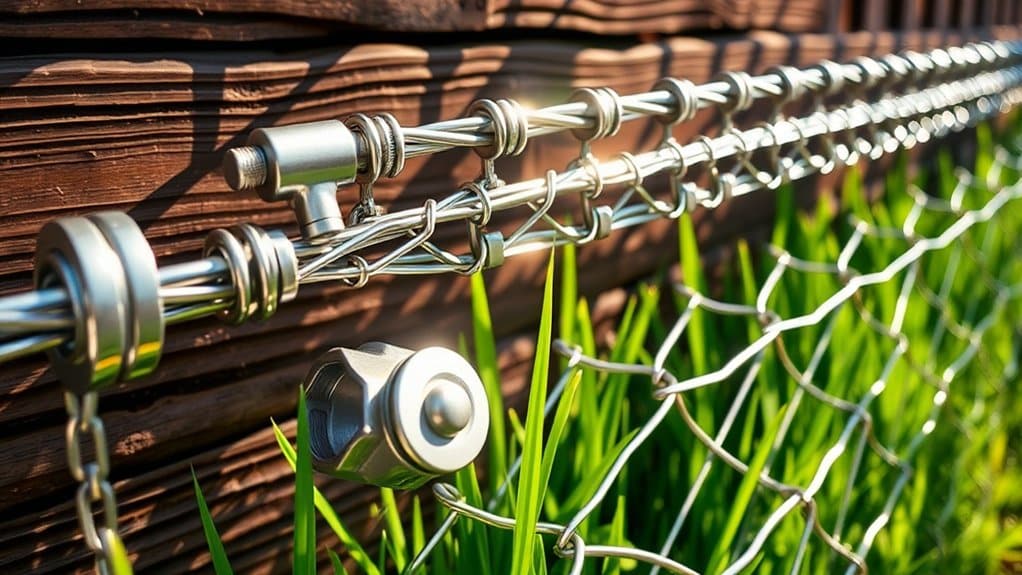
A chain link fence is made up of essential components that ensure stability and security. The chain link mesh, known for its diamond pattern, provides both durability and a pleasing look. Vertical posts, including terminal and line posts, support the mesh, while horizontal rails add strength. Post caps serve as protective and decorative elements for the tops of fence posts, enhancing the overall aesthetic. Tension bands keep the mesh tight against the posts. Galvanized Steel Posts offer robust support and resistance to rust, contributing to the fence’s longevity. Top rails offer additional support and enhance the fence’s appearance. Fastening elements like ties, clips, and carriage bolts hold everything together. Additional features like tension wire and post caps help maintain the fence’s functionality and charm over time.
Fence Mesh Installation Accessories
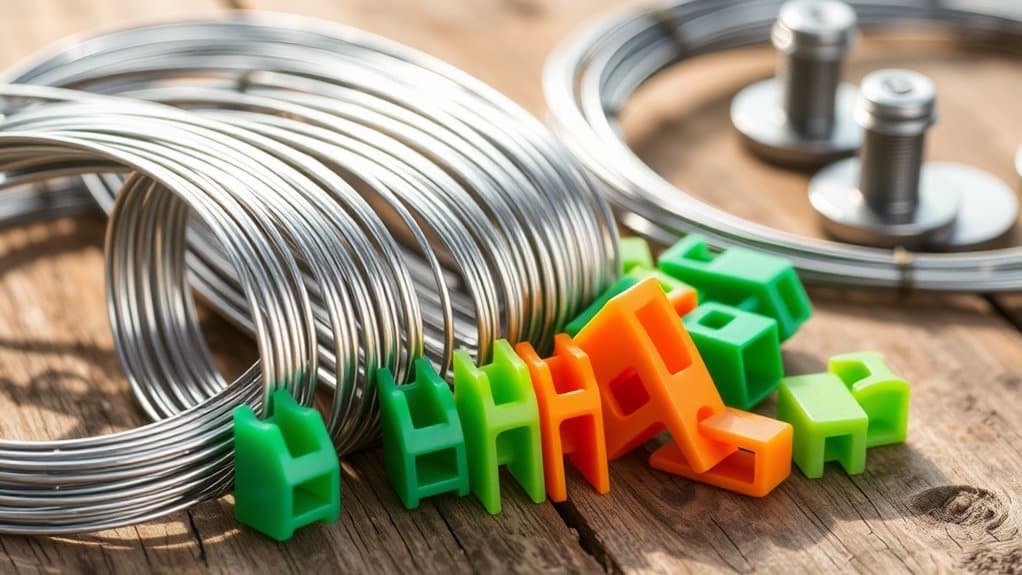
To install fence mesh effectively, you need the right accessories. These tools help tackle installation challenges and improve the durability and security of your fence. Here’s a quick look at the essential accessories:
| Tool/Component | Purpose | Benefits |
|---|---|---|
| Measuring Tape | Measure areas accurately | Ensures proper sizing |
| Wire Cutters | Cut mesh to size | Enables customization |
| Pliers | Bend and twist wires | Secures connections |
| Fence Ties | Attach mesh to posts/rails | Increases stability |
| Tension Wire | Reinforce the fence | Prevents sagging or lifting |
Using these tools will make your installation smoother and more reliable. Additionally, incorporating essential accessories ensures that your fence maintains its integrity and functionality over time. Regular inspections and maintenance, including checking for sagging fences, are crucial for long-term performance.
Wire Fence Accessories
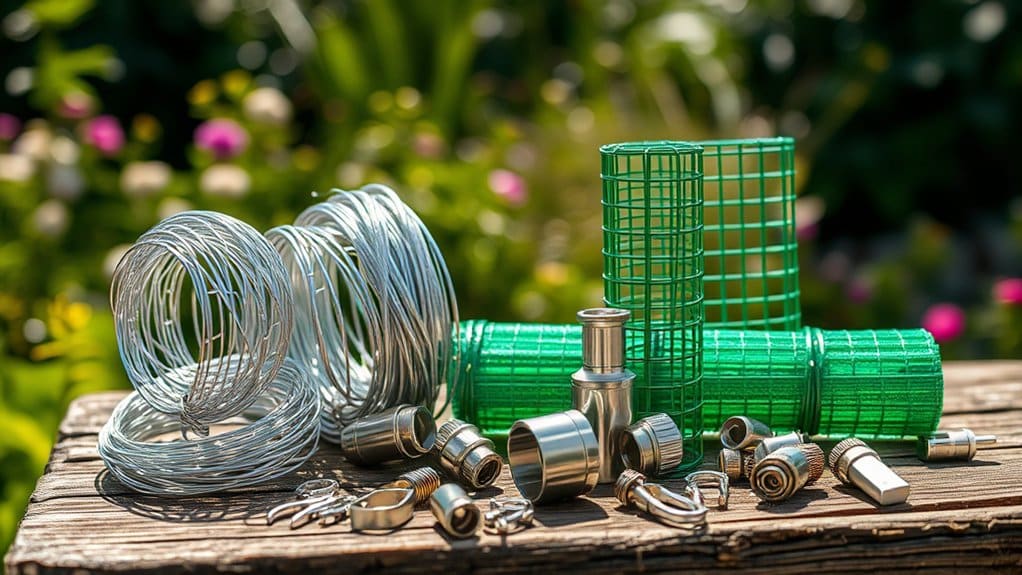
To ensure your wire fence is strong and secure, choosing the right accessories is crucial.
Use post and corner fittings like barbed wire arms and brace bands for added stability. Incorporate tension bars to maintain wire tension and truss rods to secure braces and gates.
Don’t forget essential fasteners like tie wires and carriage bolts for a solid setup. Additionally, dropper bars help space wires effectively, enhancing your fence’s performance.
With the right accessories, your wire fence will stay functional and durable for years.
Temporary Barrier Fencing Accessories
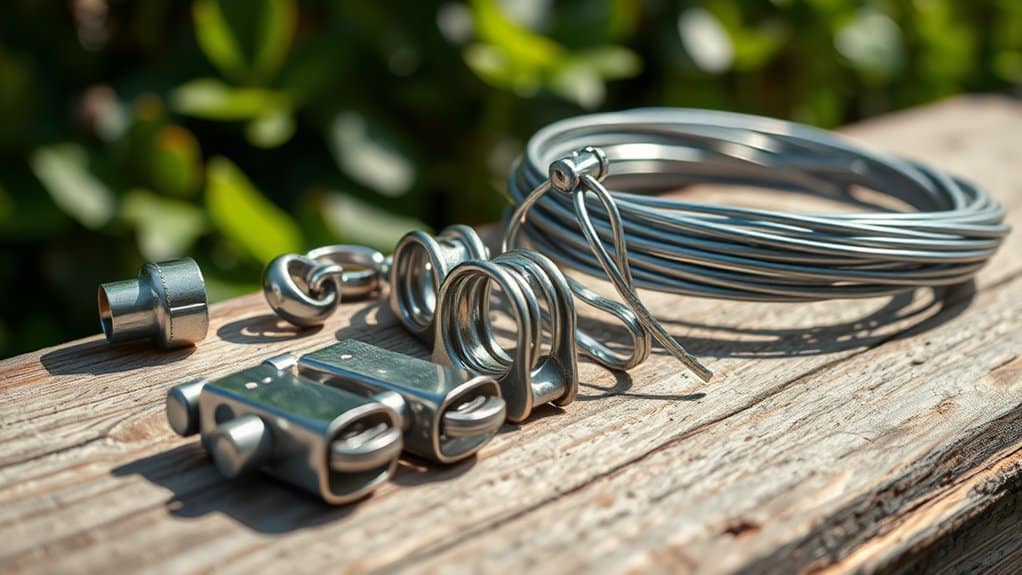
Choosing the right accessories for temporary barrier fencing is key to improving stability and functionality. Use fence bases to keep panels steady and prevent shifting. Ground stakes can secure your posts for extra strength.
Braces and crossbars help maintain the structure, while clamps and clips ensure panels connect firmly. For easy mobility, consider portable fencing solutions like vertical transport racks to reduce damage and extend the life of your barriers.
You can also add wheels to fence panels for mobile gates, providing easy access and surface protection. Don’t forget noise control barriers and custom wraps for privacy and branding, making your temporary fencing versatile for different environments.
Security and Safety Accessories
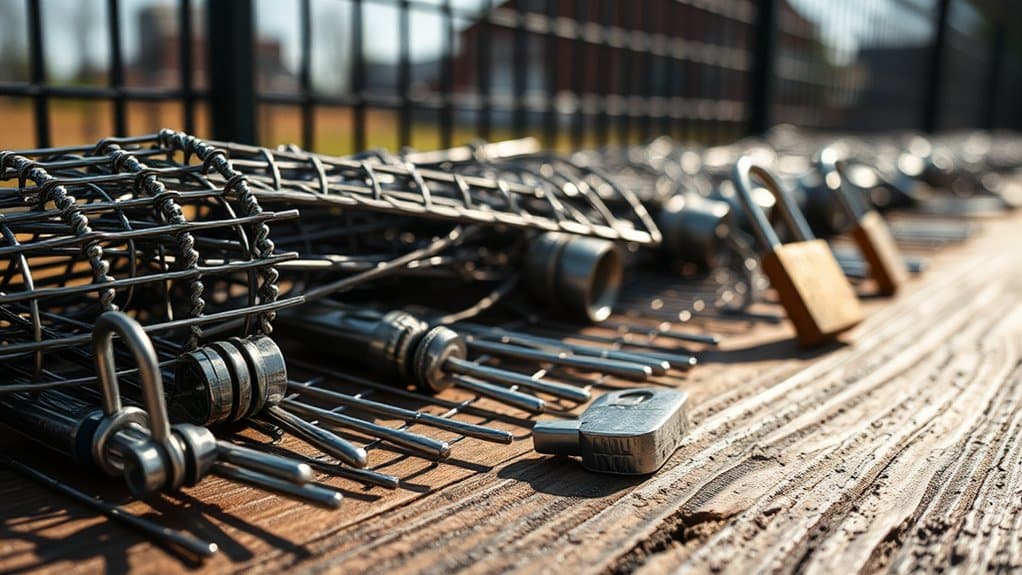
For effective security and safety, choose accessories that deter intruders and contain animals.
Look for durable products that can handle tough conditions without losing quality. For instance, strong fences or robust locks can create a secure environment tailored to your needs.
Focus on reliable materials and features to build a solid barrier that ensures safety.
Enhanced Intruder Deterrence
As security concerns grow, it’s crucial to adopt enhanced intruder deterrence measures to protect your property.
Anti-climb technology is key, featuring tightly woven wire mesh that makes it tough for intruders to climb fences. For instance, WireWorks Anti-Climb by Ameristar includes heavy steel wire that resists tampering with its anti-scale and anti-cut properties.
Additional security features like rotated mesh openings and electro-welded panels create strong barriers against unauthorized access. Omega profile post configurations strengthen the overall structure, while anti-theft bolts keep panels secure.
Plus, advanced coatings such as galvanized finishes help prevent corrosion, ensuring your fencing lasts longer. By investing in these robust features, you can significantly enhance your property’s security.
Animal Containment Solutions
Effective animal containment solutions are crucial for keeping pets safe and secure within designated areas. Here are some top options to consider:
- In-Ground Fences: Great for larger yards, customizable for up to 25 acres, and can be set up in just a couple of days.
- Wireless Fences: Quick to install (1-2 hours) and perfect for circular boundaries up to 3/4 acre.
- GPS Fences: Provide real-time tracking and allow for larger, customizable boundaries.
- Pet Containment Accessories: Includes necessary transmitters and surge protectors to keep systems reliable.
These solutions not only help contain your pets but also aid in training with adjustable correction levels and easy-to-use settings, ensuring they can enjoy their space safely.
Durability in Harsh Conditions
Choosing the right animal containment solution is vital for keeping your pets safe and ensuring your fencing lasts in tough conditions.
The durability of wire depends on the materials used and the environment. For humid or coastal areas, opt for PVC-coated or stainless steel wires to prevent rust. In cold climates, galvanized and high-carbon steel wires hold up well, while aluminum is best for hot, dry regions.
Regular inspections and maintenance, along with rust inhibitors and proper drainage, are crucial for extending the life of your fencing.
Choosing the Right Mesh for Your Project
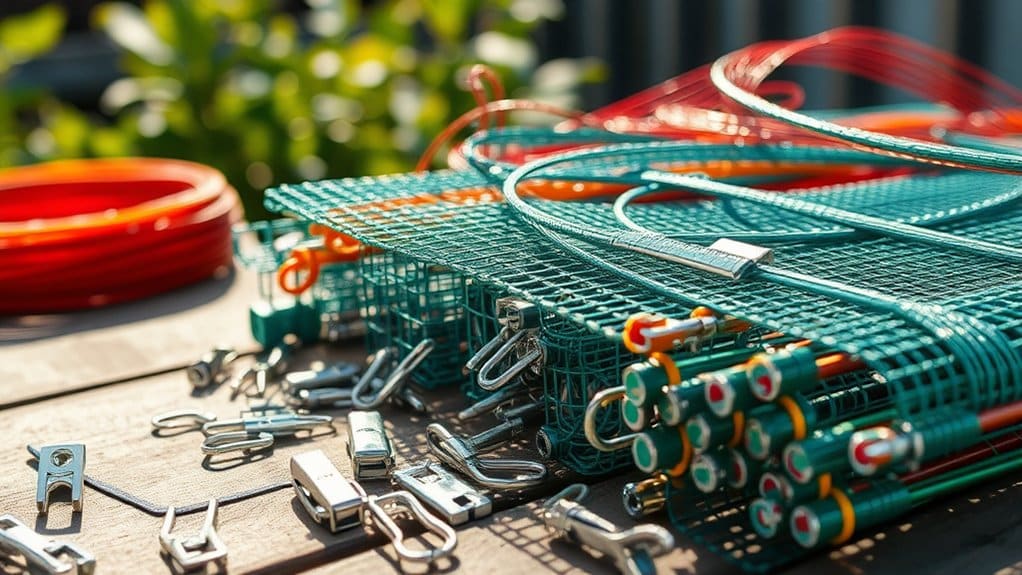
When choosing the right mesh for your project, consider these key factors:
- Purpose: Determine if you need the mesh for security, visibility, or containment.
- Mesh Size: Pick openings that will effectively contain the animals or objects you’re dealing with.
- Material: Decide on galvanized steel, stainless steel, or coated options based on how long you need it to last.
- Aesthetics: Choose colors and designs that match your project’s visual goals, especially in architectural settings.
Essential Tools for Fence Installation
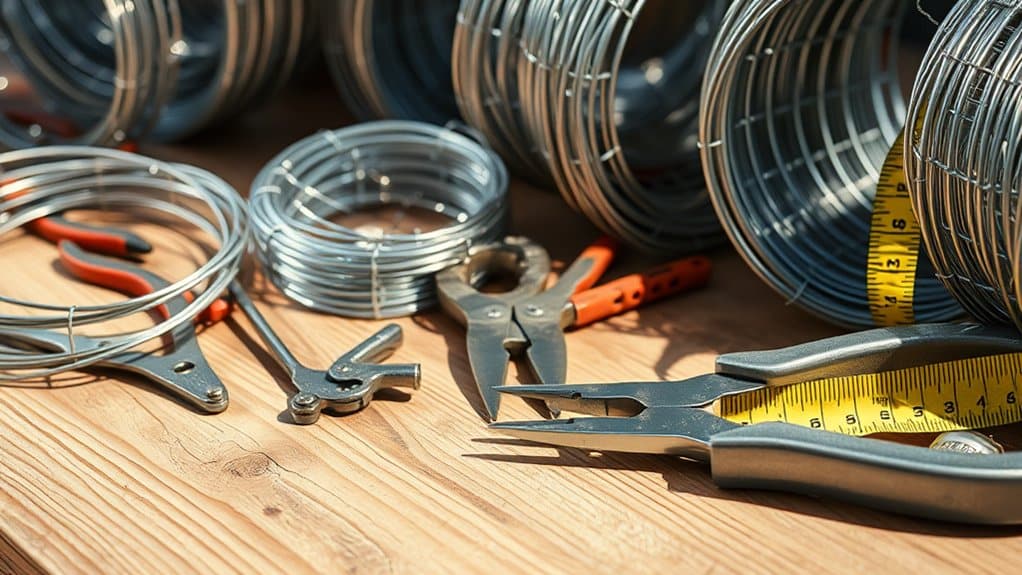
When installing a fence, having the right tools is crucial for a successful and safe project. Here’s a straightforward list of essential tools you’ll need:
| Tool Type | Purpose | Maintenance Tips |
|---|---|---|
| Measuring Tools | Accurately gauge the fence area | Keep clean and check calibration |
| Digging Tools | Dig holes for fence posts | Regularly inspect for damage |
| Securing Tools | Ensure posts are straight and secure | Store in a dry area |
| Cutting Tools | Precisely cut fencing materials | Lubricate blades as needed |
| Safety Gear | Protect against injuries | Inspect before each use |
Using these tools will help you achieve a sturdy and well-installed fence.
Maintenance Tips for Fence Mesh
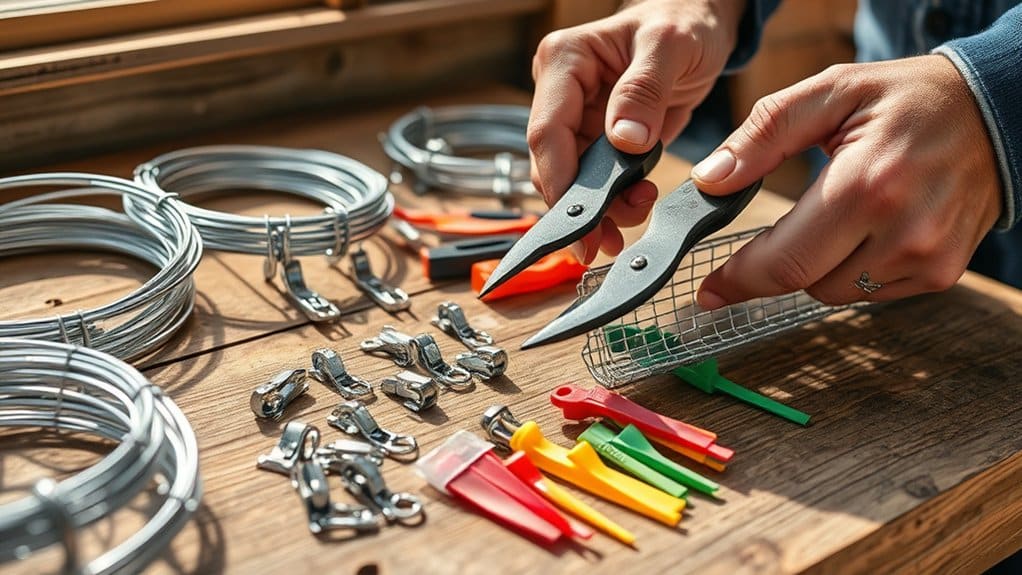
Once your fence is up, keeping the mesh in good shape is key for its longevity.
Here are some straightforward maintenance tips:
- Check Often: Regularly look for damage, rust, or loose posts.
- Clean Regularly: Use a hose to wash off dirt and debris; soap can help with stubborn stains.
- Fix Rust: Treat any rust spots promptly with remover and add a protective coat.
- Control Nearby Plants: Trim back any plants near the fence to avoid damage and entanglement.
Following these tips will help you maintain a sturdy and effective fence.
Common Mistakes to Avoid in Fence Installation
When installing a fence, be sure to take accurate measurements. Incorrect measurements can cause misalignment and weaken the structure.
Don’t skip essential accessories like posts and brackets; they’re crucial for stability.
Lastly, check local regulations to avoid legal issues that could have been easily prevented.
Neglecting Proper Measurements
Neglecting proper measurements can cause significant issues during fence installation, leading to costly mistakes. To ensure accuracy, follow these simple strategies:
- Use Reliable Measuring Tools: Always use calibrated tools, like a tape measure or laser level, for precise measurements.
- Double-Check Measurements: Measure twice to catch any mistakes before ordering materials.
- Account for Terrain: Keep in mind slopes and uneven ground to avoid gaps in your fence.
- Document Measurements: Write down all measurements to prevent confusion during installation.
Skipping Essential Accessories
Skipping essential accessories during fence installation can jeopardize stability and longevity. For example, if you don’t use proper post supports, your posts might lean or sag.
Choosing the right wire and mesh is crucial; using cheap materials can weaken security and durability. Quality hardware and fasteners are necessary to securely attach panels to posts.
Don’t forget about drainage solutions, as water buildup can erode foundations. By avoiding these mistakes, you can build a strong, attractive fence that lasts for years.
Ignoring Local Regulations
Ignoring local regulations can complicate your fence installation. To ensure compliance, follow these steps:
- Research Local Codes: Check the rules for height, style, and materials in your area.
- Consult Local Authorities: Reach out to the building department for necessary permits and zoning laws.
- Check HOA Rules: If you’re in a community with a homeowners association, verify their requirements.
- Consider Environmental Factors: Look into any regulations that protect local wildlife or ecosystems.
Neglecting these steps can lead to fines, required changes, or even having to take down your fence.
Do your research to protect your investment and avoid legal issues.
Enhancing Security With Additional Accessories
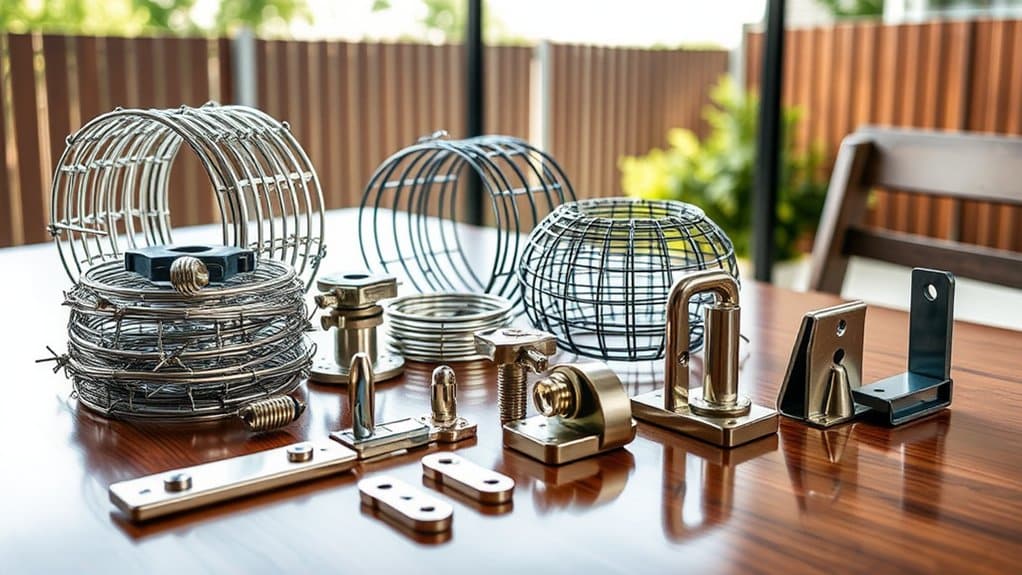
To boost security, adding accessories to your fencing system is crucial. Items like weld mesh clips and safety fence retainers keep mesh securely in place, enhancing overall fence integrity.
Opt for durable materials like galvanized steel or powder-coated finishes for better corrosion resistance. You can customize panel sizes and adjust barriers to fit your specific needs.
These accessories not only speed up installation but also increase durability, making your fencing more effective. Ultimately, these upgrades help protect valuable assets and deter intruders, providing peace of mind in settings from industrial storage to high-security areas.
Innovative Uses for Fence Mesh Beyond Fencing
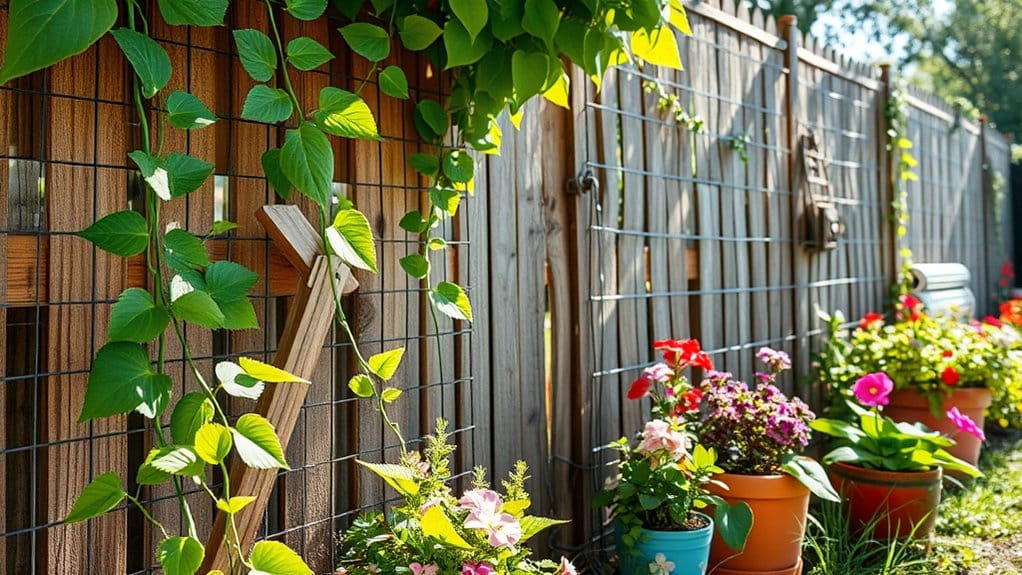
Fence mesh has many creative uses beyond just fencing.
Here are four practical applications:
- Garden Edging: Use fence mesh to outline flowerbeds and lawns, allowing plants to grow freely.
- Pest Barrier: Create an effective shield for your crops against pests.
- Support Structures: Provide a sturdy framework for climbing plants like vines.
- Compost Bins: Build compost bins that contain materials while allowing air circulation.
These ideas highlight how fence mesh can enhance your gardening and landscaping projects.
Frequently Asked Questions
How Do I Choose the Right Fence Mesh Size?
To choose the right mesh size, consider your security and visibility needs. For example, if you want to keep pets in, a smaller mesh works best. Make sure to match the mesh with its intended use and think about local weather conditions to ensure your fence lasts.
Can Fence Mesh Be Painted or Coated?
Yes, you can paint or coat fence mesh. Consider using alkyd or enamel paint for a smooth finish. For better durability, try powder coating or vinyl, which also protect against rust and UV damage.
What Is the Lifespan of Different Fence Meshes?
Your fence is like a reliable protector, and its lifespan depends on the type of mesh used. Welded fences last around 10-15 years, woven fences can last up to 30 years, while chain link fences typically endure for 15-20 years with proper maintenance.
Are There Eco-Friendly Options for Fence Mesh?
Yes, eco-friendly fence mesh options are available. Consider materials like bamboo and hemp, or opt for recycled metal. These choices help reduce waste and are durable, making them great for your fencing needs.
How Do I Dispose of Old Fence Mesh Responsibly?
About 75% of metal waste can be recycled. To dispose of old fence mesh responsibly, check your local recycling guidelines, explore recycling centers, and think about donating or repurposing it. This way, you contribute to a more sustainable environment.
Conclusion
In summary, selecting the right fence wire and mesh accessories is crucial for effective security and functionality. Think of it like putting together a puzzle—each accessory has its purpose. By understanding the different types and installation methods, you can build a strong, durable barrier. Just as a solid fence safeguards your property, the right accessories enhance its performance, giving you peace of mind.