
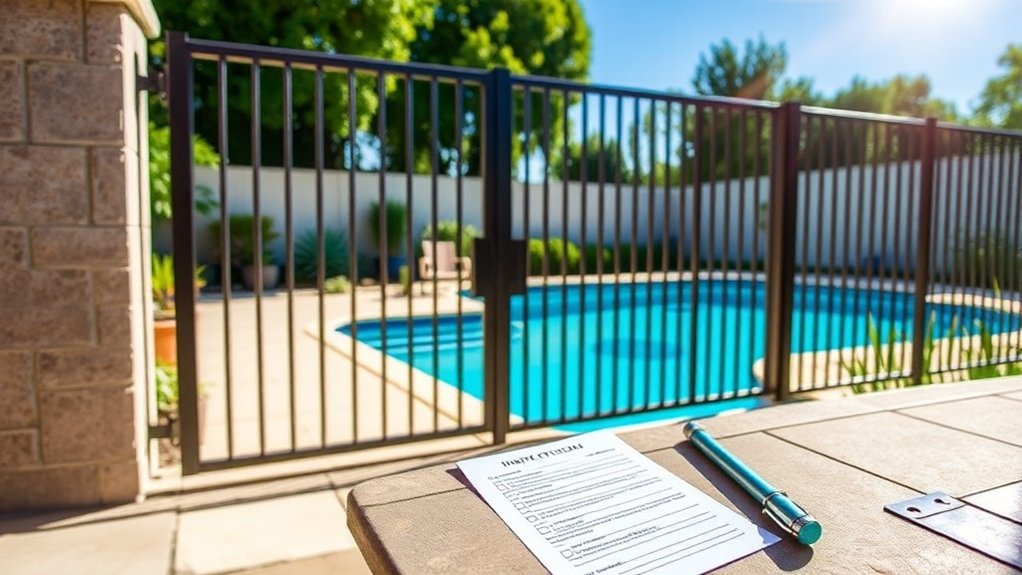
To pass a pool fence inspection in Florida, ensure your fence is at least 48 inches tall with no gaps larger than 4 inches. Gates should swing outward, self-close, and self-latch at a height of 54 inches. Use materials that comply with regulations, like mesh or solid barriers, and avoid horizontal elements that can be climbed. Also, keep vegetation and furniture away from the fence to enhance safety. Stick to these guidelines, and you’ll be ready for your inspection!
Understanding Fence Height Requirements
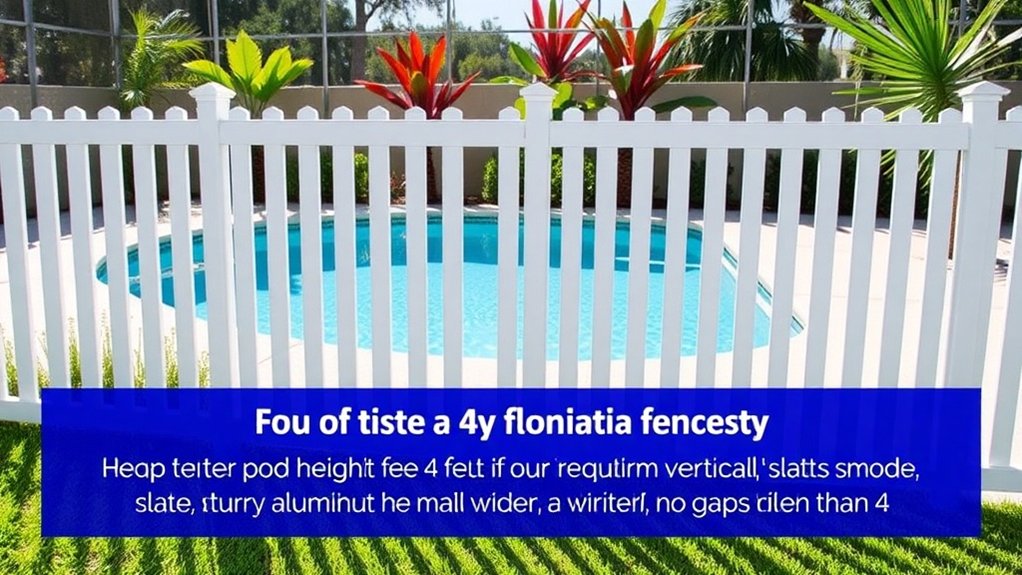
To pass a pool fence inspection, knowing the height requirements is crucial. In Florida, residential pool barriers must be at least 48 inches tall, measured from the outside ground.
Ensure this height is uniform around the entire enclosure; any inconsistencies will be noted during the inspection. For above-ground pools with walls shorter than 48 inches, you need a complete barrier since removable ladders aren’t enough. Additionally, fences must meet ASTM compliance standards to ensure they are built to withstand local weather conditions. Regular inspections are also recommended to maintain compliance with legal standards and ensure ongoing safety.
Local codes may have stricter rules, so check them before you install your fence. Both the fence and gate must be at least 48 inches high and designed to prevent climbing.
Staying informed helps ensure compliance and safety.
Ensuring Proper Gap and Opening Specifications
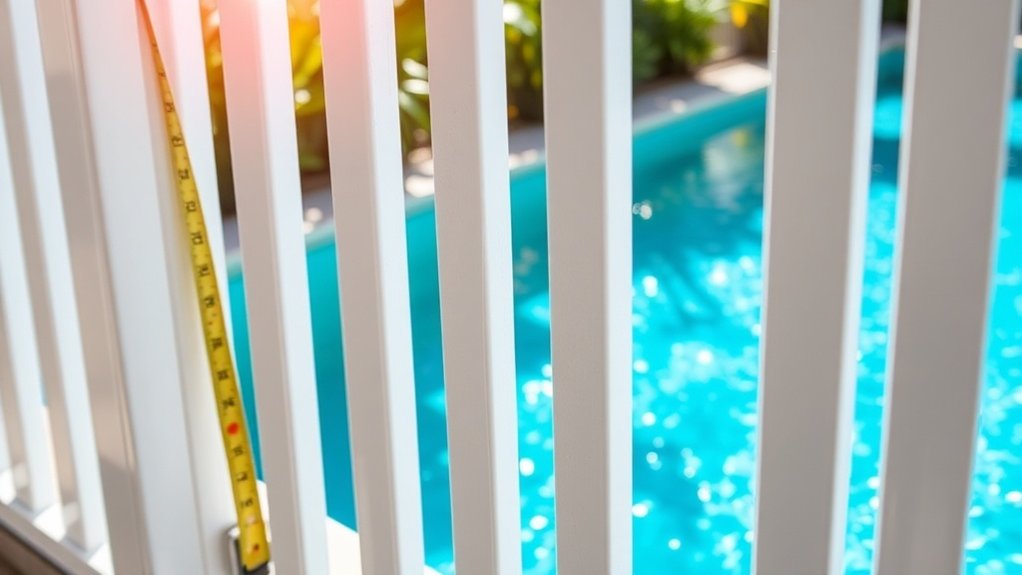
To pass a pool fence inspection, it’s crucial to follow the correct gap and opening specifications. For vertical members, the maximum spacing should be 1 3/4 inches.
However, if horizontal rails are 45 inches apart, this can increase to 4 inches. Decorative cutouts must also stay within 1 3/4 inches.
For chain-link fences, keep openings to a maximum of 2 1/4 inches square without slats. Importantly, your fence should prevent the passage of a 4-inch diameter sphere. Additionally, ensure your fence adheres to the safety barrier requirements mandated by the Preston de Ibern/McKenzie Merriam Residential Swimming Pool Safety Act.
When measuring gaps, ensure the clearance between the ground and the bottom of the fence is no more than 4 inches. Always double-check your measurements to ensure compliance with local building codes and avoid failing your inspection.
Installing Gates and Latching Mechanisms
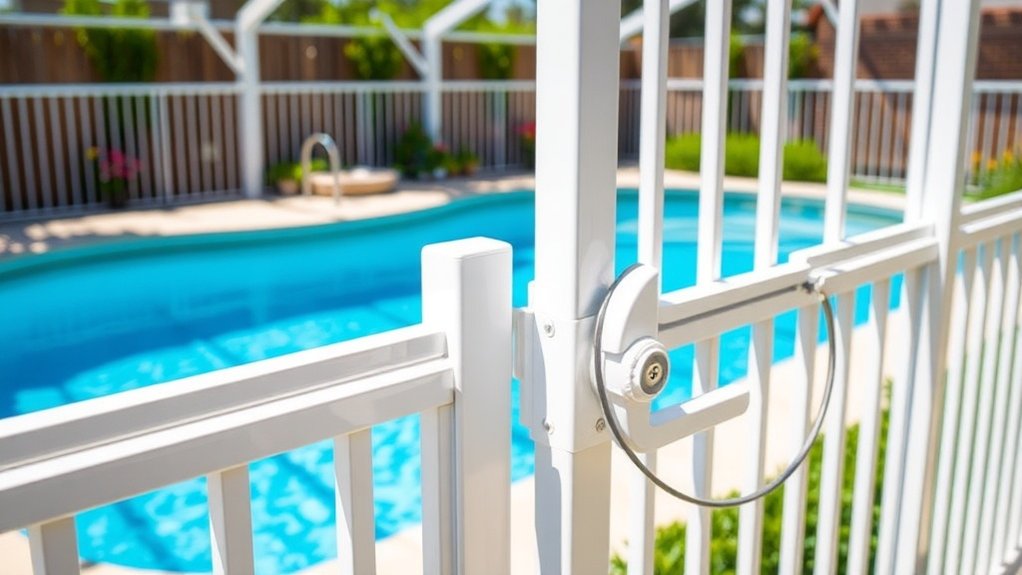
To keep your pool area secure, install gates and latching mechanisms that meet safety standards.
Position the gate to swing outward so children can’t access the pool. Each gate should have a self-closing mechanism, typically a spring, to ensure it shuts on its own after use.
Use self-latching devices that are as secure as hook-and-eye types, with the latch at least 54 inches high on the pool side to keep it out of kids’ reach. For mesh fences, set the latch at a minimum of 45 inches above the ground. Following these guidelines is crucial for passing inspections and ensuring safety for everyone. Additionally, ensure that the gates open outward to enhance the safety features of your pool barrier.
Choosing Compliant Materials and Addressing Climbability
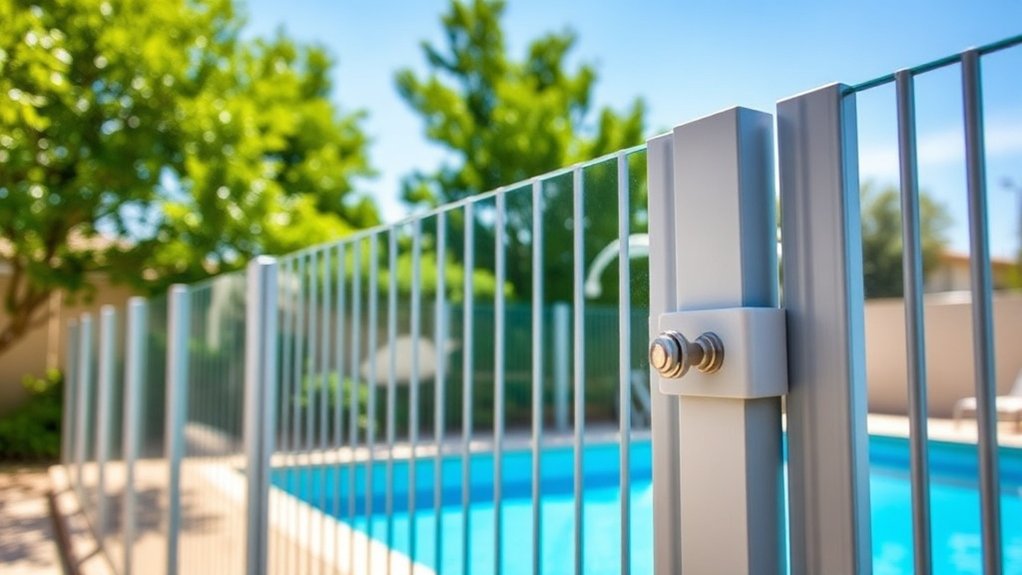
To ensure your pool fence is safe and compliant, it’s essential to choose the right materials and address climbability. Use mesh fencing that meets ASTM F2286 standards for strength and weather resistance, or solid barriers like aluminum or vinyl that comply with Florida’s building codes.
Make sure the fence is at least 48 inches high and that gaps are small enough to prevent a 4-inch ball from passing through.
To improve safety, avoid any horizontal features within the lower 36 inches that could help someone climb. Keep surfaces smooth to eliminate footholds, and ensure any protrusions are flush with the fence.
Finally, maintain a clear space around the fence by removing nearby vegetation and furniture to prevent climbing access, creating a safer environment for everyone.
Preparing for the Inspection Process
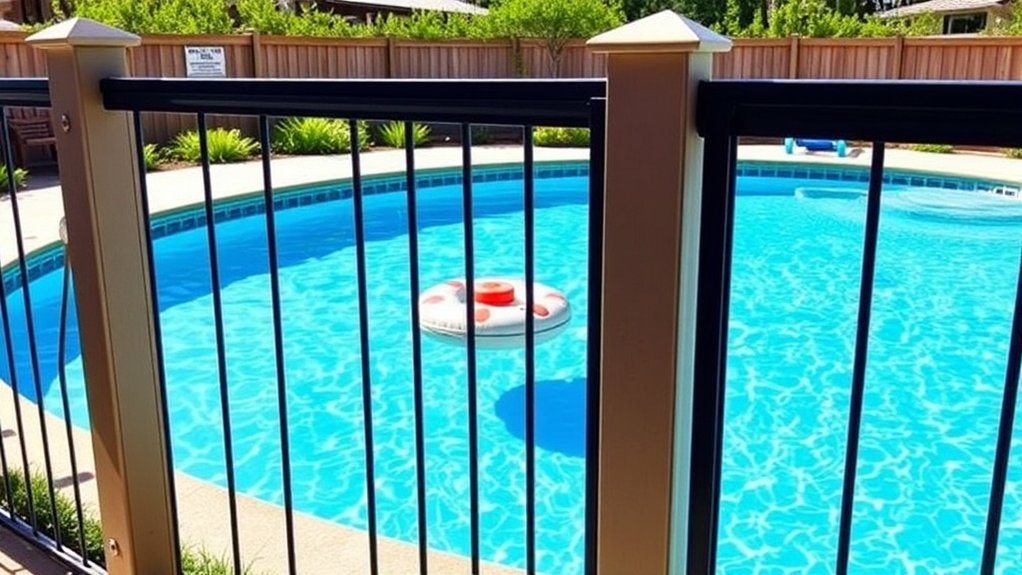
Before starting the inspection process, familiarize yourself with Florida’s pool barrier regulations.
Check that your barrier is at least 4 feet tall and has no gaps larger than 4 inches. Ensure your pool is secured with a compliant enclosure that keeps it separate from home access.
Gates should self-close and self-latch at 54 inches high. Double-check that the barrier meets local codes and functions properly.
Have your documentation ready, including site plans or affidavits that prove compliance.
Schedule your final inspection just before filling the pool to ensure everything goes smoothly.
Frequently Asked Questions
What Are the Penalties for Failing a Pool Fence Inspection?
Failing a pool fence inspection can lead to fines and legal issues. You might face misdemeanor charges, financial penalties, and increased liability if you don’t fix the issues quickly. Ignoring the problem could also affect your criminal record. It’s important to address any inspection failures promptly to avoid these consequences.
Can I Install the Fence Myself, or Must It Be Professionally Done?
You can definitely install your own fence, but be sure to check local regulations first. This means looking up codes, obtaining necessary permits, and staying compliant to avoid any issues during inspections. For example, knowing your property lines can prevent costly mistakes.
Are There Specific Materials That Are Not Allowed for Pool Fences?
Yes, there are specific materials that aren’t allowed for pool fences. Regulations typically prohibit wood, carpet, barbed wire, and glass containers within the fenced area. Make sure your fence meets these guidelines to ensure safety and comply with the law.
How Often Do I Need to Inspect My Pool Fence?
Inspect your pool fence monthly with a quick visual check and conduct functional tests every three months. It’s also wise to get a professional inspection once a year, especially after major events like storms or renovations around your pool area.
Can Landscaping Affect My Pool Fence Compliance?
Yes, landscaping can impact your pool fence compliance. Plants that are too tall or positioned incorrectly might create climbing spots or gaps. Make sure that shrubs and trees stay within the required height limits and don’t block gates to ensure your pool area meets safety standards.
Conclusion
In Florida, drowning incidents among young children in residential pools are a serious concern, making proper pool fencing essential. To pass your inspection, ensure your fence meets the required height and gap specifications. Install secure gates with reliable latching mechanisms to enhance safety. Use compliant materials and address any climbability issues to further protect children. By following these guidelines, you’ll not only pass the inspection but also create a safer environment for everyone.

