
In this ultimate guide to fence fasteners, you’ll learn about essential options like nails, screws, and specialized fasteners. Nails are budget-friendly and work for many designs, while screws provide added strength and weather resistance. For heavy-duty applications, cat’s claw fasteners deliver excellent grip. We’ll also cover environmental considerations and tips for selecting the right fastener for your fence type, helping you make informed choices for your project.
Key Takeaways
- Nails are budget-friendly and provide decent strength, but they can loosen over time and may split wood if not pre-drilled.
- Screws have better holding power and resist rust, making them a great choice for a durable fence, but they do require pre-drilling.
- Staples and clips work well for attaching wire and vinyl fencing, making installation straightforward and secure.
- Environmental considerations include using galvanized or stainless steel fasteners and opting for locally sourced materials to cut down on transportation emissions.
- Aesthetic choices include selecting fasteners that match your fence’s material, using concealed options for a clean look, or choosing decorative styles to enhance the overall appearance.
Understanding the Basics of Fence Fasteners

When choosing fence fasteners, it’s important to know the different types and their uses to ensure a strong installation.
Match the fastener to your fence material: zinc-plated nails work well with untreated wood, while stainless steel is ideal for cedar. Some fasteners, like common nails, are suitable for general framing, but if you’re in a damp area, consider galvanized or ring shank nails for better corrosion resistance and holding power. Additionally, metal fencing materials often require specialized fasteners to ensure longevity and durability in various climates.
Screws, including self-tapping and structural types, offer durability and are easy to use, though they might take a bit more effort to install. Specialized options like Cat’s Claw Fasteners provide extra grip and can be reused, making them a smart choice for long-lasting fences. Cat’s Claw Fasteners are designed for easier installation and offer 4x more holding power than traditional wire fence staples.
Choose based on your project’s specific needs for the best results.
The Advantages of Using Nails in Fence Construction
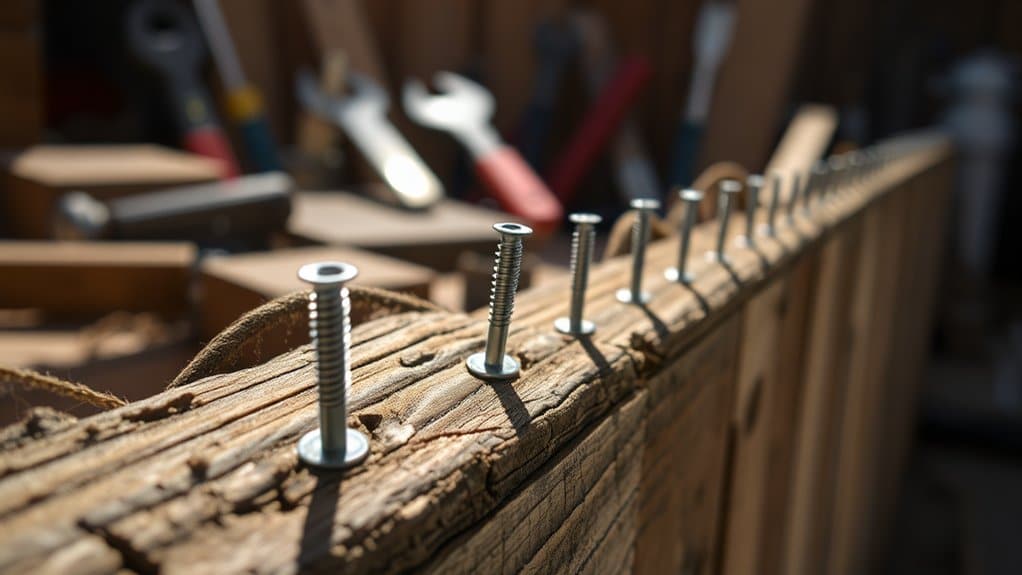
Nails are often a better choice than screws for fence construction due to several key benefits. First, they are more cost-effective, typically priced at just 1 to 1.5 cents each, making them perfect for large projects. Second, using pneumatic nail guns speeds up installation significantly, allowing you to cover hundreds of feet of fencing quickly. Additionally, nails exhibit better shear strength, flexing without breaking during parallel movement, making them ideal for fence applications.
Nails also offer flexibility and strength, particularly ring shank nails, which handle lateral forces well. Here’s a quick comparison:
| Advantage | Nails | Screws |
|---|---|---|
| Cost Efficiency | Lower cost per unit | Higher cost |
| Installation Speed | Faster with nail guns | Slower, needs pre-drilling |
| Flexibility | Adapts to wood movement | More rigid |
| Aesthetic Options | Traditional look available | More visible |
| Versatility | Works with various designs | Limited to specific types |
Exploring the Benefits of Screws for Fencing
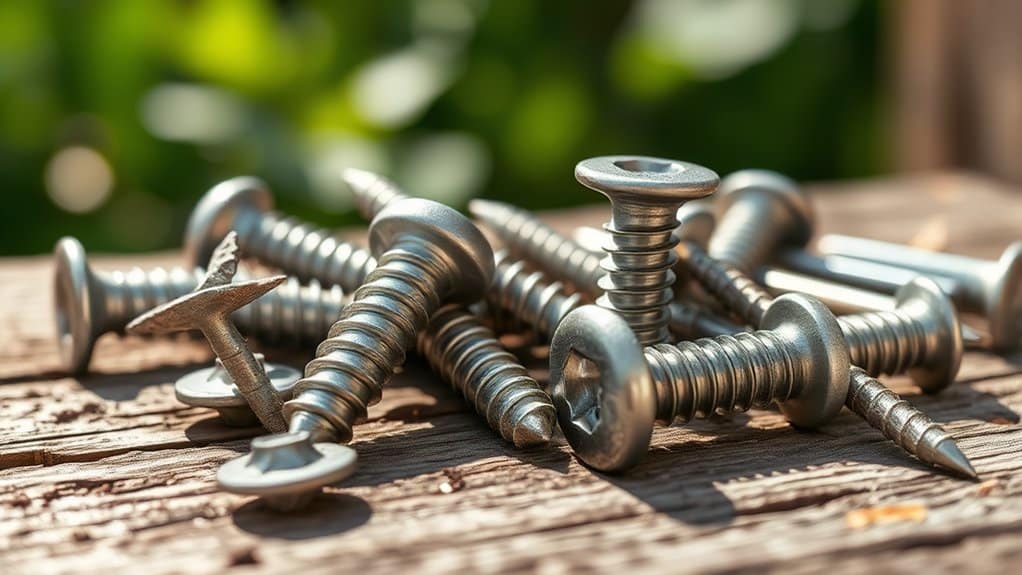
Screws provide key benefits for fencing projects, especially in terms of strength and stability. They’ve high tensile strength, which means they resist breakage and withstand harsh weather. Their ability to bear heavy loads makes them perfect for sturdier fences, and they stay tight over time, ensuring the fence remains secure. Additionally, screws are better at holding through wood swelling and shrinking, making them a reliable choice for various environmental conditions. Wood fencing requires regular maintenance to prevent damage, which highlights the importance of using durable fasteners like screws.
However, installation can be tricky. You’ll need a drill driver, and precision is vital to avoid unevenness. Pre-drilling is often necessary to prevent wood from splitting, particularly with thinner boards.
On the upside, screws are easy to remove and replace, making repairs a breeze.
Innovative Cat’s Claw Fasteners: A Sustainable Choice
Cat’s Claw Fasteners are a game-changer in fencing technology, providing a sustainable solution for securing your fence. Here are the key advantages that make them ideal for eco-friendly consumers:
| Feature | Benefit |
|---|---|
| Innovative Design | Toothed-claw design for superior grip |
| Increased Holding Power | Four times stronger than wire staples |
| Easy Installation | Cuts installation time by up to 35% |
| Reusability | Saves time and resources |
| Durable Materials | Made from 14-gauge galvanized steel for long-lasting use |
With these fasteners, you get strength, efficiency, and a commitment to sustainability—all in one package. Additionally, using eco-friendly fasteners helps reduce waste and promotes a sustainable home environment.
Hog Rings and C-Rings: Essential for Chain Link Fencing
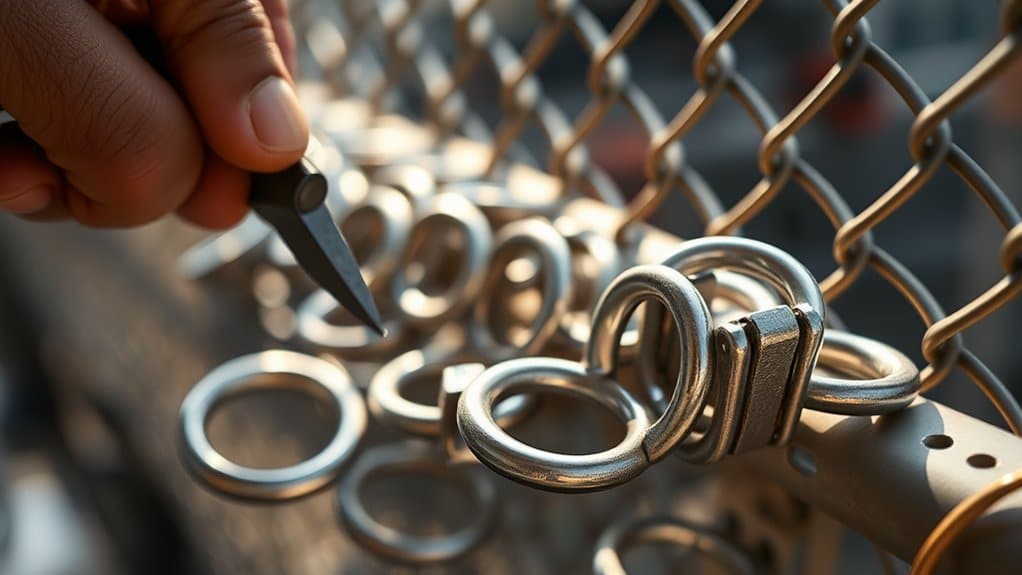
When installing chain link fences, it’s important to know how to use hog rings and C-rings.
Hog rings need special pliers for a secure fit, while C-rings require a specific gun to prevent over-tightening.
Choosing the right material and gauge is crucial for durability and performance in different weather conditions.
Installation Techniques and Tools
Installing chain link fencing requires the right fasteners, especially hog rings and C-rings. Here are some essential tips to ensure a stable installation:
- Mark Property Lines: Position posts about 4 inches inside your property line to prevent any overlap.
- Gather Your Tools: You’ll need a spade, a post level, and tensioning tools like wire stretchers.
- Secure the Mesh: Use hog rings or C-rings to attach the mesh without damaging the wire.
- Achieve Proper Tension: Use stretching tools to pull the fabric tight, cutting away any excess for a neat appearance.
These steps will help you set up a solid and professional-looking fence.
Material Durability and Selection
Choosing the right fasteners for chain link fencing is crucial for durability and stability.
Hog rings, made from heavy-duty metal, provide a tight hold on the fencing fabric with their U-shape, making them great for permanent installations.
C-rings, which have a wider opening, work well with thicker materials and offer strong structural support.
Both types are usually made from galvanized steel or aluminum, ensuring they resist corrosion.
Your choice should reflect the environmental conditions and the longevity you want for your fence, ensuring it holds up over time.
Environmental Considerations in Fastener Selection
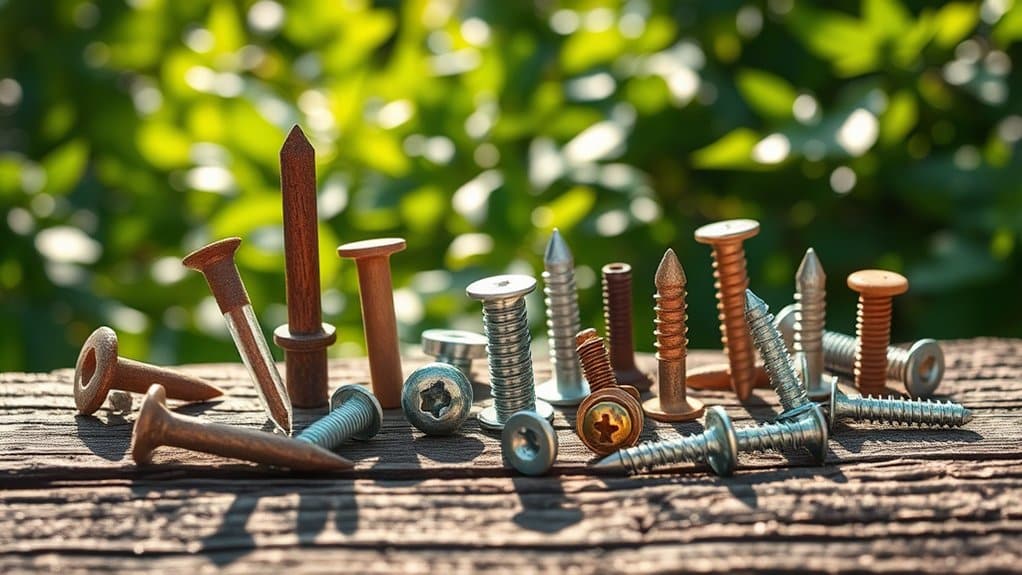
When choosing fasteners for your fencing project, consider their environmental impact.
Here are some key points for sustainable sourcing:
- Material Extraction: Be aware of how raw materials for nails and screws are sourced, as this can harm the environment.
- Energy Use: Manufacturing fasteners often requires a lot of energy, contributing to greenhouse gas emissions.
- Recyclability: Select fasteners that can be recycled to reduce waste.
- Local Sourcing: Buy from local suppliers to cut down on transportation emissions.
Choosing the Right Fastener for Your Fence Type

When starting a fencing project, it’s crucial to choose the right fasteners for your fence type to ensure durability.
For wood fences, ring shank nails offer strong holding power, while galvanized screws resist corrosion. If you want a clean look, hidden fasteners work well for decorative styles, whereas traditional designs might need visible fasteners.
Always ensure the fasteners match the wood type to prevent splitting. For quick assembly, pneumatic nail guns are effective, but screws take longer and may require pre-drilling.
Your choices should balance strength and appearance, keeping your fence functional and visually appealing.
Frequently Asked Questions
How Do I Determine the Right Fastener Size for My Fence?
To find the right fastener size for your fence, consider the materials you’re using. For wooden fences, use screws that penetrate at least 1.5 inches into the wood for a strong hold. If you’re working with metal, opt for corrosion-resistant screws. Nails can be used too, but ensure they’re long enough to provide stability. Also, think about your local weather; if it’s rainy or humid, choose fasteners that resist rust. This way, your fence will stand strong and last longer.
Can I Mix Different Fasteners in My Fencing Project?
Mixing fasteners in your fencing project can be effective, but ensure they are compatible for the best results. For instance, using screws with nails can speed up assembly, but check that they can hold up to weather conditions. Aim for a strong, durable fence that lasts.
What Tools Are Needed for Installing Fence Fasteners?
To install fence fasteners, you’ll need a cordless combi drill, an electric screwdriver, a claw hammer, and fence pliers. Use these tools to ensure a solid and long-lasting fence. Proper fastening techniques will make a big difference in the fence’s durability.
How Can I Prevent Wood From Splitting When Using Screws?
To stop wood from splitting when using screws, treat the wood properly and pre-drill. Always drill pilot holes first, choose the right bit size, and keep screws at least 15-20mm away from the edges. This will help ensure a strong hold without damaging the wood.
Are There Specific Fasteners for Electric or Barbed Wire Fences?
Yes, you need specific fasteners for electric and barbed wire fences. These fasteners are designed for durability and effective insulation, ensuring your fence functions properly. Using the right fasteners is crucial to avoid issues down the line.
Conclusion
In conclusion, choosing the right fence fasteners is crucial for durability. For instance, using screws can extend your fence’s lifespan by up to 30% compared to nails. This investment not only improves stability but also cuts down on future repair costs. Whether you opt for nails, screws, or innovative fasteners like cat’s claw, knowing their benefits will help you make the best choice for your fencing project.