When budgeting for your fencing project, you’ll need to contemplate multiple factors. Materials like wood, vinyl, or metal vary in cost and longevity. Labor expenses fluctuate based on installation complexity and location. Your fence’s length and height directly impact overall costs, while site preparation may involve clearing obstacles and evaluating soil stability. Don’t forget to factor in permits, gates, and additional features. Maintenance requirements differ by material, affecting long-term expenses. You can choose between DIY installation or hiring professionals, depending on your skills and the project’s complexity. Various financing options are available to help manage costs. Exploring these elements in depth will guarantee a thorough budget for your fencing project.
Key Takeaways
- Average fencing installation costs range from $1,743 to $4,431, with costs per linear foot typically between $13 and $25.
- Material choice significantly impacts cost, with options including wood, vinyl, chain-link, and metal, each varying in price and maintenance needs.
- Labor expenses vary by material and region, ranging from $600 to $1,200 per 100 feet of fence installation.
- Fence length, height, and site preparation requirements directly influence overall project costs and should be carefully considered.
- Additional costs may include permits, gates, security features, and ongoing maintenance, which vary based on material and local regulations.
Fencing Materials and Costs
When estimating fencing costs, you’ll need to contemplate various materials and their associated prices. A thorough fencing cost breakdown includes the material itself, labor, and any additional components like gates or post caps.
Common fencing material types include wood, vinyl, chain-link, aluminum, and wrought iron, each with its own price range and characteristics. When selecting a fence, it’s essential to take into account key factors such as purpose, budget, aesthetics, and maintenance requirements to guarantee you choose the most suitable option for your needs.
Wood fencing, typically cedar or pressure-treated pine, offers a classic look but requires regular maintenance. Vinyl fencing provides durability and low maintenance but comes at a higher initial cost. Chain-link is the most economical option, ideal for large areas or commercial properties.
Aluminum fencing combines affordability with minimal upkeep, while wrought iron offers unparalleled elegance at a premium price.
When calculating material costs, think about the linear footage required, post spacing, and any terrain challenges. Factor in the cost of concrete for post installation, hardware for assembly, and finish treatments for certain materials.
Don’t forget to account for gates, which can greatly influence your overall budget. By carefully evaluating these elements, you’ll develop a more accurate estimate for your fencing project.
Labor Expenses
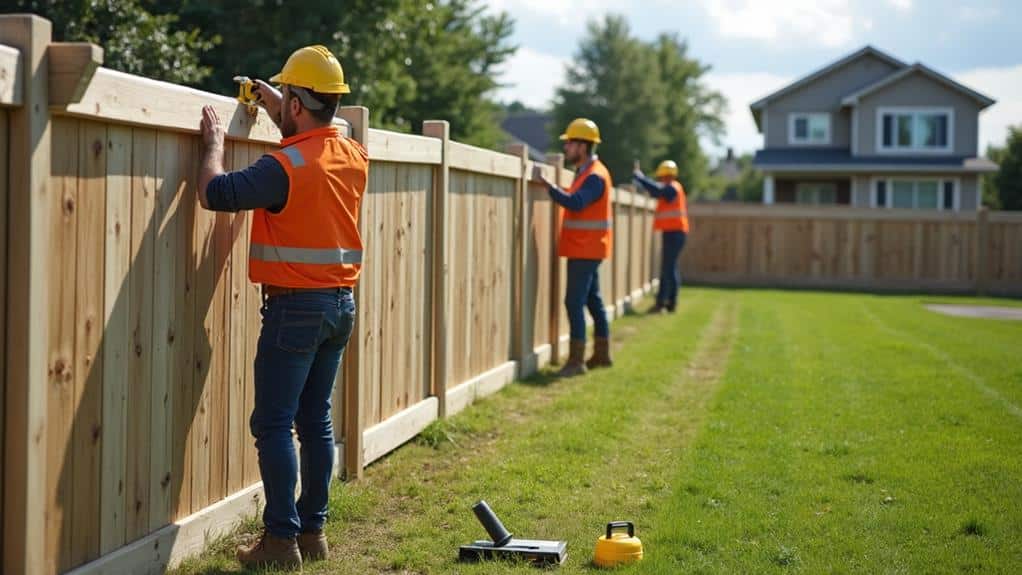
Labor expenses constitute a notable portion of your overall fencing project cost. You’ll need to account for various factors that influence these expenses, including the complexity of the installation, terrain challenges, and local wage rates. Be aware that labor costs can vary considerably depending on your location and the current economic climate.
Consider the following breakdown of labor expenses for different fencing types:
| Fence Type | Labor Hours/100ft | Avg. Labor Cost/100ft |
|---|---|---|
| Wood | 20-25 | $800-$1,000 |
| Chain-link | 15-20 | $600-$800 |
| Vinyl | 18-22 | $720-$880 |
| Wrought Iron | 25-30 | $1,000-$1,200 |
Keep in mind that wage fluctuations and labor unions can impact these costs. Urban areas typically have higher labor rates than rural regions. You may also encounter additional charges for site preparation, debris removal, or specialized equipment rental. To minimize labor expenses, make sure your property is easily accessible and clear of obstacles. Consider obtaining multiple quotes from reputable contractors to compare labor costs and negotiate competitive rates for your fencing project.
Fence Length and Height
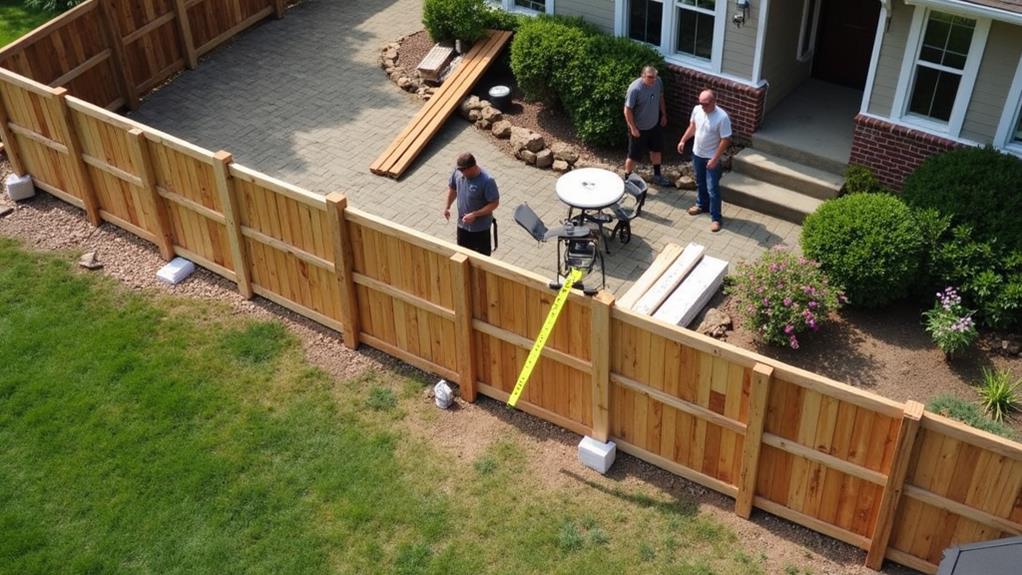
Along with material and labor costs, the length and height of your fence are important factors in determining the overall project expense. To accurately estimate your fencing costs, you’ll need to measure the perimeter of your property carefully.
Remember that longer fences require more materials and labor, directly impacting your budget. Average installation costs can range from $1,743 to $4,431, with the national average being $3,059. The cost per linear foot typically falls between $13 and $25, depending on various factors.
The height of your fence also plays a significant role in cost calculation. Standard residential fence heights typically range from 4 to 8 feet, with taller fences generally costing more.
Consider your fence design and aesthetic preferences when deciding on height, as well as any local zoning regulations that may restrict fence dimensions.
To guarantee precise cost estimation, follow these steps:
- Measure your property’s perimeter accurately, accounting for any curves or angles
- Determine the desired fence height based on privacy needs and local regulations
- Calculate the total square footage of fencing required by multiplying length by height
Site Preparation Requirements
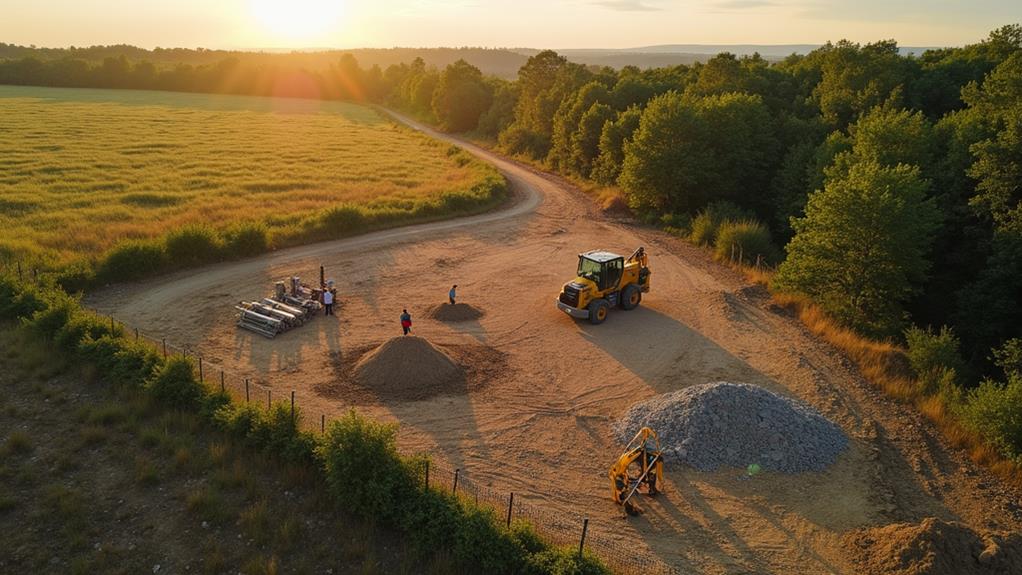
Several site preparation requirements can greatly impact your fencing project’s cost and timeline.
You’ll need to assess soil stability before installation to guarantee your fence’s longevity. Unstable soil may require additional reinforcement or deeper post holes, increasing both materials and labor costs. Reflect on the primary purpose of the fence when planning your site preparation, as this can influence the level of reinforcement needed and overall costs.
Evaluate the terrain’s slope and drainage patterns. Poor drainage can lead to fence post rot and structural instability. You may need to implement drainage solutions such as French drains or grading adjustments to divert water away from the fence line. These measures will add to your project’s overall cost but are essential for long-term fence integrity.
Remove any obstacles along the proposed fence line, including trees, stumps, rocks, or existing structures. This clearance process may involve heavy machinery or specialized equipment, further impacting your budget.
Additionally, you’ll need to take into account utility line locations and potentially relocate them if they interfere with your fence placement.
Lastly, factor in any local regulations or permits required for site preparation. Some jurisdictions may mandate specific preparation methods or inspections, which can affect both your project’s timeline and expenses.
Gates and Additional Features
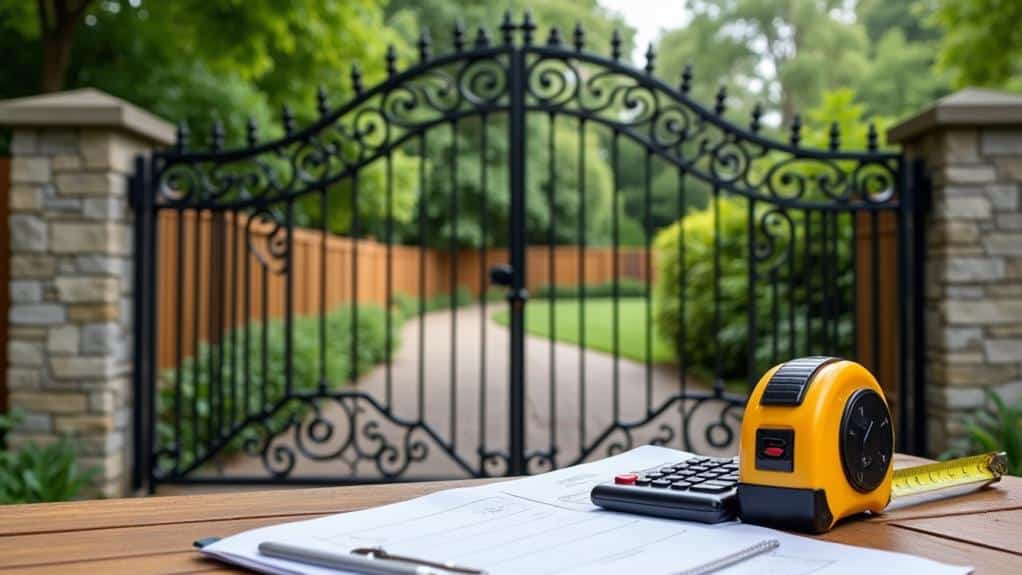
Gates and additional features can considerably impact your fencing project’s overall cost and functionality. When planning your fence, you’ll need to contemplate various gate styles and security features to meet your specific needs. Common gate options include swing gates, sliding gates, and automated gates, each with its own price point and installation requirements.
Security features can enhance your fence’s effectiveness:
- Electronic access control systems
- Surveillance cameras
- Barbed wire or electric fence toppers
These additions will increase your project’s overall cost but may be necessary depending on your security needs. Gate styles range from simple manual gates to complex automated systems with remote control access.
Evaluate factors such as frequency of use, desired level of security, and aesthetic preferences when selecting gate options.
Additional features like post caps, decorative panels, or privacy slats can improve your fence’s appearance and functionality. However, these elements will add to your total project cost.
Carefully assess each feature’s necessity and value to ascertain you’re making cost-effective choices that align with your fencing goals and budget constraints.
Permits and Regulations
Before commencing on your fencing project, it’s essential to navigate through the maze of permits and regulations.
Start by researching your local zoning laws, which dictate fence height, materials, and placement. You’ll need to obtain the necessary permits from your municipality’s building department. These permits typically require detailed plans of your proposed fence, including its location relative to property lines.
Ensure you’re aware of any homeowners’ association rules that may impose additional restrictions on fence design or materials.
You’ll also need to accurately determine your property lines to avoid encroaching on neighboring land. Consider hiring a professional surveyor to confirm boundaries if you’re unsure.
Some jurisdictions require inspections at various stages of fence installation. Be prepared for potential fees associated with permits and inspections.
Additionally, check for any utility easements on your property that may affect fence placement. If your fence will be near a public right-of-way, you may need special permission or setbacks.
Compliance with these regulations is vital to avoid costly fines or the need to remove or modify your fence after installation.
Maintenance and Longevity Considerations
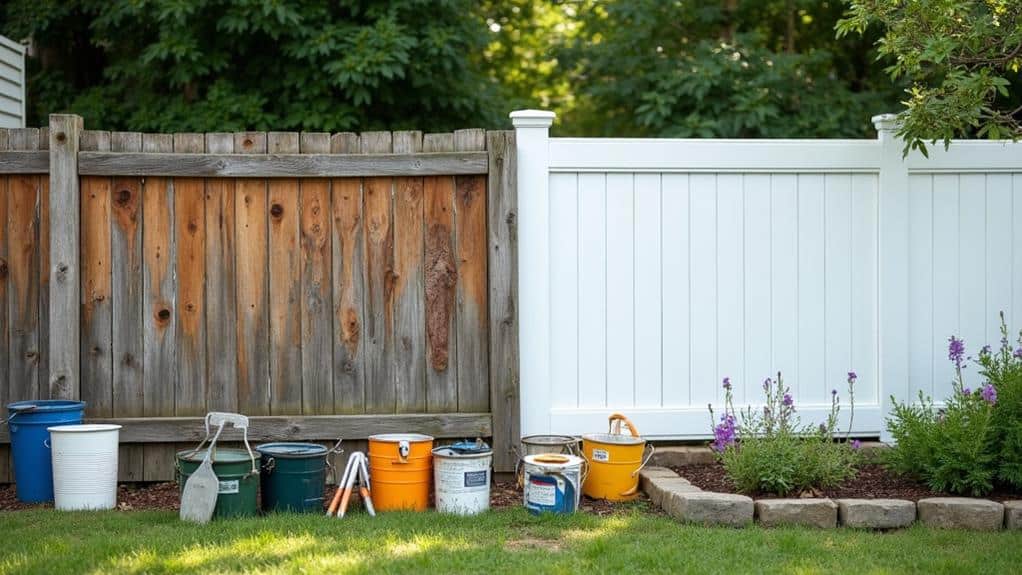
When estimating fencing costs, you’ll need to factor in ongoing maintenance expenses and the expected lifespan of your chosen materials.
Different fencing materials require varying levels of upkeep, with wood typically demanding more frequent attention than vinyl or metal options.
Consider the long-term durability of each material type, as this will impact both your maintenance schedule and the overall cost-effectiveness of your fencing investment.
Upkeep Frequency and Costs
In accordance with the longevity of your fence, you’ll need to factor in ongoing maintenance costs and frequency of upkeep. Different fence materials require varying levels of attention. Wood fences typically demand more frequent maintenance, while vinyl and metal options often require less.
To effectively budget for upkeep, consider the following cost-saving strategies:
- Implement regular inspections to catch minor issues before they escalate
- Apply protective coatings or sealants as recommended by manufacturers
- Address repairs promptly to prevent further damage and higher costs
For wood fences, plan on annual cleaning and staining or sealing every 2-3 years. Metal fences may need rust treatment and repainting every 5-7 years. Vinyl fences generally require only periodic cleaning. Concrete and stone fences might need occasional patching or repointing.
Upkeep tips include using appropriate cleaning solutions, avoiding power washing on softer materials, and maintaining proper drainage around fence posts.
Material Durability Comparison
The durability of fencing materials plays an essential role in long-term cost-effectiveness and maintenance requirements. When comparing wood vs vinyl or metal vs composite fencing options, you’ll find significant differences in longevity and upkeep needs.
Wood fences, while initially cost-effective, require regular maintenance and have a shorter lifespan. Vinyl fences offer superior durability and minimal maintenance but come at a higher initial cost. Metal fences, such as wrought iron or aluminum, provide excellent strength and longevity but may require periodic rust prevention. Composite fencing combines the aesthetics of wood with enhanced durability and lower maintenance needs.
Consider the following comparison table:
| Material | Lifespan (years) | Maintenance Frequency | Resistance to Elements | Initial Cost |
|---|---|---|---|---|
| Wood | 10-20 | High | Low | Low |
| Vinyl | 20-30 | Low | High | High |
| Metal | 20-30 | Medium | Medium | Medium |
| Composite | 20-30 | Low | High | High |
| PVC | 20-30 | Low | High | Medium |
When selecting your fencing material, weigh the initial costs against long-term durability and maintenance requirements to make an informed decision that aligns with your budget and property needs.
DIY Vs Professional Installation
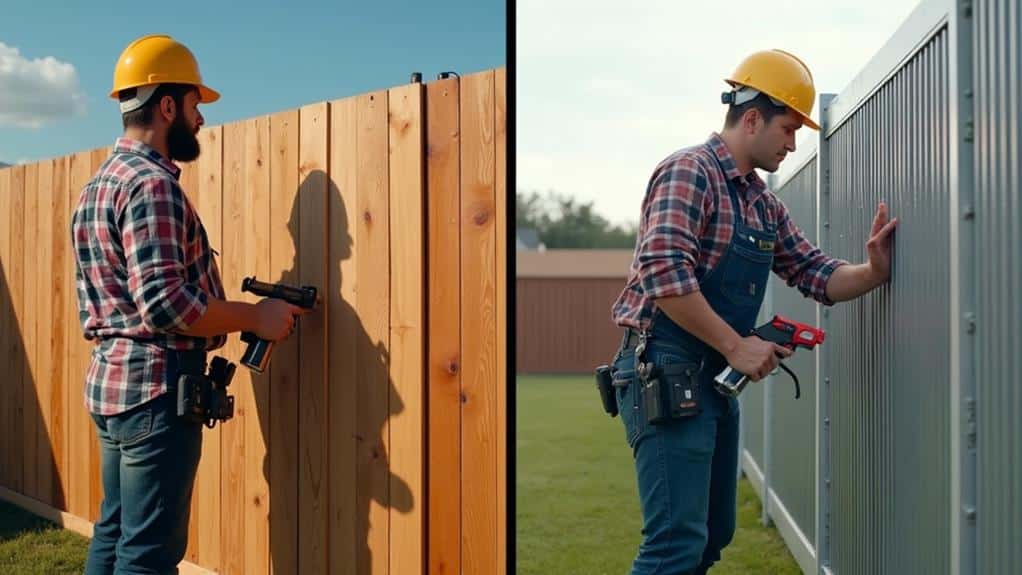
Homeowners frequently face the decision between DIY fence installation and hiring professional contractors. When considering a DIY approach, you’ll need to assess your skills, time availability, and access to necessary equipment.
Create an extensive tools checklist and establish a realistic project timeline before committing to self-installation.
Professional installation offers several advantages:
- Expertise in proper techniques and local regulations
- Access to specialized equipment and bulk materials
- Typically faster completion times and warranties
However, DIY installation can lead to significant cost savings, provided you have the requisite skills and time.
You’ll need to factor in the cost of tool rentals or purchases, as well as potential mistakes that may require correction.
Consider the complexity of your project when deciding between DIY and professional installation.
Simple, straight-line fences on level ground are more suitable for DIY, while complex designs or challenging terrain may necessitate professional expertise.
Ultimately, weigh the potential savings against the value of your time and the importance of a flawless installation to make an informed decision.
Financing Options
After deciding between DIY and professional installation, you’ll need to contemplate how to finance your fencing project. Several loan options are available, including home equity loans, personal loans, and home improvement loans. These provide immediate funds but require repayment with interest.
Credit options like credit cards or lines of credit offer flexibility but may have higher interest rates.
Many fencing companies offer financing plans, allowing you to spread the cost over time. These often come with promotional periods of low or no interest.
Evaluate various payment methods, such as cash, check, or digital transfers, to determine which aligns best with your financial situation.
Implement budget strategies to manage costs effectively. Consider phasing your project, prioritizing sections of your property, or opting for more affordable materials initially.
Conduct an investment analysis to assess the long-term value of your fencing project. Factor in potential increases in property value, security benefits, and maintenance costs over time.
This analysis will help you determine the most appropriate financing approach for your specific circumstances, ensuring you make an informed decision that balances immediate needs with long-term financial implications.
Frequently Asked Questions
How Long Does It Typically Take to Install a Fence?
You’ll find that fence installation typically takes 1-3 days, depending on the project’s complexity and length. The installation timeline directly impacts labor costs. Factors like terrain, materials, and crew size influence the duration of your fence project.
Can I Install a Fence on a Sloped or Uneven Terrain?
Did you know that 60% of residential properties have some slope? You can install a fence on sloped terrain using specialized fence installation techniques. Consider stepped fencing or racking methods, accounting for drainage and soil stability in your sloped terrain considerations.
What’s the Best Time of Year to Install a Fence?
You’ll find spring installation ideal for fencing due to favorable weather and soil conditions. However, don’t rule out winter considerations; frozen ground can simplify post-hole digging, and you’ll often secure better contractor rates during off-peak seasons.
How Close to My Property Line Can I Install a Fence?
You’ll need to check your local property line regulations and fence placement guidelines. Typically, you can install fences on or near your property line, but some areas require setbacks. Always verify with your local zoning office before proceeding.
Are There Eco-Friendly or Sustainable Fencing Options Available?
Did you know 87% of consumers prefer eco-friendly products? You’ll find numerous sustainable fencing options utilizing recycled materials like composite or reclaimed wood. These choices often feature natural finishes, reducing environmental impact while maintaining durability and aesthetic appeal.
Conclusion
You’ve now explored the key factors influencing fencing costs. While it’s tempting to focus solely on materials and labor, your project’s true cost extends beyond initial installation. Factors like maintenance, permits, and site preparation greatly impact long-term expenses. By carefully considering each element, you’ll develop an all-encompassing budget that accounts for both immediate and future costs. This approach guarantees you’re fully prepared for your fencing project’s financial requirements and potential challenges.