In Broward County, hurricane-rated fences must withstand winds up to 180 mph. To build one, you’ll need a building permit and materials that meet Miami-Dade or Broward standards. Use 4″ x 4″ posts, embedded at least 2 feet in concrete for stability. Backyard fences can be up to 6 feet tall. Always follow local codes to ensure your fence is safe and sturdy during hurricanes.
Understanding High-Velocity Hurricane Zone Status
Understanding the High-Velocity Hurricane Zone (HVHZ) status is crucial for homeowners in Broward County. It sets the design and construction standards needed to endure extreme wind forces.
For fences, this means following Florida Building Code Section 1620, which requires structures to withstand wind speeds up to 180 mph. When designing your fence, ensure materials meet Miami-Dade or Broward Notice of Acceptance (NOA) standards, proving they’ve passed tough impact tests.
It’s also important to consider the wind pressures specific to HVHZ, which means using stronger post embedment and secure connections. The HVHZ designation ensures that all construction complies with the highest safety standards in hurricane-prone areas.
Permit and Compliance Requirements

If you’re planning to install a hurricane-rated fence in Broward County, you must follow specific permit and compliance processes. It’s crucial to adhere to local regulations to ensure safety and legality. Not following these rules can result in fines or even having to remove the fence. Obtaining a building permit is essential, as it ensures compliance with local building codes and hurricane wind-load standards.
Permit Application Process
Homeowners in Broward County must follow a straightforward permit application process for installing a fence.
Here’s a quick guide to ensure you meet local regulations:
- Fill out the Broward County Uniform Building Permit Application, including the job value and a notarized signature.
- Provide two complete sets of building plans, a certificate from a registered land surveyor, and zoning approval documents. It is crucial to check setback requirements to ensure your fence complies with local zoning laws.
- Make sure to include any additional requirements, like contractor insurance proof or HOA approval. Obtaining a permit is essential to ensure compliance with local codes and prevent potential issues during severe weather events.
Following these steps will help you get your fence up legally and without hassle.
Compliance Review Standards
If you’re installing a hurricane-rated fence in Broward County, it’s important to follow specific compliance standards for safety and legality.
Your fence must meet wind-load requirements since the area is a High-Velocity Hurricane Zone. For chain link fences over 12 feet, structural reinforcement is essential.
Be sure to adhere to the Florida Building Code for materials and construction, and submit two complete sets of plans with a registered land surveyor’s certificate.
Also, obtain any necessary HOA approvals and complete required affidavits. These steps are crucial for protecting your property and neighbors during hurricanes. Additionally, consider the average fencing installation costs to help inform your budget and ensure you meet all necessary standards.
Installation Regulations Overview
Before installing a hurricane-rated fence in Broward County, you need to follow specific permit and compliance steps. Here’s a quick guide:
- Permit Submission: Submit two sets of building plans along with a land surveyor’s certificate that shows your property lines and where you plan to put the fence.
- Design Compliance: Ensure your fence meets Florida Building Code standards, including wind-load calculations and approvals for any manufactured materials.
- Zoning Regulations: Review local zoning laws for limits on height and location, especially regarding setbacks and easements.
Height Limitations for Residential Fences
In Broward County, if you’re putting up a residential fence, there are clear height rules to follow.
Backyard fences can be up to 6 feet tall, while front yard fences are usually capped at 4 feet.
If you’re considering a chain link fence, it can go as high as 12 feet, as long as it complies with Florida Building Code regulations.
Backyard Fence Height Limits
Here is the revised content following your instructions:
In Broward County, backyard fences in residential areas can be a maximum of 6 feet tall, measured from the ground to the top of the fence.
Here are some important points to keep in mind:
- Certain chain-link fences can go over 6 feet if allowed by Florida Building Code.
- Homeowner associations (HOAs) may have stricter height rules than the county.
- Fences must be built to withstand high winds, as per High-Velocity Hurricane Zone standards.
Always check local laws and permit requirements to ensure your fence is compliant and avoid issues during inspections. Understanding these rules will help you keep your backyard fence both legal and attractive. Additionally, a proper fence can significantly enhance property value and curb appeal, making it a worthwhile investment for homeowners.
Front Yard Restrictions
In Broward County, front yard fences are limited to a maximum height of 4 feet. This aligns with county and state guidelines to ensure visibility, especially on corner lots that require clear sight lines.
Fences within this height often use decorative materials to enhance curb appeal while following opacity rules—open designs are encouraged to keep views unobstructed.
Additionally, there may be rules about how far fences must be set back from sidewalks. It’s crucial to check your local regulations before installing a front yard fence, as not complying can lead to permit denials or enforcement issues.
Chain Link Regulations
Homeowners in Broward County need to follow specific rules for chain link fences to ensure compliance and enjoy their benefits.
- Height Limit: Backyard chain link fences can be a maximum of 6 feet tall.
- Front Yard Rules: Chain link fences are generally not allowed in front yards to maintain neighborhood appearance.
- Construction Guidelines: Fences must meet Florida Building Code table 2224, with a maximum mesh size of 2-1/4 inches.
Ensuring your fence meets these standards is crucial for durability, especially during hurricanes.
Using decay-resistant materials will also enhance its lifespan and effectiveness.
Wood Fence Specifications
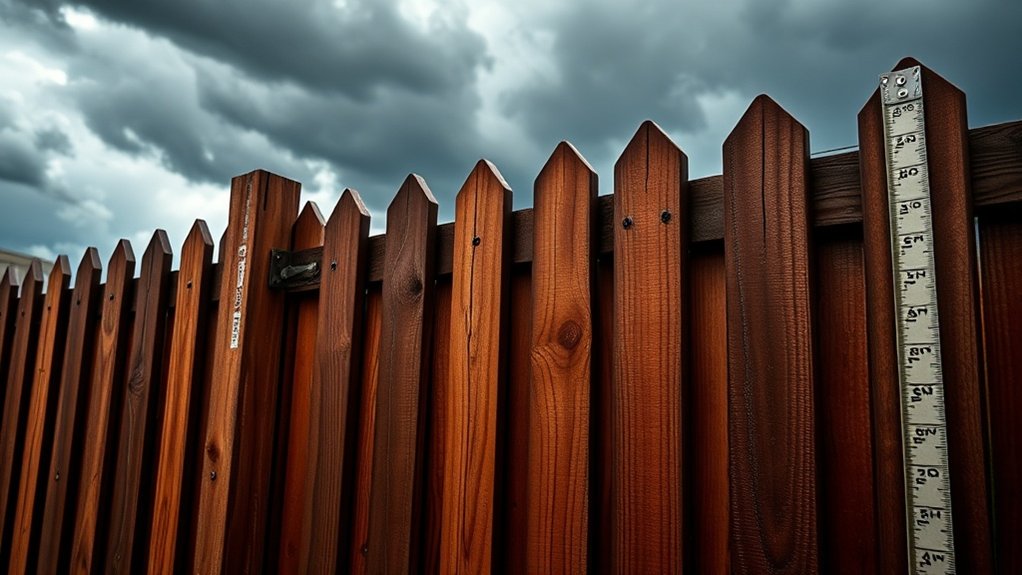
When building a wood fence in Broward County, follow these key regulations to meet the Florida Building Code (FBC).
Use decay- and termite-resistant lumber, like pressure-treated Southern Pine, with at least a No.2 grade. Ensure your posts are a minimum of 4″ x 4″ and spaced no more than 4 feet apart, set in concrete footings that are at least 24 inches deep.
For better storm protection, consider digging footings up to 3 feet deep. Use exterior-grade, corrosion-resistant fasteners and treat the wood to enhance durability.
Regular maintenance, like applying preservatives, is crucial for the fence’s longevity, especially in coastal areas. Stick to these guidelines to ensure your fence can withstand hurricanes in Broward County.
Chain Link Fence Specifications
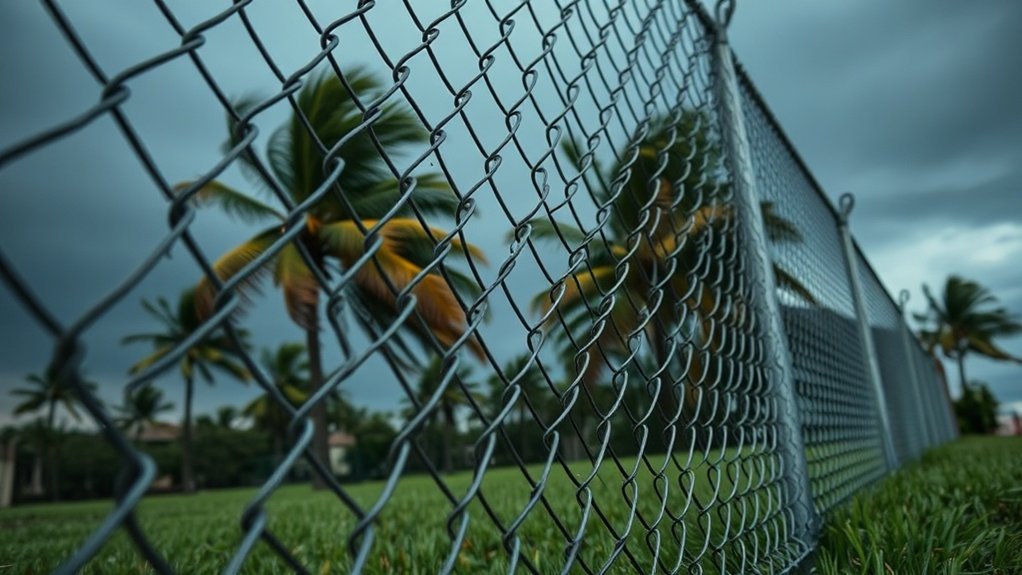
In Broward County, chain link fences must be built to withstand hurricanes due to the area’s classification as a High-Velocity Hurricane Zone (HVHZ).
Here are the essential specifications to follow:
- Wind-load Requirements: Fences should be able to handle wind speeds up to 175 mph. Ensure you submit accurate calculations for permit approval.
- Material Durability: Use 12½-gauge fabric with galvanized finishes to prevent rust, especially in coastal areas.
- Installation Techniques: Adhere to specific post sizes and concrete foundations, with appropriate spacing and bracing to ensure stability during strong storms.
Material and Zoning Rules
Understanding material and zoning rules is crucial for homeowners in Broward County, especially since it’s a High-Velocity Hurricane Zone. If you’re planning to install or replace a fence, you must follow the 2001 Florida Building Code, especially if you’re replacing 75% or more of your existing fence. Here’s a straightforward summary of the key fencing materials and their requirements:
| Fence Material | Key Requirements |
|---|---|
| Wood | Max height: 6 ft; posts: 4×4 in; embed: 2 ft in footings |
| Chain Link | Use 12-1/2 gauge; tension bands depend on height |
| Aluminum/Steel | Must be corrosion-resistant and designed to withstand hurricane loads |
| General Zoning | Max height: 6 ft; submit a uniform permit application |
| Access Gates | Must be at least 42 inches wide for lake maintenance easements |
Follow these regulations to ensure your fence can endure hurricane conditions.
Importance of Wind-Load Compliance
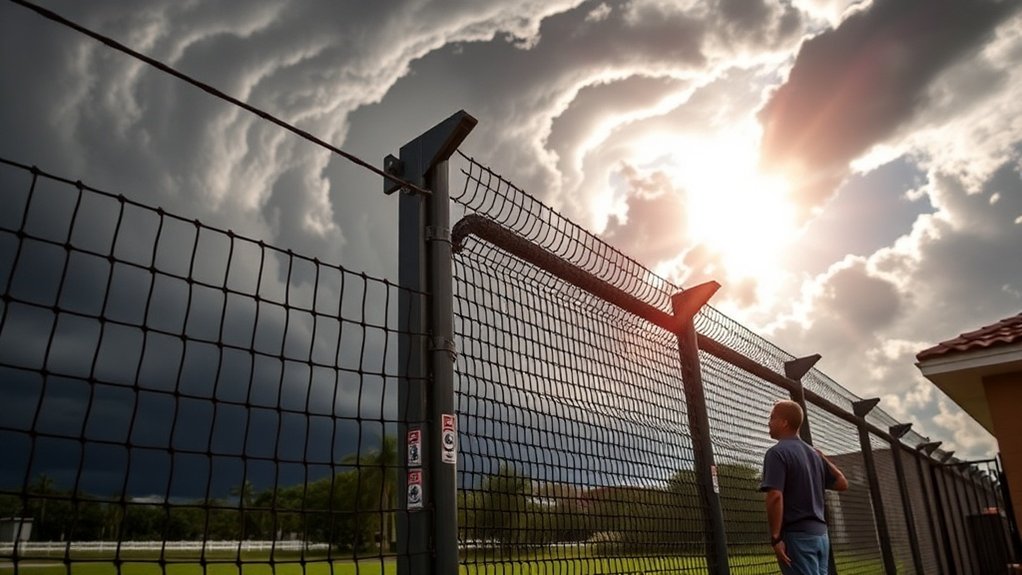
Wind-load compliance is crucial for the safety and durability of fences in Broward County’s High-Velocity Hurricane Zone (HVHZ).
Here are three important reasons to prioritize it:
- Structural Integrity: A well-designed fence can resist strong winds, preventing it from collapsing or being damaged.
- Code Compliance: Following the Florida Building Code helps you avoid fines and the need for expensive upgrades.
- Safety: A sturdy fence protects your property and your neighbors from potential damage during hurricanes.
Ensuring Safety and Protection During Storms
Your fence must meet wind-load requirements to ensure safety during storms. Proper preparation involves regular maintenance and compliance with Broward County regulations.
| Key Requirement | Details |
|---|---|
| Wind Resistance | Built to withstand 75 mph winds, 115 mph gusts |
| Post Specifications | At least 4×4 inches, buried 2 feet deep |
| Material Standards | Use galvanized chain link or steel |
| Height Restrictions | Maximum of 6 feet in backyards |
| Fastener Compliance | Use corrosion-resistant materials as per code |
Frequently Asked Questions
Can I Use Vinyl Fencing in Hurricane-Prone Areas?
Yes, you can use vinyl fencing in hurricane-prone areas, but ensure it meets durability standards. Reinforce it to handle strong winds and follow local building codes for the best results. For example, consider using thicker panels and secure posts to enhance stability.
What Are the Penalties for Non-Compliance With Fence Regulations?
Ignoring fence regulations can lead to serious consequences. You might face fines that stack up quickly, daily penalties for non-compliance, and even liens against your property. If your fence isn’t up to local codes, you could be forced to remove it at a high cost. It’s best to follow the rules to avoid these issues.
How Often Do I Need to Replace My Hurricane-Rated Fence?
Replace your hurricane-rated fence every 20-30 years, depending on the material. Regular checks and quick repairs can help it last longer and keep it up to code. For example, a vinyl fence may last longer than a wooden one, so choose wisely.
Are There Any Exemptions for Historic Properties Regarding Fence Requirements?
In Broward County, there are no specific exemptions for historic properties when it comes to fence design. If you face challenges complying with local requirements, you’ll need to go through the variance process to maintain your property’s historic character.
Can I Install a Fence Myself Without a Contractor?
Yes, you can install a fence yourself, but you need to follow local regulations and get the necessary permits. For instance, if you’re in Florida, make sure your materials and installation methods align with the Florida Building Code. It’s important to check these details before starting your DIY project.
Conclusion
In Broward County, following hurricane-rated fence requirements is essential. Ignoring these regulations can put your property and family at risk during a storm. A sturdy fence acts as a protective barrier, so ensure yours meets the necessary codes. Don’t take shortcuts—make sure your fence can withstand high winds and severe weather. Protect your home and loved ones by being prepared!